7 Diseases You Can Screen for With Just a Phone Camera
How contactless vitals and smartphone cameras are enabling multi-disease screening in rural healthcare clinics across Sub-Saharan Africa without medical equipment.
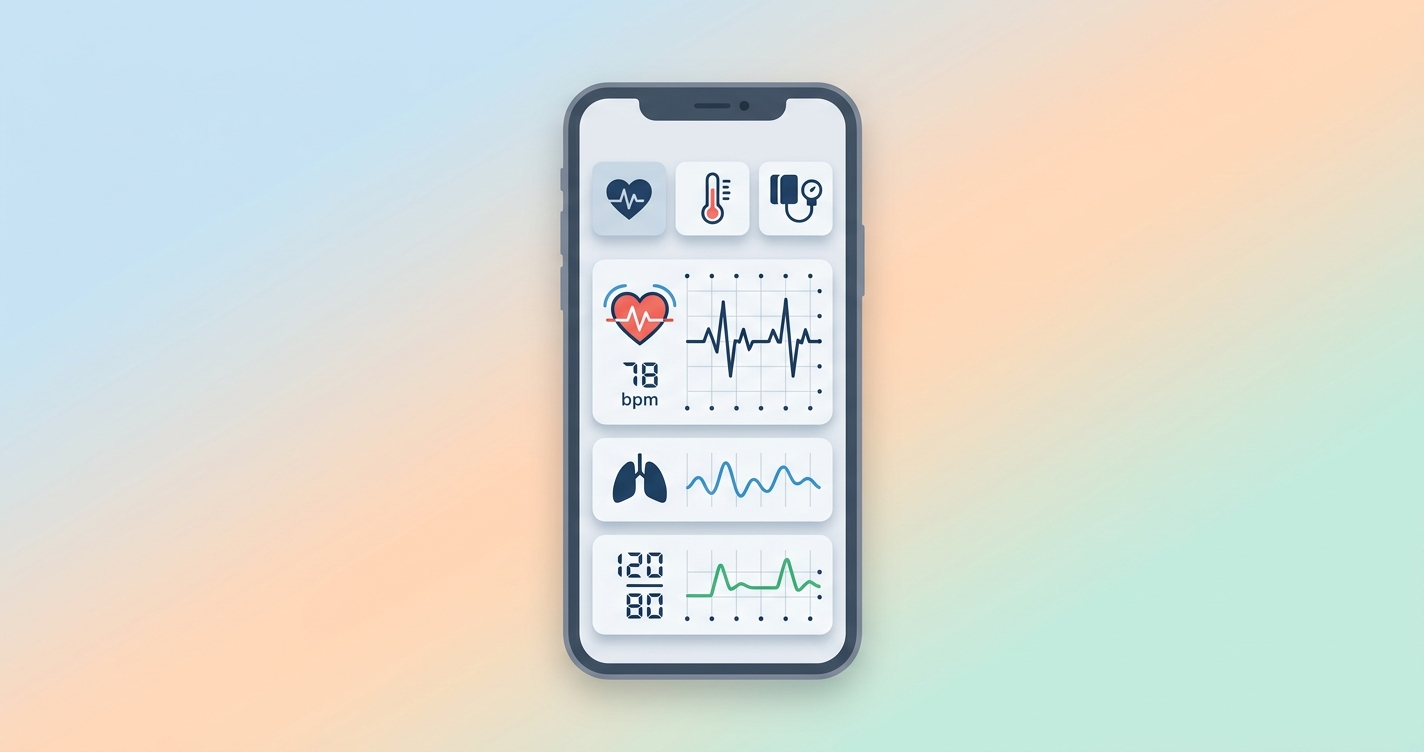
Program managers planning field operations across Sub-Saharan Africa are increasingly turning to software to solve hardware problems. The logistical burden of purchasing, shipping, and maintaining physical medical devices makes population level screening highly inefficient. To address this infrastructure gap, organizations are adopting contactless vitals rural healthcare models, utilizing devices that community health workers already carry. By using sophisticated algorithms, a standard smartphone can now perform a multi-disease screening Africa programs desperately need, all without requiring a single piece of imported clinical equipment.
"Between 40 percent and 70 percent of medical equipment in hospitals in Low- and Middle-Income Countries is out of order, often due to a lack of technical support, training, and reliable electricity."
- World Bank Group, The Realities of Primary Care
The mechanics of a phone camera health check
The primary technology enabling these contactless measurements is remote photoplethysmography (rPPG). When the human heart beats, it pushes a pulse of blood through the vascular system. This microvascular volume change slightly alters the light absorption properties of human skin. While invisible to the naked eye, a standard smartphone camera can detect these microscopic color variations in the red, green, and blue pixel values of a continuous video feed.
By isolating specific light channels, particularly the green channel which has the highest absorption rate for oxygenated hemoglobin, algorithms can extract a reliable pulse wave. This raw signal is then processed to calculate heart rate, respiratory rate, and proxy indicators for blood pressure.
Parallel to rPPG, computer vision models analyze static images for physical biomarkers. For instance, evaluating the pallor of the inner eyelid provides a strong correlation to blood hemoglobin levels. Together, these two modalities enable comprehensive vital signs without equipment.
| Feature | Traditional Medical Equipment | Smartphone Camera Screening |
|---|---|---|
| Hardware Required | BP cuffs, pulse oximeters, blood draw kits | Standard smartphone device with a camera |
| Maintenance Overhead | High (requires routine calibration and repairs) | Low (requires periodic software updates) |
| Power Supply Needs | Continuous electricity or frequent battery swaps | Standard phone charging (solar compatible) |
| Clinical Consumables | Test strips, lancets, sanitizing wipes | Zero physical consumables required |
| Supply Chain Dependency | High (relies on imported parts and shipping) | Low (utilizes locally sourced mobile devices) |
7 conditions tracked via smartphone screening
1. hypertension (high blood pressure)
Hypertension remains a major contributor to cardiovascular disease across the continent. Traditional screening requires inflatable cuffs, which often break, puncture, or lose calibration in harsh environmental conditions. Contactless systems estimate blood pressure by calculating pulse wave velocity or analyzing the morphological features of the rPPG waveform. The time it takes for the pulse to travel from the heart to the facial capillaries provides a functional proxy for arterial stiffness and pressure, allowing health workers to flag at-risk adults for clinical follow-up.
2. Anemia and Malnutrition
Severe anemia is a leading cause of maternal and infant mortality in low-resource settings. Standard diagnosis requires a blood draw or a point of care device requiring expensive test strips. Camera based screening analyzes the palpebral conjunctiva, the inner lining of the lower eyelid. Deep learning models map the specific pixel colors of this tissue directly to hemoglobin concentration levels, instantly flagging severe anemia and signs of malnutrition without requiring needles or biological waste disposal.
3. hypoxia and respiratory infections
Pneumonia is one of the deadliest infectious diseases for children under five in Sub-Saharan Africa. Early detection relies heavily on monitoring blood oxygen saturation (SpO2). While traditional pulse oximeters measure the ratio of red to infrared light absorption through a fingertip, rPPG algorithms achieve a similar calculation by comparing ambient light absorption across the facial skin. This allows community health workers to identify hypoxia early, expediting life saving referrals for pediatric patients.
4. tachycardia and cardiac arrhythmias
Detecting an abnormal heart rate is a fundamental step in medical triage. Standard protocols require a stethoscope and a trained ear, or an ECG machine. A phone camera health check simplifies this by performing peak-to-peak interval detection on the rPPG signal. By calculating the exact millisecond differences between heartbeats, the software can identify resting tachycardia or irregular rhythms that may indicate underlying cardiac conditions or severe systemic infections.
5. respiratory distress
In remote clinics, an elevated respiratory rate is a critical indicator of deteriorating patient health, yet it is notoriously difficult to measure manually with accuracy. Contactless screening tools track respiration through two distinct methods: observing subtle, sub-pixel head and chest movements associated with breathing, or extracting respiratory sinus arrhythmia patterns directly from the cardiovascular pulse wave. Both methods provide an automated, objective respiratory rate count.
6. maternal pre-eclampsia risk
Maternal health programs struggle with the high maternal mortality rates linked to pre-eclampsia, a condition characterized by dangerous spikes in blood pressure during pregnancy. By combining rPPG based blood pressure trend monitoring with resting heart rate analysis, community health workers can conduct regular, non-invasive checkups during antenatal visits. This continuous monitoring capability helps identify high risk pregnancies long before severe complications arise.
7. autonomic nervous system stress
The balance of the autonomic nervous system provides deep insights into a patient's overall physiological load. By calculating Heart Rate Variability (HRV) metrics such as the root mean square of successive differences (RMSSD) from the rPPG pulse wave, algorithms can detect sympathetic nervous system overload. This acts as a generalized early warning system for physiological stress, dehydration, or the onset of severe febrile illnesses like malaria.
Industry applications in low-resource settings
Triage in overburdened clinics
Rural clinics often suffer from massive patient volumes and severe staffing shortages. Implementing a multi-disease screening Africa protocol via smartphones allows triage nurses to assess waiting patients rapidly.
- Eliminates the bottleneck of sharing a single, functional blood pressure cuff.
- Reduces cross contamination risks during infectious disease outbreaks.
- Digitizes triage data instantly, avoiding lost paper records.
Community outreach campaigns
Community health workers conduct household visits to monitor vulnerable populations. Equipping them with software rather than heavy hardware kits expands their diagnostic reach.
- Enables continuous screening in villages located far from grid power.
- Reduces the physical weight of the equipment bag carried by field staff.
- Standardizes the quality of vital sign collection regardless of the worker's manual measurement skills.
Current research and evidence
The clinical viability of remote photoplethysmography and conjunctival imaging is supported by a growing body of peer-reviewed research. A 2023 study by researchers at Johns Hopkins University (Chen et al., 2023) evaluated the extraction methods for rPPG data, confirming that software based vital sign acquisition can match the clinical capability of traditional remote monitoring devices.
Similarly, research focused on conjunctival imaging has demonstrated high accuracy in estimating hemoglobin levels. A 2023 clinical trial involving 435 patients (HCPLive Research Desk, 2023) showed that smartphone applications analyzing the inner eyelid are highly effective at detecting anemia. These studies validate the transition of these algorithms from controlled laboratory environments to active, real world clinical deployments.
The future of multi-disease screening
The reliance on imported, physical medical devices for basic population health screening is structurally unsustainable for many developing nations. The future of global health diagnostics lies in edge computing and artificial intelligence. As mobile processors become more powerful, the ability to run complex neural networks locally on a device will only improve.
This shift means that improving a national healthcare system's diagnostic capacity will no longer require building new factories or shipping containers full of plastic and silicon. Instead, health ministries will be able to instantly upgrade the diagnostic capabilities of their entire workforce through a simple software update, transforming the standard mobile phone into a comprehensive medical tricorder.
Frequently asked questions
Q: How does a smartphone camera actually measure vital signs? A: The technology uses remote photoplethysmography to detect microscopic color changes in the skin caused by blood flow. Algorithms process these video frames to extract a cardiovascular pulse wave, which is then used to calculate metrics like heart rate and blood pressure proxies.
Q: Does camera based screening work accurately on all skin tones? A: Modern algorithm development prioritizes diverse training datasets to ensure the technology can accurately extract vital signs across all melanin levels, overcoming the limitations of early optical sensors.
Q: Do these screening tools require an active internet connection to work? A: Most applications utilize edge computing, meaning the video data is processed locally on the smartphone's internal processor. This allows community health workers to conduct screenings in completely offline environments.
Q: Can this software replace laboratory blood tests entirely? A: No. Contactless vitals and camera-based screenings act as highly scalable triage tools designed to flag at-risk individuals for referral. They do not replace definitive diagnostic laboratory testing.
To support the expansion of non-invasive diagnostic tools, Circadify is actively collaborating with organizations deploying these software based systems in remote environments. To review our latest field deployment data and learn how this technology is implemented practically, visit our partnership hub at circadify.com/blog.