7 Health Conditions a Phone Camera Can Help Spot in 2026
What can a phone camera screen for in community health programs? Seven conditions, from anemia to fast breathing, that a smartphone scan can flag in seconds.
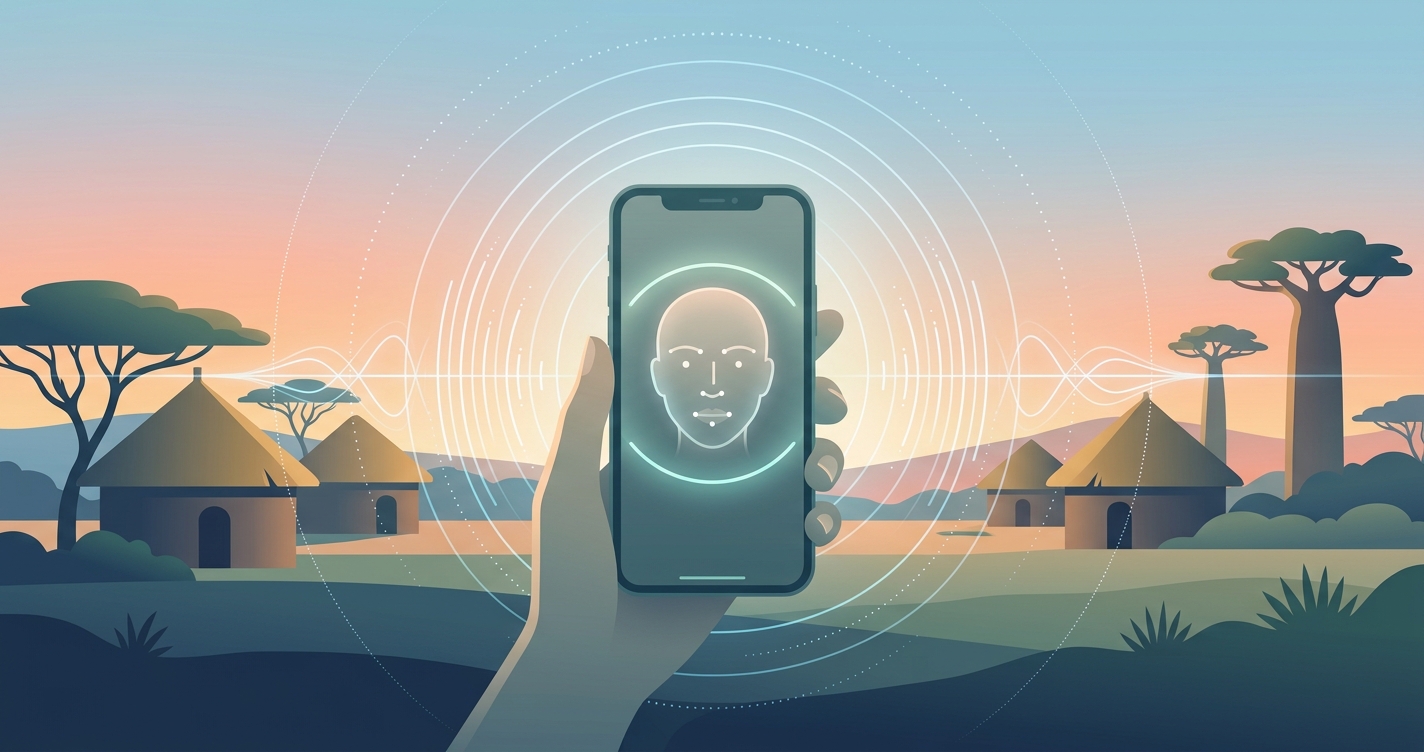
Program managers planning field campaigns across Sub-Saharan Africa keep arriving at the same arithmetic problem. A community health worker carries a fixed set of devices, each one screening for a single thing, each one needing batteries, cuffs, probes, or consumables. The cost and weight of that kit caps how many conditions a single visit can check and how many households the team reaches before nightfall. The question worth asking in 2026 is no longer whether a smartphone can replace any one of those devices. It is how many of them a single camera scan can stand in for. So what can a phone camera screen for, and where does the evidence actually hold up?
"Pneumonia remains the leading infectious cause of death in children under five worldwide, and the RRate respiratory rate app measured breathing roughly six times faster than the manual method, averaging 9.9 seconds per count.", Walter Karlen and colleagues, BC Children's Hospital Research Institute
What can a phone camera screen for in a community setting
The short answer is a cluster of vital signs and visible biomarkers that, taken together, flag the conditions responsible for most preventable deaths in low-resource settings. A smartphone camera does two distinct jobs. The first is remote photoplethysmography, or rPPG, where the camera reads tiny color changes in skin or fingertip tissue caused by each heartbeat. The second is image analysis, where the camera quantifies color and motion in places a clinician would normally inspect by eye, such as the inner eyelid, the white of the eye, or the rise and fall of a child's chest.
Neither job requires a cuff, probe, or disposable. That single fact is what makes multi-disease screening on one device interesting to anyone budgeting a field program. A scan that flags several conditions in under a minute changes the math on contactless vitals for rural healthcare, because the marginal cost of adding another screening target is close to zero once the camera is already running.
Here is how the seven targets compare on what they detect, the camera method involved, and the evidence base behind each.
| Condition flagged | Camera method | Typical scan target | Evidence signal |
|---|---|---|---|
| Anemia | Image analysis of conjunctiva or fingertip | Pallor, low hemoglobin proxy | Conjunctival pallor correlates with hemoglobin in multiple cohorts |
| Pneumonia (fast breathing) | Motion counting / chest video | Respiratory rate vs WHO threshold | RRate counted in ~9.9s; automated counters validated against expert panels |
| Tachycardia / arrhythmia | rPPG (face or fingertip) | Resting heart rate, rhythm | MAPE under 2% vs reference in validation studies |
| Hypertension risk | rPPG waveform analysis | Estimated blood pressure | Active validation; treated as triage, not diagnosis |
| Neonatal jaundice | Image analysis of sclera | Yellowness of eye white | neoSCB: 0.94 sensitivity, 0.73 specificity in Ghana |
| Hypoxemia (low oxygen) | Fingertip light absorption | Blood oxygen proxy | Promising but device-dependent; camera SpO2 still maturing |
| Febrile / acute illness | rPPG plus rate trends | Elevated heart and breathing rate | Strong as a composite triage signal |
The pattern in that table matters more than any single row. No one of these signals is a standalone diagnosis. Together they form a triage screen that sorts a queue of villagers into those who can wait and those who need referral now.
The seven conditions in detail
- Anemia. The inner eyelid and fingertip carry visible cues to low hemoglobin. Camera analysis of conjunctival pallor offers a non-invasive proxy that is especially relevant for pregnant women and young children, where iron deficiency is widespread and bloodwork is rarely available in the field.
- Pneumonia and fast breathing. The World Health Organization defines fast breathing as 50 breaths per minute or more for infants aged 2 to 12 months, and 40 or more for children aged 1 to 5 years. Counting accurately by hand is hard, which is why app-assisted counting matters.
- Fast or irregular heartbeat. rPPG reads pulse from skin color change. Resting heart rate from camera methods has shown strong agreement with reference monitors, making tachycardia and obvious rhythm irregularity practical screening targets.
- Elevated blood pressure risk. Waveform features from rPPG can estimate blood pressure. This sits firmly in the triage column, useful for flagging people who should get a confirmatory cuff reading, not for setting a diagnosis.
- Neonatal jaundice. Yellowing of the sclera tracks rising bilirubin. A camera can quantify that color far more consistently than the naked eye, which is the whole point in homes and clinics without a bilirubinometer.
- Low blood oxygen. Fingertip light absorption can approximate oxygen saturation. This is the least mature of the seven and remains sensitive to device and lighting, but it is an active research frontier.
- Acute febrile illness. No camera reads core temperature directly, but the combination of elevated heart rate, raised breathing rate, and other rPPG-derived signals forms a useful composite flag for a child who is sicker than they look.
Industry Applications
Maternal and newborn programs
Anemia in pregnancy and neonatal jaundice are both leading contributors to maternal and infant harm, and both are visible to a camera. The neoSCB jaundice app, developed by University College London and the University of Ghana, screened over 300 newborns in Ghana and correctly identified 74 of 79 severely jaundiced infants, a performance comparable to a transcutaneous bilirubinometer. Community health workers in that study learned the method in about 30 minutes.
Child health and pneumonia case management
Fast breathing detection slots directly into existing Integrated Management of Childhood Illness workflows. The RRate app, built at the BC Children's Hospital Research Institute, cut respiratory rate counting to roughly 9.9 seconds. For mobile health technology in developing countries, that speed is not a luxury. It is the difference between screening every child in a queue and screening only the loudest cases.
Non-communicable disease surveillance
Hypertension and arrhythmia are climbing across the region as populations age and urbanize. A camera-based heart rate and blood pressure screen lets a community health screening campaign in Africa capture cardiovascular risk in the same visit that checks a child for pneumonia, turning a single-purpose trip into population-level data.
Current research and evidence
The evidence base is uneven across the seven, and honest program design depends on knowing which rows of the table are solid. Prospective validation work on smartphone-based vitals has reported mean absolute percent error under 2 percent for fingertip heart rate and a mean absolute error of roughly 0.78 breaths per minute for camera-based respiratory rate against reference monitoring. A 2023 evaluation of the WellFie rPPG application reported heart rate accuracy above 97 percent and respiratory rate accuracy above 84 percent against certified medical devices in normotensive adults.
Heart rate, heart rate variability, and breathing rate are now treated as well-established rPPG outputs in recent reviews of the field. Blood pressure and blood oxygen from a camera remain under active validation and should be deployed as triage prompts rather than diagnostic readings. Jaundice and anemia screening rest on image analysis with growing field data, the jaundice case strengthened by the Ghana cohort above. The practical takeaway for a program manager is to weight referral thresholds toward the better-validated signals and treat the maturing ones as supporting evidence.
One recurring caution across studies is the influence of lighting, motion, and skin tone on camera readings. Field protocols that standardize how a scan is captured, and that calibrate against local reference devices during rollout, consistently produce more reliable results than ad hoc use.
The future of smartphone multi-disease screening
The direction of travel is consolidation. Instead of seven apps for seven conditions, the next generation of mHealth across Sub-Saharan Africa points toward a single scan that returns a panel of flags with referral guidance attached. Regulatory momentum is following, with contactless respiratory rate measurement now reaching formal clearance milestones and pediatric validation trials enrolling hundreds of children to compare camera-derived heart and breathing rates against standard monitoring.
For field programs the implication is structural. When the screening tool is software on a phone the workforce already carries, adding a condition to the panel becomes a configuration decision rather than a procurement cycle. That shifts the bottleneck away from hardware logistics and toward the things that actually limit impact: training, referral pathways, and follow-up. A camera that screens for seven conditions is only useful if the eighth step, getting a flagged patient to care, is funded and staffed.
Frequently asked questions
What can a phone camera screen for without any extra equipment?
Using rPPG and image analysis, a smartphone camera can flag heart rate and rhythm irregularities, respiratory rate and fast breathing, anemia through pallor, neonatal jaundice through scleral yellowness, blood pressure risk, blood oxygen proxies, and composite signals for acute febrile illness. Accuracy varies by condition, with heart and breathing rate the most validated.
Are camera-based screening results accurate enough for field use?
For heart rate and respiratory rate, validation studies report strong agreement with reference devices, with heart rate error often under 2 percent. Blood pressure and oxygen estimates are best used as triage prompts. The tool sorts a queue into urgent and non-urgent cases rather than delivering final diagnoses.
How is this useful for community health workers in rural Africa?
A single device the worker already owns replaces a bag of single-purpose instruments, needs no consumables, and returns results in seconds. Studies in Ghana showed workers learning a camera screening method in about 30 minutes, which keeps training costs low for large field programs.
Can a phone camera diagnose disease on its own?
No. These methods screen and triage. They identify who needs confirmatory testing or referral. Diagnosis still requires clinical assessment, and programs should pair camera screening with clear referral pathways and follow-up.
Circadify is building toward exactly this kind of multi-disease, camera-only screening for field programs in Sub-Saharan Africa, with deployment experience in Uganda and a focus on contactless vitals that need no added equipment. Global health NGOs, program managers, and health ministries evaluating multi-disease screening for their campaigns can review partnership options and field data in the global health section at circadify.com/blog.