
Best Smartphones for Health Screening in Remote Clinics 2026
A 2026 procurement guide ranking affordable, durable phones that run camera-based vital checks reliably in low-resource Sub-Saharan African clinics.
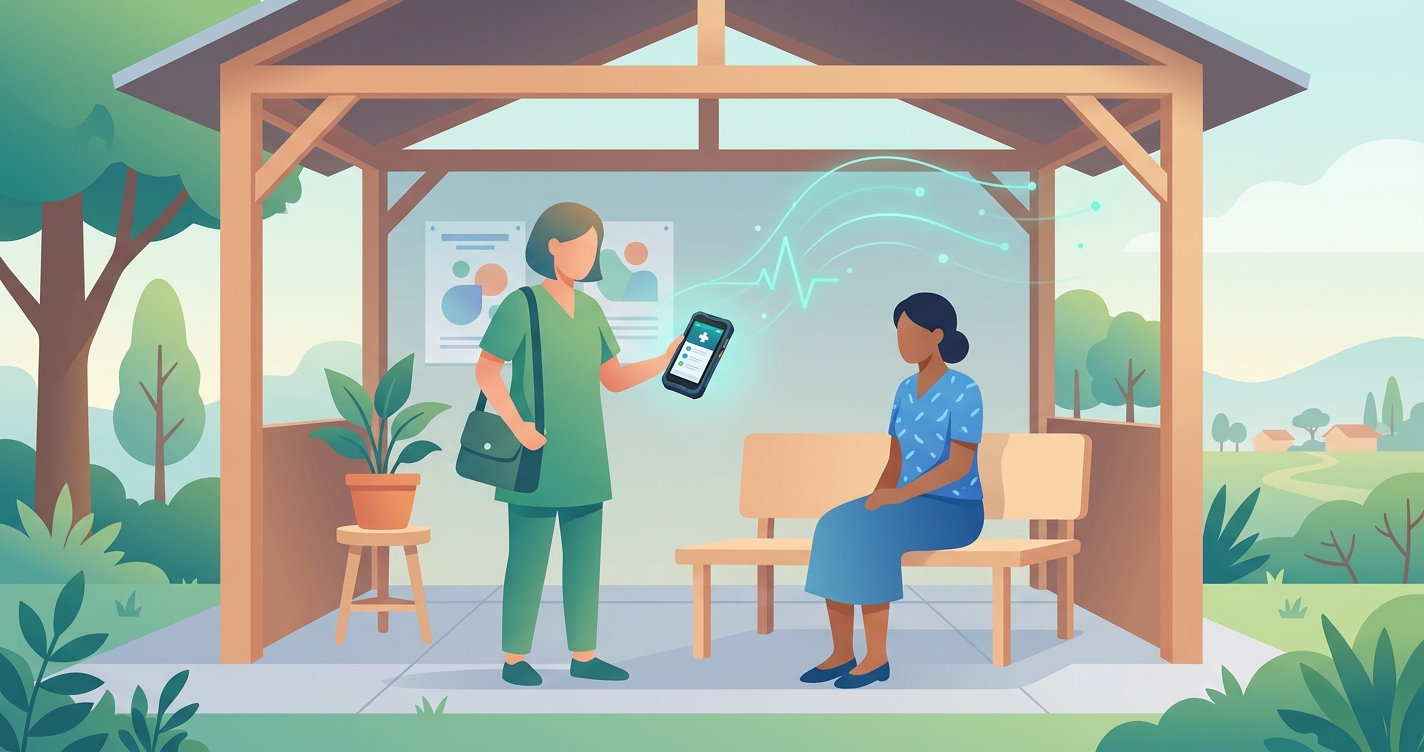
Procurement teams scoping a population-screening program rarely fail because they pick the wrong app. They fail because they pick the wrong hardware. A device that overheats in a 35C clinic, throttles its camera frame rate to save battery, or ships with a sensor too noisy to extract a clean pulse signal will quietly degrade every downstream measurement. Choosing the best smartphones for health screening is therefore not a consumer exercise in megapixels and screen size. It is an engineering and logistics decision that determines whether a contactless vitals workflow holds up across thousands of patients in settings with intermittent power, dust, heat, and no service technician within a day's drive.
A 2024 review in MDPI Electronics by researchers surveying remote photoplethysmography found that smartphone-camera heart rate estimation can approach reference-grade accuracy under controlled conditions, while respiratory rate and motion-robust performance remain the binding constraints in field deployment.
What makes the best smartphones for health screening
Camera-based screening works by remote photoplethysmography (rPPG): the front camera captures minute color changes in facial skin caused by the cardiac pulse wave, and an algorithm reconstructs heart rate, respiratory rate, and related signals. The quality of that reconstruction depends far more on a handful of unglamorous hardware traits than on flagship specifications. For mobile health technology in developing countries, the device has to do one job exceptionally well and survive years of abuse doing it.
The traits that actually move screening reliability:
- Camera frame-rate stability. A sensor that holds a consistent 30 frames per second under variable light produces cleaner signals than a higher-resolution sensor that drops frames. Consistency beats megapixels.
- Sustained thermal performance. Phones throttle CPU and camera when hot. A device that cannot run a 30 to 60 second capture in a non-air-conditioned room without throttling will introduce measurement variance.
- Battery capacity and charge tolerance. Clinics running off solar or generator power need large batteries (5,000 mAh or more) and chargers that tolerate dirty, fluctuating voltage.
- Ingress protection and drop rating. IP68 dust and water resistance plus MIL-STD-810H drop certification are no longer premium features. Several rugged models under USD 200 now carry them.
- Front-facing sensor quality and low-light capability. Screening often happens indoors with poor lighting; adequate dynamic range matters more than resolution.
- Repairability and supply continuity. A model that disappears from distribution in eight months breaks fleet standardization. Longevity of the SKU is a procurement criterion in its own right.
Device tiers for procurement
The market sorts cleanly into three tiers. The right choice depends on deployment density, environment severity, and whether the device is shared across a clinic or assigned to individual community health workers.
| Tier | Typical price (USD) | Durability | Camera consistency | Battery | Best fit |
|---|---|---|---|---|---|
| Budget consumer Android | 90 to 150 | Low (needs case) | Variable, frame drops common | 4,000 to 5,000 mAh | High-density urban screening with reliable power |
| Mid-range consumer Android | 180 to 320 | Moderate | Stable 30 fps, good low light | 5,000 mAh | Mixed clinic and outreach use |
| Rugged Android (IP68 / MIL-STD-810H) | 150 to 280 | High | Stable, often slower sensor | 6,000 to 10,000 mAh | Remote outreach, dust, no power, field mobility |
Notably, the rugged tier has compressed in price. Devices that once cost USD 500 now sit in the same band as mid-range consumer phones, which changes the calculus for any program operating outside reliable infrastructure.
Industry applications across low-resource settings
The hardware choice cannot be separated from the deployment model. The same screening software performs differently depending on who holds the phone and where.
Fixed clinic screening stations
In a clinic with mains or solar power, a mid-range consumer device mounted on a stand is often the most cost-effective option. The device stays stationary, lighting can be partly controlled, and charging is continuous. Here the priority is camera consistency and screen visibility, not ruggedness. Low-cost phones for community health programs make economic sense at this tier because the failure modes (drops, water, dust) are limited.
Mobile community health worker outreach
When a community health worker carries the device door to door across a catchment area, the equation inverts. Drops, rain, dust, and days between charges dominate the risk profile. A rugged device with a 6,000 to 10,000 mAh battery and IP68 rating becomes the rational purchase even at a small price premium, because field replacement is the largest hidden cost in any program. Contactless vitals in rural healthcare depend on the device surviving the journey to the patient, not just the measurement itself.
Campaign and surge deployments
Immunization drives, refugee intake, and seasonal screening surges need large fleets deployed fast and recovered intact. Standardization on a single SKU matters more than per-unit optimization, because training, spare parts, and software configuration all scale better on one model. SKU continuity from the supplier is the deciding factor for mHealth in Sub-Saharan Africa at campaign scale.
Current research and evidence
The evidence base for camera-based vitals has matured considerably. A 2024 review by Chen and colleagues in MDPI Electronics on rPPG for heart rate and respiratory rate monitoring concluded that heart rate estimation can reach accuracy comparable to contact devices under controlled conditions, while motion artifacts, ambient lighting, and skin-tone variation remain the principal sources of error. This is the central finding procurement teams should internalize: the limiting factor is rarely the algorithm in isolation, it is the interaction between algorithm, camera hardware, and capture conditions.
A separate 2024 review in Frontiers in Cardiovascular Medicine on remote photoplethysmography reinforced that respiratory rate extraction is more fragile than heart rate, because breathing signals are lower frequency and more easily swamped by movement. For field programs, this argues for hardware that holds frame rate steady and for capture protocols that minimize patient and operator motion.
The skin-tone point deserves specific attention for African deployments. Several reviews note that historical rPPG datasets skewed toward lighter skin, which can degrade signal extraction for darker pigmentation if not corrected in the model. Programs evaluating any screening system should ask vendors directly about validation across the Fitzpatrick scale and request population-representative field data rather than laboratory benchmarks alone. The NIH-indexed literature on smartphone sensors for health monitoring (PMC, 2024) similarly frames camera-based screening as promising for triage and frequent low-cost checks rather than as a replacement for diagnostic-grade instruments.
The practical takeaway: the device and the model must be evaluated together, on the population that will actually be screened, in the conditions where screening will occur.
The future of smartphone health screening
Three trajectories will shape procurement over the next few years. First, hardware convergence: rugged certification, large batteries, and stable cameras are migrating into ever-cheaper devices, which steadily lowers the total cost of a field-ready screening unit. The rugged market's continued growth, documented across 2025 to 2026 market analyses, is pushing capable IP68 devices firmly under USD 250.
Second, on-device processing. As mid-range chipsets gain capacity, more signal processing can run locally rather than in the cloud, which matters enormously where connectivity is intermittent. Offline-capable screening removes the dependency on a network that rural clinics often lack.
Third, validation and standards. Expect funders and ministries to demand population-specific accuracy evidence as a procurement gate, not an afterthought. The programs that document their own field accuracy on representative populations will be the ones that scale, secure repeat funding, and inform national policy.
Frequently asked questions
Do we need a flagship phone for reliable camera-based vitals?
No. Flagship specifications such as very high resolution and multiple lenses add little to rPPG quality. A mid-range or rugged device with a stable 30 fps front camera, adequate low-light performance, and good thermal management typically outperforms a more expensive phone that throttles or drops frames under heat.
Is a rugged phone worth the extra cost over a budget consumer model?
For mobile outreach in dust, heat, and without reliable power, yes. The largest hidden cost in field programs is device replacement and downtime. A rugged IP68 device with a large battery often has a lower total cost of ownership than a cheaper phone that fails within a year, even though its sticker price is higher.
Does skin tone affect camera-based screening accuracy in African populations?
It can, if the underlying model was trained on non-representative data. Heart rate extraction from darker skin is achievable but requires algorithms validated across the full pigmentation range. Procurement teams should request field accuracy data collected on the populations they serve rather than relying on laboratory benchmarks.
How many devices should a single clinic standardize on?
Standardizing on one model per program simplifies training, spare parts, and software configuration, and it lowers per-unit support cost. Confirm the supplier can guarantee SKU continuity for the program duration, because mid-deployment model changes fragment a fleet and raise costs.
Circadify is working directly on this gap, pairing smartphone-based vital signs screening with field deployment in Uganda so that ministries and NGOs can evaluate hardware, software, and population-specific accuracy as one system rather than buying them piecemeal. Procurement and program teams evaluating a deployment-ready setup, or weighing a partnership backed by real field data, can review the approach and the global health work at circadify.com/blog.