
Can a phone really replace a stethoscope in a rural African clinic?
Exploring the data on whether a smartphone can replace a stethoscope in rural African clinics. Analysis of AI, digital stethoscopes, and their impact on community health.
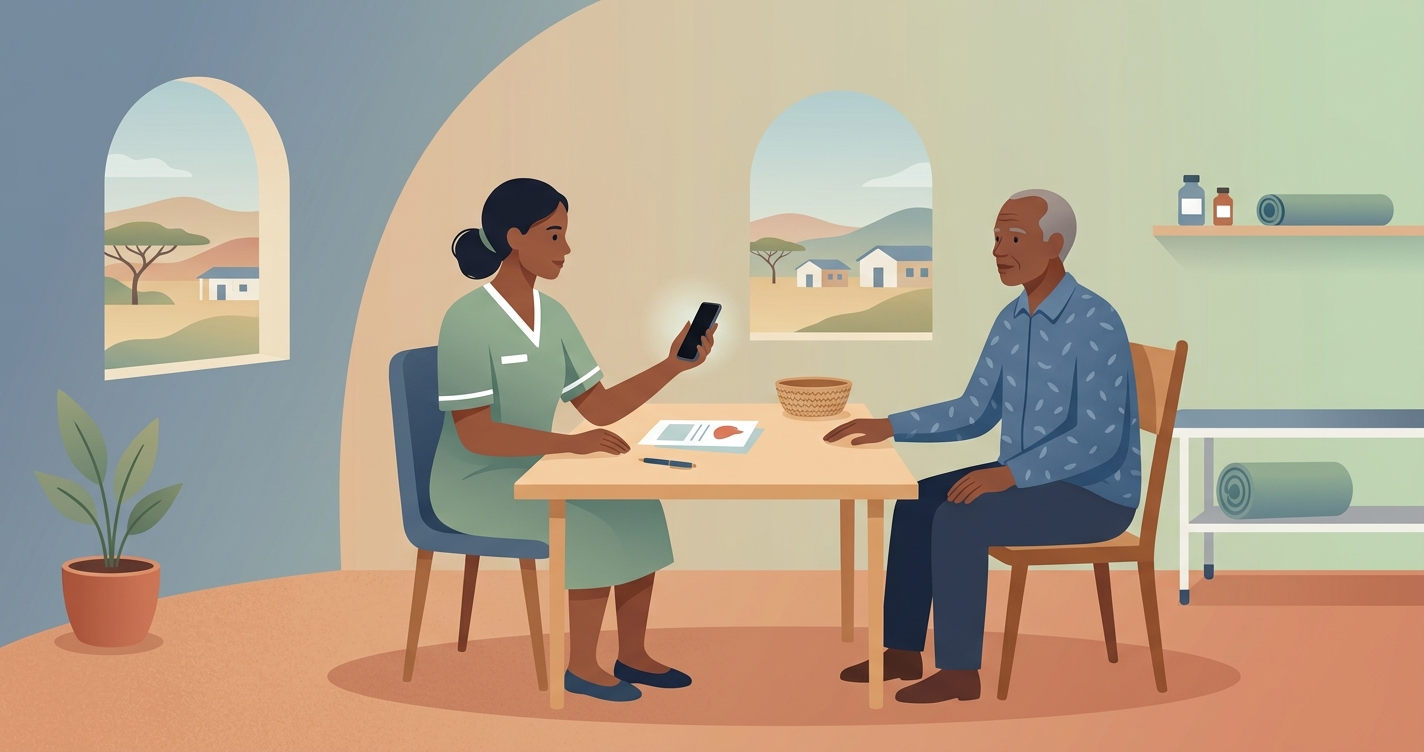
The stethoscope is an iconic symbol of medicine, a simple yet powerful tool for listening to the internal sounds of the human body. For over 200 years, it has been a frontline diagnostic instrument for health workers globally. In many rural African clinics, however, access to trained clinicians who can interpret these sounds accurately is severely limited. This diagnostic gap has created a significant barrier to tackling major health challenges like pneumonia and heart disease. The proliferation of mobile technology across the continent now raises a critical question: can a device already in millions of hands begin to assume the role of this fundamental medical tool?
"Sub-Saharan Africa bears 24% of the global disease burden but has access to only 3% of the world's health workers and less than 1% of global health expenditure."
- World Health Organization, 2021
The shifting diagnostic landscape in rural africa
The idea that a smartphone replace stethoscope Africa deployment is not about a one-for-one substitution, but about augmenting the capabilities of frontline health workers. The core challenge with the traditional stethoscope is not the device itself, but the extensive training required to use it effectively. A clinician needs years of experience to distinguish the subtle sounds of a wheeze from a crackle, or a harmless heart murmur from a sign of valvular disease. In many rural settings, community health workers (CHWs) with limited formal training are the primary source of care. They need tools that provide clear, actionable information without requiring a decade of medical school. This is where smartphone-based solutions, often paired with artificial intelligence (AI), are creating a new paradigm. These systems use a smartphone's processing power and microphone, sometimes connected to a digital stethoscope attachment, to record, analyze, and interpret physiological sounds.
Traditional stethoscope vs. smartphone-based solutions
| Feature | Traditional Acoustic Stethoscope | Smartphone-Based Solutions (with Digital Stethoscope) |
|---|---|---|
| Expertise Required | High level of clinical training for accurate interpretation. | Minimal training needed for data capture; AI handles interpretation. |
| Objectivity | Highly subjective; depends on listener's skill and hearing. | Objective, standardized analysis based on algorithms. |
| Data Capture | No recording; transient sounds are lost. | Audio can be recorded, stored, and shared for second opinions. |
| Noise Cancellation | Poor; ambient noise in a busy clinic is a major issue. | Advanced algorithms can filter out background noise. |
| Upfront Cost | Low to moderate ($20 - $200). | Moderate; requires a basic smartphone and digital attachment. |
| Decision Support | None; relies entirely on the clinician's judgment. | Provides real-time analysis and classification of sounds. |
Industry Applications
The application of smartphone-based auscultation extends across several high-burden diseases in Sub-Saharan Africa.
Childhood Pneumonia
Pneumonia remains the single largest infectious cause of death in children worldwide. Diagnosis often relies on identifying signs like rapid breathing and chest retractions, with auscultation playing a key role. However, distinguishing the sound of pneumonia from other respiratory conditions is difficult.
- AI-Powered Analysis: Researchers are training AI algorithms on vast libraries of recorded lung sounds to identify patterns indicative of pneumonia. A study by Johns Hopkins University engineers, involving over 1,500 patients in Malawi and South Africa, has focused on developing a smart digital stethoscope that can function effectively in noisy, real-world environments.
- Task-Shifting: By embedding this diagnostic intelligence into a smartphone app, a CHW can record a child's breathing and receive a clear recommendation, helping to determine which cases are severe and require referral to a hospital. This approach is being tested in countries like Senegal and Tanzania.
Cardiovascular Screening
Undiagnosed heart disease is a growing problem in Africa. Rheumatic heart disease, for instance, requires early detection to prevent severe complications.
- Heart Failure Detection: A study in Ghana, known as DAMSUN-HF, demonstrated that an AI-enabled digital stethoscope could effectively detect heart failure. The technology, developed by Eko Health, allows for specialist-level screening to be conducted by non-specialist health workers.
- Murmur Analysis: Researchers from the University of Cape Town and Oxford University have developed a mobile-phone connected stethoscope specifically to screen for heart disease, validating the system with a study of 150 patients. The system helps identify abnormal murmurs that would be missed by less experienced health workers.
Current research and evidence
The evidence base for using a smartphone replace stethoscope Africa strategy is growing rapidly. A pivotal finding comes from the Pneumonia Etiology Research for Child Health (PERCH) project, which spanned six countries in Africa and Asia. The study found moderate agreement between lung sounds classified by traditional stethoscope and those recorded digitally and analyzed remotely. This suggests that digital recording is a viable method for capturing diagnostic-quality data.
A 2022 comparative feasibility study published in PubMed directly compared a smartphone's built-in microphone to a digital stethoscope for lung auscultation. The findings indicated that smartphone-based recording is a viable technology for capturing respiratory sounds and identifying adventitious sounds like wheezes and crackles in children. This points to a future where specialized attachments may not even be necessary for certain screening applications. In Uganda, a team developed a "biomedical smart jacket" that uses embedded sensors to monitor vital signs and lung sounds, offering an even more integrated approach for faster pneumonia diagnosis in children.
The future of smartphone-based auscultation
The trajectory of this technology is not about replacing doctors but about empowering the health workers who are already on the ground. As AI models become more accurate and smartphone hardware more powerful, the diagnostic capabilities available in a rural clinic will increasingly mirror those found in a central hospital. The ability to perform longitudinal analysis, tracking a patient's heart or lung sounds over time, could unlock new possibilities for managing chronic conditions remotely. For health ministries and NGOs, this technology offers a scalable way to improve the quality of primary care, optimize antibiotic use by reducing misdiagnosis, and ensure that patients who need urgent care are identified sooner.
Frequently asked questions
Q: Does a smartphone microphone work as well as a real stethoscope? A: While a high-quality digital stethoscope attachment provides the best audio quality, recent studies show that even a smartphone's built-in microphone can be effective for basic respiratory sound analysis, especially when enhanced with AI noise cancellation. For many screening use cases, it is a viable alternative where traditional equipment and expertise are unavailable.
Q: Is this technology accurate enough to diagnose pneumonia? A: AI-powered digital stethoscopes have shown high accuracy in clinical studies for identifying pneumonia and heart failure. The technology acts as a decision support tool, helping a health worker determine if a patient needs further investigation. It augments, rather than replaces, clinical judgment.
Q: What are the biggest challenges to deploying this in Africa? A: The challenges are less about the technology and more about the operational realities. They include ensuring device compatibility, providing robust training and technical support for health workers, managing data privacy and security, and integrating the technology into existing national health information systems.
The work of making healthcare accessible in the most remote parts of the world involves rethinking fundamental tools. The stethoscope is a powerful instrument, but its power is tied to the expert ear of a clinician. By using the ubiquity of mobile phones, a new generation of tools is emerging that puts that expertise into the hands of community health workers everywhere. Circadify is actively working in this space, developing and deploying smartphone-based health screening technologies to support global health partners. To learn more about our field data and partnership opportunities, visit Circadify's global health blog at circadify.com/blog.