
Can a phone tell if my child is too sick to wait until morning?
A review of how smartphone-based screening can help community health workers in rural clinics triage sick children and determine when immediate care is necessary.
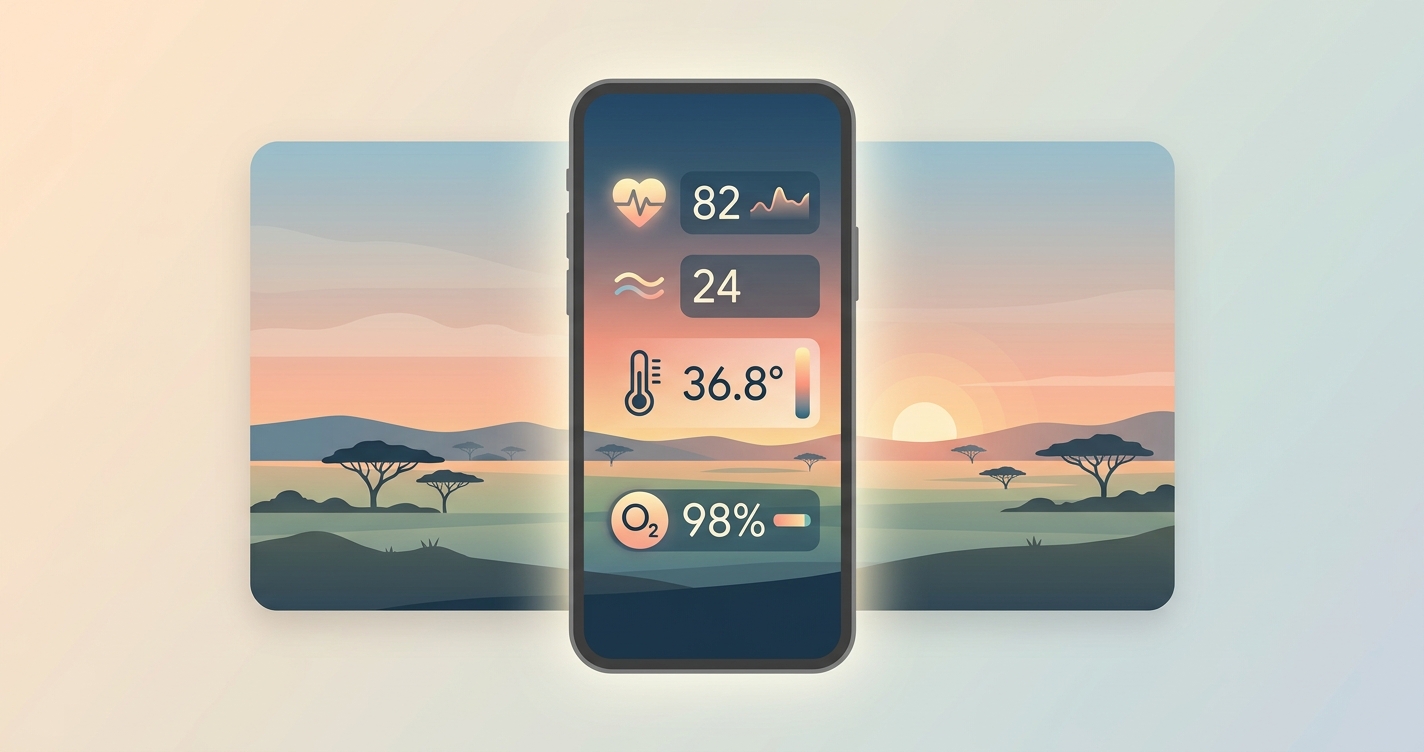
For a parent or a community health worker in a remote setting, a child's fever in the middle of the night presents a difficult decision. The nearest clinic may be hours away, a journey that is costly, difficult, and potentially dangerous. The central question is one of risk: is this a simple illness that will resolve by morning, or is it the start of something that requires immediate, urgent intervention? Delaying care is a significant factor in child mortality in Sub-Saharan Africa, where children in rural areas face a 1.5 times higher risk of death before age five than their urban counterparts. New models of assessment are required to bridge this gap, equipping frontline health workers with tools to make better-informed decisions at the point of first contact.
"Globally, 4.9 million children died before their fifth birthday in 2022. Sub-Saharan Africa shouldered more than half of these losses, with the region accounting for 57% of the world's under-five deaths but only 30% of its live births." - World Health Organization, 2024.
Triage beyond observation: how to screen a sick child with a smartphone in a rural clinic
The traditional method for assessing a sick child in a low-resource setting relies on parental observation and the training of a community health worker (CHW). This often involves checking for fever, observing breathing difficulty, and asking about symptoms like diarrhea or lethargy. While invaluable, this approach is subjective and can miss subtle signs of deterioration. The challenge is to introduce objective data without requiring expensive, bulky, or power-hungry medical equipment. This is the context where the ability to screen a sick child with a smartphone in a rural clinic becomes a transformational intervention. By using a smartphone camera to perform a contactless scan, a trained CHW can capture and trend fundamental vital signs like heart rate and respiratory rate. This data provides an objective layer of information, helping to quantify the severity of an illness and escalate care for children who need it most, while providing reassurance for those who can be safely monitored at home or at the local health post.
| Feature | Traditional Assessment (Visual/Manual) | Smartphone-Enabled Assessment (Contactless) |
|---|---|---|
| Method | Visual inspection, touching for fever, counting breaths | Camera-based rPPG scan, on-screen guidance |
| Data Points | Subjective symptoms (feverish, breathing fast) | Quantitative vitals (Heart Rate, Respiratory Rate) |
| Objectivity | Low to moderate; dependent on experience | High; standardized measurement |
| Equipment | None | Standard smartphone |
| Skill Level | Relies on extensive training and experience | Minimal training required for scan acquisition |
| Data Record | Paper notes, if any | Automatic digital record, can be trended and shared |
Industry Applications
The application of smartphone-based screening extends beyond the individual child. For program managers and health ministries, it represents a new paradigm for population-level health monitoring.
- Objective Triage at Scale: It allows CHWs to apply a consistent, data-driven standard of assessment across entire communities, identifying high-risk children more reliably.
- Early Warning Systems: Aggregated, anonymized data from these screenings can provide real-time insights into disease outbreaks or patterns of distress in a specific geographic area.
- Supporting Existing Programs: This technology can be integrated into existing health initiatives, such as post-natal home visits or national immunization campaigns, adding a vital signs screening component with minimal additional overhead.
Enhancing community health worker capacity
CHWs are the backbone of rural healthcare in much of Sub-Saharan Africa. Smartphone screening tools do not replace their expertise; they augment it. By handling the mechanical task of measuring vitals, the technology frees the CHW to focus on the human aspects of care: counseling the parent, observing the child's overall condition, and providing health education.
Informing health ministry resource allocation
For a ministry of health, knowing where the highest-acuity cases are emerging is critical for deploying limited resources. A district showing a spike in children with elevated respiratory rates could signal a localized outbreak of pneumonia, allowing for a targeted deployment of medical supplies and expert personnel before the situation becomes a crisis.
Current research and evidence
The technology enabling these scans, typically remote photoplethysmography (rPPG), is an active area of research. Studies are focused on validating its accuracy and operational feasibility, particularly in challenging field conditions and with pediatric populations.
A 2023 study on the use of rPPG in pediatric care highlighted the technology's current state. Researchers found a strong correlation for heart rate in children over 12 years old. However, they also noted clinically significant discrepancies in heart rate for children under 10 and weak correlations for respiratory rate and oxygen saturation across all pediatric age groups studied. The authors, associated with the ongoing VISION-Junior study, concluded that further refinement of the algorithms is necessary, especially for younger children. This research underscores a critical point: the technology is a powerful screening and triage tool, not a diagnostic one. It is designed to flag potential danger and indicate the need for further clinical assessment, not to replace it.
The future of pediatric screening
The trajectory for smartphone-based pediatric screening is toward greater accuracy and integration. As algorithms are trained on more diverse datasets of children in real-world settings, their precision, particularly for respiratory rate, will improve. The future will likely see this technology integrated with other data sources, such as electronic health records and local environmental data, to create more powerful predictive models for child health. The ultimate goal is to create a system where a simple, fast, contactless scan can give a health worker the data they need to save a life, turning a standard smartphone into a powerful tool for public health.
Frequently asked questions
Q: How accurate is a smartphone scan for a child's vital signs? A: Current research shows good accuracy for heart rate in older children. However, accuracy for respiratory rate and for heart rate in younger children is still an area of active development. The technology is best used as a screening tool to identify children who need further clinical assessment, not as a replacement for diagnostic medical equipment.
Q: Can this technology tell me if my child has malaria or pneumonia? A: No, the technology does not diagnose specific diseases. It measures vital signs like heart rate and respiratory rate. An elevated respiratory rate can be a key early indicator of pneumonia, prompting a health worker to refer the child for a definitive diagnosis and treatment at a clinic.
Q: What are the biggest challenges to using this in a rural clinic? A: Beyond algorithmic accuracy, key challenges include ensuring CHWs have consistent access to functioning smartphones, reliable power for charging, and robust training programs. Integrating the data into the national health information system is another critical step for long-term success.
The deployment of smartphone-based vital signs screening is a crucial step toward reducing preventable child deaths in low-resource settings. By equipping community health workers with objective data, we can move from a reactive to a proactive model of care. Circadify is actively addressing this space by developing and deploying these technologies in partnership with local health systems. Program managers and ministry officials can explore further field data and implementation strategies in our global health section at circadify.com/blog.