
Cuff vs Camera: Measuring Blood Pressure in Rural Clinics
Comparing traditional cuffs against camera-based rPPG for contactless blood pressure screening across rural Sub-Saharan Africa's community health clinics.
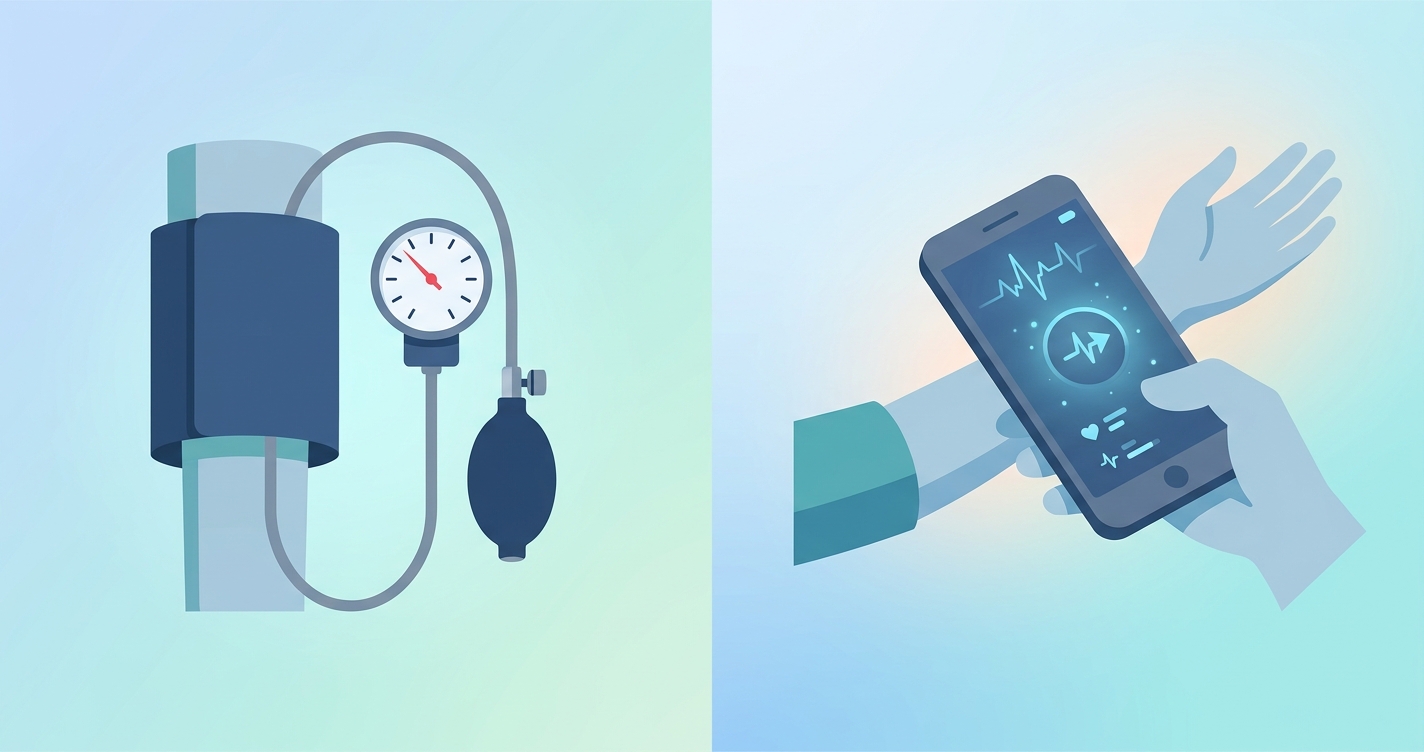
Procurement teams scoping hypertension programs across rural Sub-Saharan Africa inevitably hit a logistical bottleneck: hardware. The traditional approach to community health screening assumes a linear supply chain where physical diagnostic devices are purchased, distributed, and maintained indefinitely. In practice, the delivery of basic tools to remote clinics is fraught with friction. Evaluating the transition from standard cuffs to contactless blood pressure screening Africa requires analyzing not just the initial capital expenditure, but the long-term realities of field durability, maintenance protocols, and speed of deployment. As the burden of non-communicable diseases rises across the continent, relying on imported hardware creates a fragile foundation for public health programs.
"The pooled prevalence of hypertension among adults in Sub-Saharan Africa is estimated at 30.5 percent, yet only 27 percent of those diagnosed receive treatment, leaving millions at risk for severe cardiovascular events." , Atibila et al., European Journal of Preventive Cardiology, 2021
The logistical burden of cuff-based measurement
The standard inflatable blood pressure cuff, known clinically as a sphygmomanometer, has been the default tool for hypertension screening for decades. However, deploying these physical devices across decentralized rural clinics introduces immediate friction. A standard digital blood pressure monitor distributed in countries like Ghana or Kenya ranges from 20 to 140 USD per unit. In a cost analysis for a trauma registry in Malawi, researchers from the University of North Carolina estimated the replacement cost of a single clinic-grade blood pressure cuff at 82 USD (Gallaher et al., 2020).
Transporting physical medical supplies requires navigating complex logistics networks. A device must be procured by a global donor, shipped to an African port, cleared through customs, transported to a central medical warehouse, and finally driven over unpaved roads to a rural clinic. At any point in this chain, delays can stretch for months. Once the device arrives, it immediately begins a countdown to inevitable failure.
The hidden cost of these devices lies in their fragility. Cuffs require specific sizing to be accurate. Using an adult cuff on an obese patient or a child produces highly skewed readings, forcing clinics to stock multiple sizes. Furthermore, the physical components - rubber bladders, valves, and tubing - degrade rapidly in high-heat, high-humidity environments. When a valve sticks or a tube cracks in a remote health post, the device is rarely repaired.
A report in Medical Devices: Evidence and Research found that up to 95 percent of medical equipment in developing regions is inoperable, largely due to a lack of spare parts and absent preventive maintenance. Digital cuffs also rely on continuous power, often requiring AA batteries that drain clinic budgets, or AC adapters that are useless during frequent grid blackouts.
Contactless blood pressure screening africa: a new paradigm
Software-based measurement offers an alternative that bypasses traditional hardware procurement entirely. Using remote photoplethysmography (rPPG), standard smartphone cameras can extract vital signs by capturing subtle micro-color changes in the human face. As the heart beats, the volume of blood in the microvascular tissue of the face changes, altering how light is absorbed and reflected by the skin.
This mechanism enables contactless blood pressure screening Africa-wide without distributing a single new piece of physical hardware. Sub-Saharan Africa has experienced an explosion in mobile technology adoption. Program managers are increasingly using this existing infrastructure. Because the hardware is multi-purpose - a phone is used for messaging, mapping, reporting, and now diagnostics - it is treated with higher care and is less likely to be abandoned than a single-use medical device.
Since community health workers already carry smartphones for data collection, patient registration, and digital reporting, health ministries can deploy vital sign screening capacity instantly via software updates. This model shifts the financial burden from repeated hardware purchasing to a more scalable software infrastructure.
Comparing measurement modalities
| Feature | Traditional Cuff (Digital) | Camera-Based rPPG |
|---|---|---|
| Initial Cost | 30 to 140 USD per unit | Existing smartphone infrastructure |
| Durability | Vulnerable to leaks and cracked tubes | No physical degradation |
| Maintenance | Requires spare parts and manual calibration | Automated over-the-air software updates |
| Scalability | Limited by physical supply chains | Instant via application deployment |
| Power Dependency | Replaceable batteries or AC adapter | Standard smartphone battery |
The transition to software-based screening resolves several operational bottlenecks for health ministries:
- Elimination of recurring budgets for replacement cuffs, rubber tubes, and single-use batteries.
- Standardization of measurement protocols, as software algorithms remove the variability of manual inflation and human auscultation errors.
- Immediate digitization of patient records, linking measurements directly to national health information systems without manual transcription delays.
- Reduction in cross-contamination risks, as no physical equipment touches the patient during the diagnostic process.
Industry Applications
Remote community screening
In rural settings where populations are highly dispersed, community health workers often travel on foot or by bicycle to reach patients. Carrying a comprehensive, heavy diagnostic kit is physically restrictive. Camera-based tools allow workers to screen for hypertension using the exact same device they use to log patient data. This consolidation of equipment increases the number of households a single health worker can visit in a day, directly expanding screening coverage.
Maternal health and preeclampsia
Hypertension during pregnancy remains a leading cause of maternal mortality across Sub-Saharan Africa. Routine blood pressure monitoring is critical for detecting preeclampsia before it becomes fatal for the mother and child. Software-based screening allows for rapid, accurate assessments during routine antenatal home visits. This ensures that high-risk pregnancies are identified early, even when the mother cannot afford transport to a centralized district hospital.
Outbreak management and mobile clinics
During infectious disease outbreaks, limiting physical contact between healthcare workers and symptomatic patients is a fundamental safety protocol. Contactless measurement allows for basic triage and vital sign monitoring from a safe distance. This capability preserves scarce personal protective equipment and maintains clinical safety without sacrificing patient observation data.
Current research and evidence
The shift toward rPPG technology is supported by active clinical validation and institutional recognition. The World Health Organization has explicitly identified smartphone-based blood pressure applications as promising digital innovations for global health monitoring. Multi-country validation studies are currently underway across diverse clinical settings, including comprehensive trials in Tanzania, South Africa, and Bangladesh, designed to test the accuracy of software applications against arterial lines and clinical-grade cuffs.
Researchers from leading global health institutions are heavily invested in validating these tools. In an exploratory study published on arXiv in 2023, researchers demonstrated the feasibility of estimating blood pressure with a camera among ambulatory patients with cardiovascular disease.
A primary focus of current scientific research is ensuring that rPPG algorithms operate accurately across all human skin tones and in highly variable lighting conditions. A major challenge in optical health monitoring has historically been the melanin optical absorption variable, which can affect signal quality. Recent development studies emphasize that digital health tools must incorporate immense data diversity during the algorithm training phase. By training models on diverse datasets, researchers are closing the performance gap, proving that camera-based blood pressure estimation can be reliable across global populations.
The future of blood pressure screening
The structural challenges of primary healthcare in low-resource environments are rarely solved by simply importing more physical equipment. The future of non-communicable disease management relies entirely on utilizing existing digital infrastructure to perform complex clinical tasks. As rPPG algorithms achieve and maintain parity with clinical-grade cuffs, the concept of a medical device will increasingly refer to software rather than physical hardware.
The shift to software-as-a-medical-device (SaMD) alters the procurement model. Software does not rust, degrade, or require physical shipping. It is updated securely over the air when the device reaches a Wi-Fi zone, ensuring that every clinic, regardless of its isolation, runs the exact same diagnostic standard. This digital equity is essential for achieving universal health coverage.
This technological shift will enable health ministries and donor organizations to reallocate constrained budgets. Instead of spending capital on replacing broken rubber tubes and shipping AA batteries to remote outposts, funds can be directed toward patient treatment, medication supply chains, and community health worker compensation. The transition from cuff to camera represents a fundamental realignment of how global health programs build sustainable diagnostic capacity.
Frequently asked questions
What is remote photoplethysmography?
Remote photoplethysmography (rPPG) is a non-invasive optical method that detects cardiovascular dynamics by analyzing ambient light reflected from the skin. It allows standard smartphone cameras to measure vital signs like heart rate and blood pressure without requiring physical contact with the patient.
How do health workers use camera-based screening?
Health workers use a standard smartphone application to capture a brief, localized video of a patient's face. The software processes the video entirely on the device to extract pulse signals and calculate blood pressure, requiring no external physical attachments.
Does contactless screening require internet access?
No. Designed specifically for rural and remote environments, high-quality camera-based screening applications process all data locally on the smartphone processor. This allows health workers to conduct measurements and save data in areas with zero cellular or internet connectivity.
Conclusion
For health ministries and global non-governmental organizations, building sustainable screening programs requires decoupling diagnostic capacity from fragile physical supply chains. Relying on imported hardware that breaks down in the field will not solve the rising hypertension crisis. Circadify is addressing this space by developing equipment-free, camera-based screening software designed specifically for community health workers operating in low-resource settings. By turning the phones already in the field into clinical tools, programs can scale instantly without waiting for physical shipments. To view our latest partnership outcomes, clinical protocols, and field data on vital signs screening, visit circadify.com/blog.