Data Privacy in Mobile Health Screening: A Ministry Guide
Learn how smartphone-based health screening protects patient data and meets privacy rules, helping African ministries scale secure digital health rollouts.
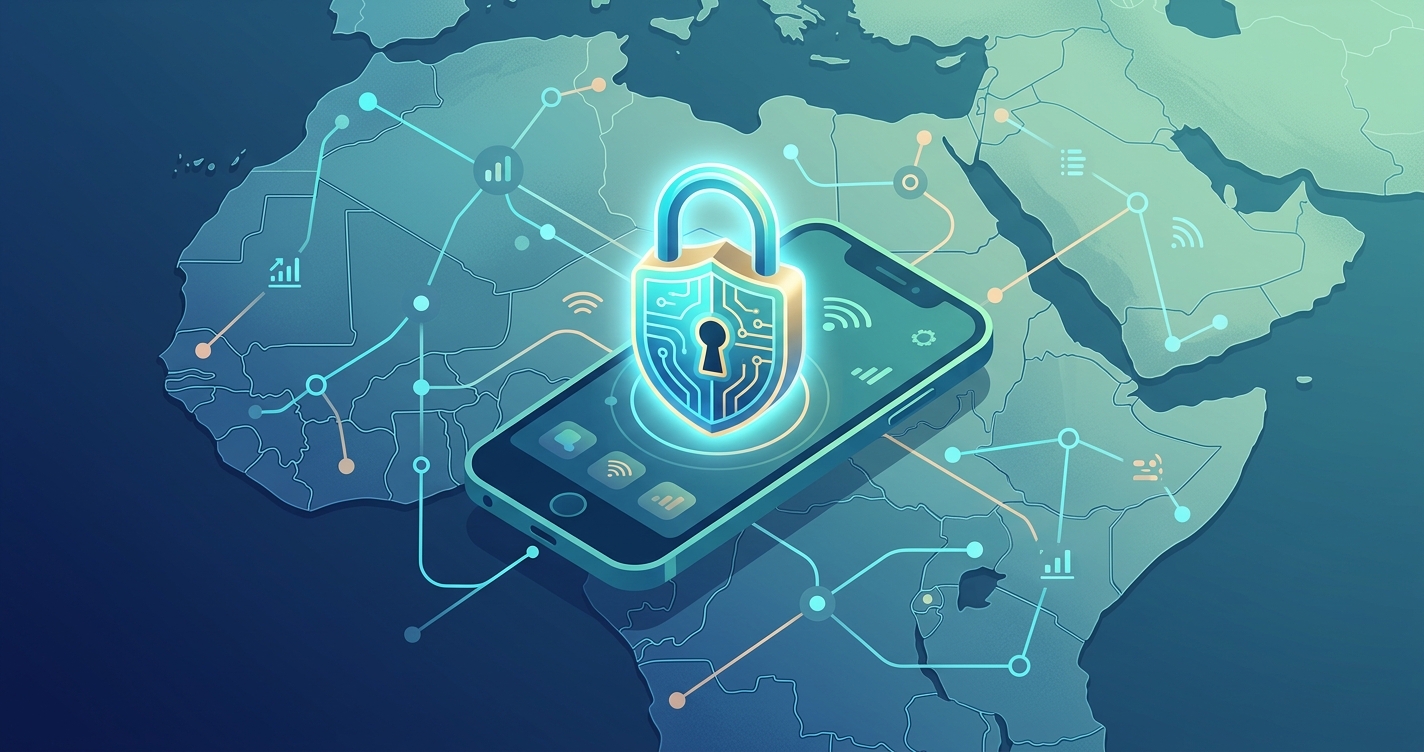
As digital tools replace paper records in rural clinics, global health organizations and ministries face a critical challenge: securing patient information. The rapid scaling of smartphone-based health initiatives brings immense clinical value, yet it simultaneously introduces new vulnerabilities. For public health ministries, deploying digital infrastructure requires more than clinical validation. It requires an uncompromising approach to the exact standards of health data privacy mobile screening Africa initiatives demand today. Without robust compliance mechanisms, digital screening programs risk becoming vectors for unauthorized data access rather than instruments for improved public health. Implementing these digital frameworks across diverse regulatory environments requires a precise understanding of regional privacy laws, technical safeguards, and patient consent protocols.
"As of 2024, at least thirty-nine African countries have enacted data protection legislation, a significant increase from just seventeen in 2022, universally classifying health records as sensitive data requiring strict processing safeguards." (Collaboration on International ICT Policy for East and Southern Africa, CIPESA, 2024)
Governing health data privacy mobile screening africa
The regulatory environment for patient data protection mHealth across the continent has matured rapidly. A decade ago, digital health pilots operated in a legislative vacuum, allowing organizations to collect, store, and analyze health metrics with minimal oversight. Today, health ministries mandate rigorous compliance with national data protection laws before any software is deployed in the field.
Uganda provides a clear model for this regulatory evolution. The Uganda Data Protection and Privacy Act of 2019, supported by the 2021 Regulations, explicitly classifies health data as a special category of sensitive personal information. The Ministry of Health requires all health facilities and digital platform providers to appoint Data Protection Officers and register with the Personal Data Protection Office. These mandates eliminate the informal sharing of patient data. Historically, community health workers sometimes relied on consumer messaging apps to share vital signs or diagnostic images with remote doctors. Under current legislation, this practice is a direct violation of patient privacy.
Purpose-built secure mobile health technology must replace these ad hoc solutions. Digital screening tools must be engineered with privacy as a foundational element, ensuring that biometric readings, demographic information, and location data never reside on a device unencrypted. Health ministries evaluate these tools based on their capacity to process measurements locally and transmit data securely to national health databases without third-party interception.
| Feature | Paper-Based Screening | Informal Mobile Methods | Compliant mHealth Screening |
|---|---|---|---|
| Data Storage | Physical cabinets, vulnerable to loss | Unencrypted on personal devices | Encrypted local storage and secure cloud |
| Access Control | Physical locks, easily bypassed | None, visible to anyone with device access | Role-based authentication and biometric login |
| Audit Trail | Manual logs, prone to human error | No tracking of data sharing | Automated logs of all data interactions |
| Ministry Compliance | Often fails modern data reporting standards | Violates national privacy acts | Fully aligned with national data laws |
| Transit Security | Physical transport, high risk of interception | Consumer-grade encryption | Enterprise-grade end-to-end encryption |
To meet these strict ministry requirements, mobile screening deployments must incorporate specific architectural principles:
- End-to-end encryption protocols must secure data both during transmission to ministry servers and while resting on the mobile device.
- Local data residency infrastructure ensures that a nation's sensitive health information remains securely stored within its own borders, complying with data sovereignty laws.
- Role-based access controls strictly limit patient record visibility to authorized healthcare personnel, preventing unauthorized viewing by administrative staff or external vendors.
- Automated anonymization techniques remove identifiable markers before data is aggregated for population health analysis and disease surveillance.
- Ephemeral processing capabilities allow the device to analyze vital signs in real-time without permanently storing the raw data input, heavily reducing the risk of a breach if a phone is lost or stolen.
Industry applications for secure screening
When global health NGOs and ministries align their mHealth Sub-Saharan Africa strategies with data protection laws, they unlock new operational capabilities. Secure data pipelines allow for real-time health monitoring without compromising individual patient rights.
Routine maternal care
During maternal health visits in remote villages, community health workers collect sensitive indicators including blood pressure, nutritional status, and fetal heart rates. Using compliant digital tools, this information is immediately encrypted at the point of care. The data syncs directly with national electronic medical record systems when a cellular connection is available, bypassing any local storage vulnerabilities on the smartphone. This seamless, secure integration ensures that a mother's clinical history is available at the district hospital if she requires emergency transfer, all while maintaining strict confidentiality.
Non-communicable disease tracking
Chronic conditions such as hypertension and diabetes require continuous monitoring and longitudinal data collection. Privacy-first screening tools allow ministries to track these metrics across populations over time. By utilizing anonymized data aggregation, public health officials can map the prevalence of non-communicable diseases in specific geographic zones and allocate resources accordingly. The individual patient identity remains shielded, but the systemic health trends become visible to policymakers planning national interventions.
Outbreak Surveillance
Speed is critical during an infectious disease outbreak, but urgency cannot override data privacy. When health workers screen for elevated temperatures or respiratory distress at community levels, the screening software must rapidly transmit anomaly alerts to central command centers. Secure mobile health platforms utilize encrypted alert protocols that notify epidemiologists of a potential cluster without broadcasting the specific names or exact household coordinates of the affected individuals until authorized medical teams are deployed.
Current research and evidence
Academic analysis of mHealth deployments consistently points to data security as a primary factor in user adoption and long-term program sustainability. Researchers examining the intersection of digital rights and healthcare stress that robust privacy frameworks are not merely legal hurdles, but essential components of patient trust.
A comprehensive systematic review of patient perspectives on mobile health apps found a direct correlation between data security transparency and patient willingness to participate in digital screening programs. The researchers noted that while patients in resource-limited settings recognize the clinical benefits of mobile screening, they retain significant concerns regarding who accesses their health records (Nasser Alhammad et al., University of Birmingham, 2022). Their findings indicate that applications prioritizing visible data confidentiality features achieve higher acceptance rates among marginalized populations.
Furthermore, studies assessing the barriers to mHealth systems in Sub-Saharan Africa categorize data privacy concerns as a primary obstacle for both patients and healthcare executives. Resolving these concerns requires clear national guidelines. The introduction of the African Union Malabo Convention on Cyber Security and Personal Data Protection provides a regional blueprint, urging member states to adopt standardized protective measures for electronic health transactions (African Union, 2023).
The future of mobile health screening privacy
The next phase of community health screening Africa will rely on advanced computational methods that further separate clinical analysis from personal identification. Federated learning is emerging as a critical methodology for health technology in developing countries. Instead of sending raw patient data to a central server to improve diagnostic algorithms, federated learning trains the algorithm locally on the device. Only the learned insights are transmitted back to the central server, meaning raw patient data never leaves the community health worker's smartphone.
Dynamic consent models will also define the future of digital health interactions. Traditional paper consent forms are static and difficult to track over time. Future mHealth applications will feature digital consent interfaces, allowing patients to grant or revoke permission for their data to be used in specific public health research initiatives. This empowers the patient and ensures ministries maintain a verifiable, auditable trail of consent for every data point collected.
Additionally, the integration of offline-first encrypted processing will solve the persistent challenge of conducting reliable community screening in areas with zero internet connectivity. Future platforms will process complex biometric measurements entirely on the mobile device's local hardware, applying military-grade encryption to the results until a secure network connection is established days or weeks later.
Frequently asked questions
What qualifies as sensitive health data under African privacy laws?
Under regulations like the Uganda Data Protection and Privacy Act, sensitive health data includes any information regarding a person's physical or mental health status, medical history, clinical measurements, biometric records, and genetic information. Because the exposure of this data can lead to discrimination or social stigma, it requires higher levels of encryption and stricter access controls than standard personal data.
Do digital health programs need to store patient data locally?
Yes, many African nations are implementing data sovereignty requirements. This means health data generated within a country must be hosted on servers located within its national borders. International NGOs and technology providers must configure their mobile screening platforms to route data to ministry-approved local data centers rather than defaulting to overseas cloud storage.
How do rural health workers manage patient consent for digital screening?
Compliant digital screening platforms incorporate verbal and digital consent logging directly into the user interface. Before a health worker initiates a scan, the software prompts them to explain the data usage policy in the local language. The health worker then records the patient's consent digitally, creating an auditable timestamp that links directly to the clinical measurement.
Why are informal messaging apps unsuitable for health screening?
Consumer messaging applications lack the specialized access controls, audit trails, and data sovereignty compliance required for medical records. If a health worker shares a patient's vitals via a standard chat app, that data is stored on commercial servers, mixed with non-medical data, and accessible to anyone who gains access to the recipient's phone. This violates national health data protection protocols.
Ministries and global health organizations can no longer afford to treat data protection as an afterthought in their digital transformation strategies. Circadify is addressing this space by building mobile infrastructure that processes vital signs securely, ensuring clinical measurements remain accurate without compromising patient privacy or violating national regulations. By turning common smartphones into highly secure screening devices, these tools provide an architecture that ministries can trust for population-scale deployments. To learn more about how secure field technology is transforming remote clinical measurement, explore our latest partnership and field data at circadify.com/blog.