What if my grandparent's breathing changes overnight in the village?
How contactless smartphone technology helps families and health programs detect a grandparent breathing change in a village when no clinic is nearby.
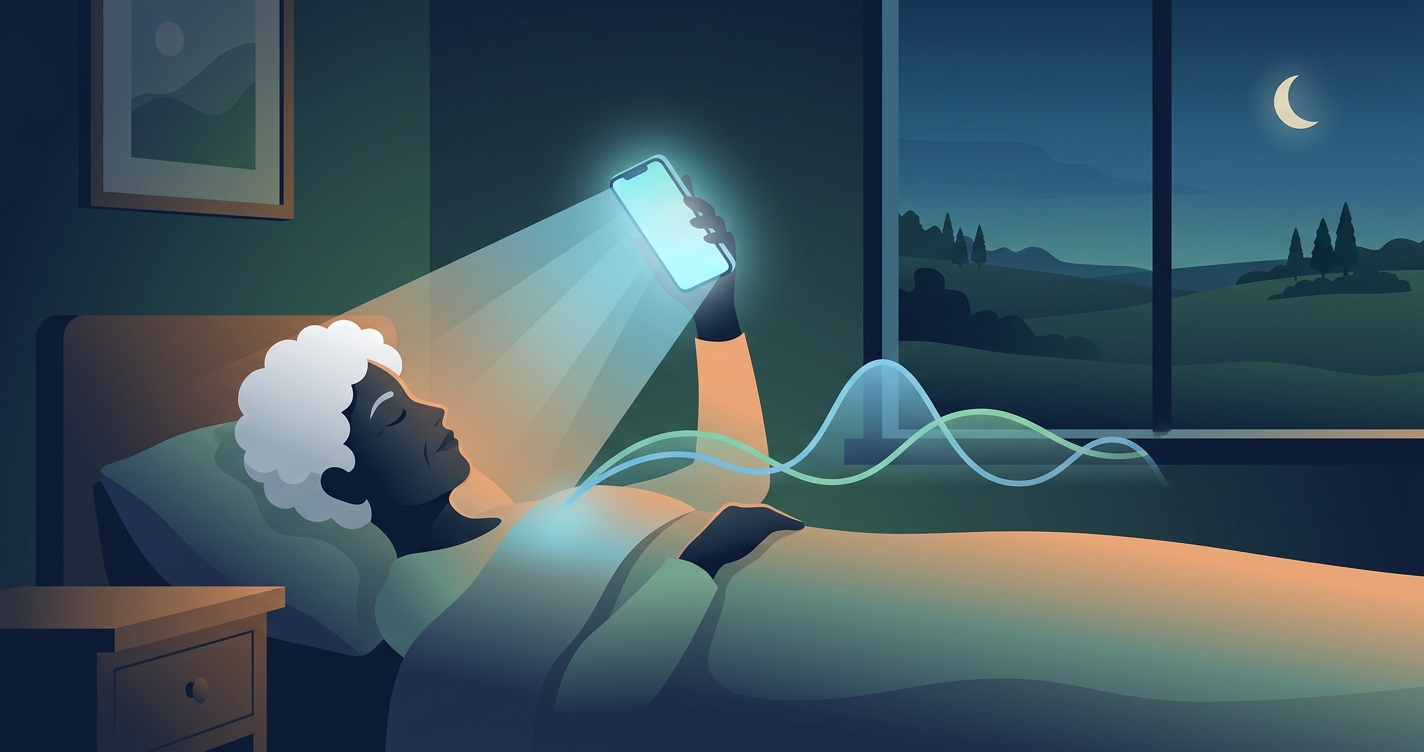
A change in an older relative's breathing during the night is one of the most frightening signals a rural household can face. The breaths come faster, shallower, or with a rattle that was not there at dusk, and the nearest health facility may be a half-day journey away. For families across Sub-Saharan Africa, a grandparent breathing change in a village rarely arrives with a measurement attached to it. It arrives as worry, and worry alone is a poor guide to whether someone needs to travel through the night or can safely wait until morning. This gap between observation and measurement is precisely where mobile screening technology is beginning to matter for health ministries and elder-care programs.
Adults aged 70 and older carry the highest global incidence of pneumonia, and Sub-Saharan Africa records an estimated 131 million new cases of community-acquired pneumonia each year, according to research summarized by the International Federation on Ageing and regional pneumonia reviews.
The demographic pressure behind this concern is growing quickly. The World Health Organization's Regional Office for Africa projects that the number of people aged 60 and older in Sub-Saharan Africa will more than double by 2050, rising from roughly 50 million in 2020 toward 163 million. At the same time, the prevalence of chronic obstructive pulmonary disease in the region rose by about 117 percent between 1990 and 2019. More older people, more chronic lung disease, and the same thin layer of rural health infrastructure together produce a predictable result: respiratory deterioration that goes unmeasured until it becomes an emergency.
Why a grandparent breathing change in a village is hard to assess
Respiratory rate is one of the most sensitive early indicators of deterioration in older adults, yet it is the vital sign most often skipped, even inside well-staffed clinics. Counting breaths for a full minute is tedious, easy to estimate badly, and almost never done at home. In a village setting, the family is left interpreting qualitative signs: Is the breathing "fast"? Is it "labored"? These judgments vary widely between observers and offer no threshold a community health worker or remote clinician can act on.
The clinical stakes of getting this wrong are high. A resting respiratory rate that climbs above 20 to 24 breaths per minute in an older adult can signal pneumonia, heart failure, or sepsis hours before other symptoms become obvious. Without a number, a family cannot know whether the change they are watching crosses that line. A smartphone-based measurement converts a frightening but vague observation into a value that can be recorded, compared against a baseline, and shared with a supervising clinician by phone.
The table below contrasts the common ways a rural household or program might assess a sudden nighttime breathing change.
| Approach | Equipment needed | Time to a result | Works at night at home | Produces a shareable number |
|---|---|---|---|---|
| Family visual judgment | None | Immediate | Yes | No |
| Travel to nearest facility | Transport | Hours to a full day | No | Yes, after arrival |
| Wearable chest or finger sensor | Device per patient, charging | About 1 minute | Yes | Yes |
| Manual breath counting by health worker | Timer | 1 minute plus travel | Only if worker present | Inconsistent |
| Smartphone camera screening (rPPG) | Existing phone | Under 1 minute | Yes, with light | Yes |
The advantage of the camera-based option is not that it replaces a clinician. It is that it puts a defensible number into the hands of whoever is already at the bedside, including a relative, a neighbor, or a community health worker passing through.
How contactless screening detects breathing change
Camera-based screening uses remote photoplethysmography, often shortened to rPPG. The phone's camera detects tiny color changes in the skin caused by blood flow, and combines this with subtle chest and head movements that occur with each breath. Software then estimates heart rate and respiratory rate without any cuff, finger clip, or chest strap touching the patient.
For an elderly relative who may be frail, confused, or distressed at night, the contactless nature of the method matters in practical terms:
- No device needs to be cleaned, charged, or fitted to a sleeping or agitated patient.
- One phone can screen many people, which suits a household with several older members.
- A measurement can be repeated through the night to show whether the rate is rising or stabilizing.
- The same capture can record other vitals, giving a fuller picture than breathing alone.
Trend matters as much as any single reading. A respiratory rate of 22 means something different if it was 16 an hour earlier than if it has held steady for days. Repeatable, low-friction measurement is what makes that trend visible to a family far from any clinic.
Industry applications for elder care programs
Community health worker rounds
Community health workers already form the backbone of primary care in rural Sub-Saharan Africa. Adding a contactless respiratory screen to a routine home visit lets a worker flag an older adult whose breathing rate sits outside a safe range and escalate that case before it becomes a night emergency. The measurement travels with the worker on a phone they already carry.
Family-led monitoring between visits
The harder problem is the hours when no health worker is present, which is when most frightening breathing changes occur. A trained family member using a guided screening app can capture a reading, compare it to a stored baseline, and relay the result to a supervising nurse by call or message. This turns a household into a forward sensor for the health system rather than a silent waiting room.
Ministry and NGO surveillance
For program managers, aggregated screening data reveals where respiratory deterioration clusters among older populations, which seasons drive it, and which villages lack timely referral pathways. That evidence can direct oxygen supply, ambulance routing, and seasonal staffing rather than leaving these decisions to guesswork.
Current research and evidence
The accuracy of smartphone respiratory measurement has improved markedly in recent validation work. A prospective validation study of smartphone-based heart rate and respiratory rate algorithms, published in 2023 and associated with researchers at Google, reported a mean absolute error of 0.78 plus or minus 0.61 breaths per minute for respiratory rate, well below the pre-specified goal of 3 breaths per minute, with consistent performance across skin tones and in participants with chronic respiratory conditions. A 2023 evaluation of the rPPG-enabled WellFie application reported respiratory rate accuracy near 84 percent in adults. Work from Samsung Research combining facial motion and rPPG reported a mean absolute error of 1.33 breaths per minute, with about 86 percent of estimates falling within a 2-breath error band.
Evidence specific to aging populations is also accumulating. A digital health evaluation study published in JMIR mHealth and uHealth found that contactless monitoring could reliably track heart rate, breathing rate, and breathing disturbance during sleep in older adults, supporting the case for unobtrusive bedside use. What the literature still lacks is large field validation among elderly patients in low-resource rural African settings, where lighting, camera quality, and connectivity differ from controlled clinics. Closing that gap is the central research priority for anyone deploying this technology for village elder care.
The Future of grandparent breathing change detection in villages
The direction of travel is toward screening that needs no dedicated hardware, runs on the phones families and health workers already own, and feeds results into national health information systems. Three developments will shape the next few years:
- Deep learning models that hold accuracy under poor lighting and motion, with recent work reporting large reductions in respiratory rate error from noisy real-world smartphone video.
- Offline-capable apps that capture and store readings where connectivity is intermittent, syncing when a signal returns.
- Integration of screening data with referral and transport systems so that an abnormal nighttime reading automatically triggers a defined response rather than a lonely decision.
The technology will not put a clinic in every village. What it can do is shorten the distance between the moment a grandparent's breathing changes and the moment someone with clinical judgment sees a number they can act on.
Frequently asked questions
Can a smartphone really measure breathing without touching the patient? Yes. Remote photoplethysmography reads small color and movement changes captured by the camera to estimate respiratory and heart rate. It is a screening aid, not a diagnostic device, and abnormal readings should prompt contact with a health worker or clinic.
What breathing rate should worry a family caring for an older relative? A resting rate persistently above roughly 20 to 24 breaths per minute, or a sharp rise from the person's normal baseline, warrants urgent clinical advice. The exact threshold depends on the individual, which is why tracking a baseline over time is valuable.
Does this work at night and without reliable internet? A measurement needs adequate light, so a lamp or phone light helps at night. Several screening tools can capture and store readings offline, then sync results to a clinician once a connection is available.
Is contactless screening accurate for older adults specifically? Validation studies report respiratory rate errors under 1 to 1.5 breaths per minute in general adult populations, and aging-focused sleep studies show reliable breathing measurement. Large field validation in rural African elderly populations is still needed and is an active research area.
Circadify is working on this space directly, building smartphone-based vital signs screening designed for community deployment where no equipment and little infrastructure exist. Health ministries, WHO and UNICEF program managers, and NGOs focused on elder care can follow the field data and partnership work in the global health section at circadify.com/blog.