How do aid organizations screen thousands of patients a day without cuffs or needles?
Discover how aid organizations are using contactless, smartphone-based technologies to conduct mass health screenings in resource-limited settings without traditional medical equipment.
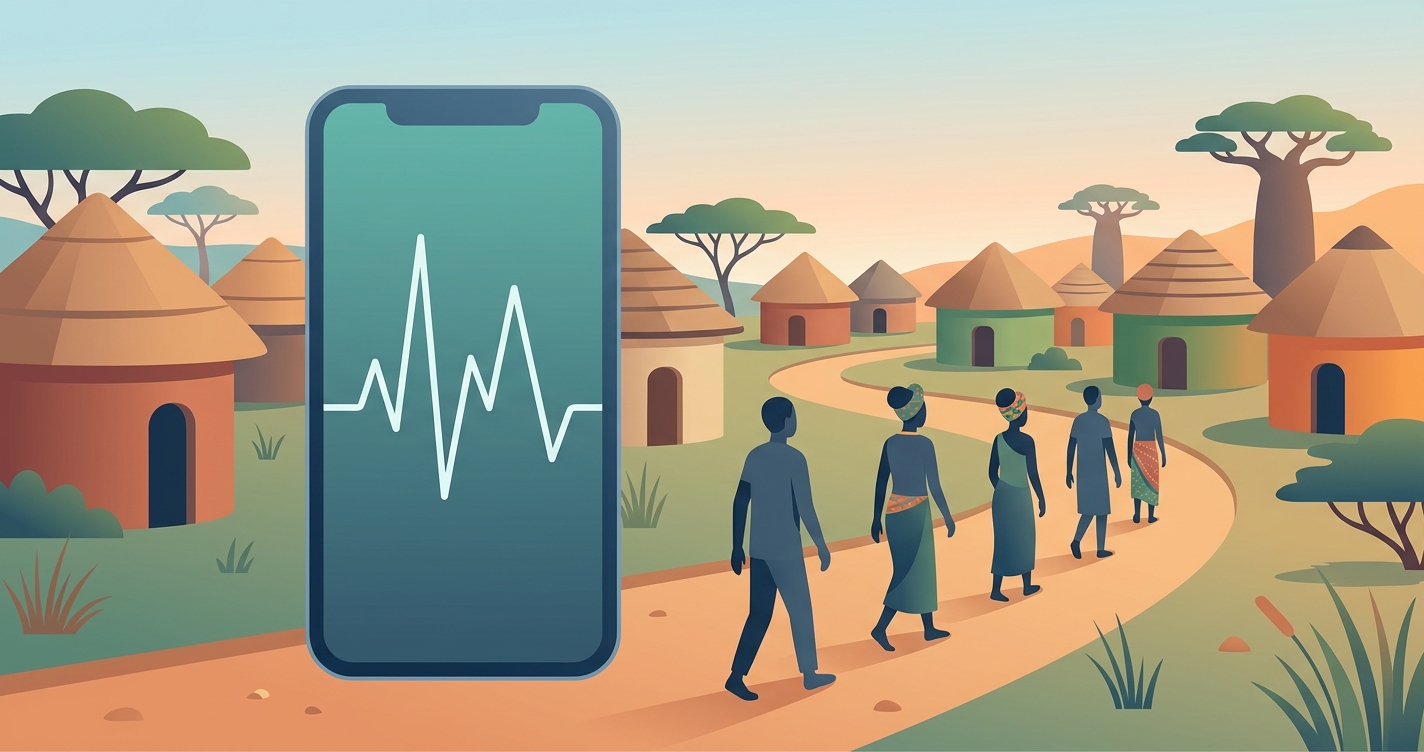
In humanitarian crises and large-scale public health campaigns, the logistics of screening thousands of people for basic health indicators can be overwhelming. Traditional methods, reliant on blood pressure cuffs, thermometers, and needles for blood draws, are slow, resource-intensive, and require trained personnel. For aid organizations working in remote or low-resource settings, these tools present significant barriers to delivering care at scale. The need to screen entire populations quickly during a disease outbreak or a refugee influx has driven the development of a new class of medical technology, one that operates without physical contact and uses the one piece of hardware that is nearly ubiquitous: the smartphone.
"Mobile technology is a game-changer for health care in developing countries. It has the potential to improve access to health services, enhance the quality of care, and reduce costs." - World Health Organization, 2018
The rise of contactless mass screening
The core challenge for any aid mass screening contactless program is speed and scale. When an organization needs to assess the health of thousands of people in a single day, conventional clinical workflows are not just inefficient; they are impossible. Contactless screening technologies address this by replacing physical instruments with software and sensors, primarily using the camera and processor of a standard smartphone. This approach, often utilizing a technique called remote photoplethysmography (rPPG), analyzes minute changes in the color of light reflected from a person's skin to measure vital signs like heart rate, respiratory rate, and even blood pressure and oxygen saturation. The process is fast, often taking under 60 seconds, and requires no specialized medical hardware. This allows a single community health worker with a smartphone to screen hundreds of individuals in a day, a scale unattainable with traditional methods.
| Feature | Traditional Screening (Cuffs, Needles) | Contactless Smartphone Screening |
|---|---|---|
| Equipment | BP cuff, pulse oximeter, thermometer, needles | Standard smartphone |
| Speed per person | 5-10 minutes | < 60 seconds |
| Cost per screening | Moderate (equipment + consumables) | Low (software license) |
| Portability | Bulky, requires carrying case | Highly portable (fits in a pocket) |
| Personnel skill | Trained clinical staff | Minimally trained community health worker |
| Infection risk | High (shared equipment, needles) | Zero (no physical contact) |
| Data management | Manual entry, paper-based | Automatic, digital, cloud-synced |
Industry Applications
The ability to conduct rapid, equipment-free health assessments has profound implications for how aid organizations operate. The technology is not a theoretical future but is being actively deployed in various public health contexts across Sub-Saharan Africa and other regions.
Refugee and internally displaced person (idp) camps
Screening new arrivals at a refugee camp is a critical first step for identifying urgent medical needs and preventing the spread of communicable diseases. Contactless screening allows for rapid triage at intake points, identifying individuals with fever, elevated heart rate, or respiratory distress who may require immediate medical attention. This process can happen in a designated tent or even as people wait in line, maximizing efficiency and minimizing disruption.
Community health and immunization campaigns
During national immunization campaigns or community health drives, contactless screening provides a valuable "check-in" tool. Community health workers can quickly assess the vital signs of children and caregivers before administering vaccines or distributing nutritional supplements. This creates a valuable health data point and can help identify underlying conditions that might otherwise go unnoticed. For example, a study by researchers at the University of Toronto (2021) demonstrated the feasibility of using smartphone-based rPPG to screen for anemia in children in rural settings.
Maternal and child health
In many parts of the developing world, a significant number of pregnancies and births occur outside of a formal clinical setting. Contactless screening provides a way for birth attendants and community health workers to monitor the vital signs of expectant mothers during home visits. This can help in the early detection of conditions like pre-eclampsia, which is characterized by high blood pressure and is a leading cause of maternal mortality.
Current research and evidence
The scientific foundation for contactless vital signs monitoring has been building for over a decade. Early research, such as the work of Wim Verkruysse and his team at the University of Rochester in 2008, established the theoretical basis for using digital cameras to measure physiological signals. More recent studies have focused on validating these technologies in real-world clinical and field settings.
- A 2022 study published in The Lancet Digital Health by researchers from the University of California, San Francisco, evaluated the accuracy of a smartphone camera-based blood pressure measurement application against an ICU-grade arterial line, finding a high degree of correlation.
- Researchers from Khalifa University published a comprehensive review in 2021 detailing the use of radar-based systems for contactless vital sign detection, noting their high accuracy even through clothing and at a distance.
- Work in drone-based systems, such as a 2023 feasibility study in the journal Remote Sensing, is exploring the use of imaging to extract vital signs for mass casualty triage in disaster zones, a direct application for aid mass screening contactless protocols.
These studies, and many others, are building the evidence base needed for wider adoption by ministries of health and large international organizations.
The future of aid mass screening
The trajectory of this technology points toward greater integration and sophistication. The future of mass screening will likely involve multi-modal systems that combine camera-based measurements with other contactless sensors, potentially even analyzing voice or gait for signs of illness. As AI and machine learning algorithms become more powerful, these systems will be able to detect not just basic vital signs but also more complex conditions, acting as a powerful decision support tool for frontline health workers. The ability to do this offline, without a persistent internet connection, will be critical for an aid mass screening contactless program to be truly effective in the most remote parts of the world.
Frequently asked questions
Q: How accurate is contactless screening compared to traditional methods?
A: The accuracy of contactless screening is a subject of ongoing research and depends on the specific technology and vital sign being measured. For heart rate and respiratory rate, many systems have demonstrated accuracy comparable to standard clinical devices. Blood pressure measurement is more complex, but recent studies show promising results that are approaching clinical-grade accuracy.
Q: Does this technology work on all skin tones?
A: This is a critical area of research and development. Early rPPG algorithms sometimes showed a performance bias on darker skin tones. However, newer algorithms are being specifically trained on more diverse datasets to ensure equitable performance across all populations. Reputable providers of this technology will have data validating their performance on a wide range of skin types.
Q: What about data privacy and security?
A: As with any digital health technology, data privacy and security are critical. Data collected through contactless screening should be encrypted both at rest and in transit. The systems should be compliant with international data protection regulations like GDPR and local data sovereignty laws. Anonymization of data used for public health analysis is also a standard practice.
The logistical challenges of providing healthcare at scale are immense, but the rapid evolution of mobile and contactless technologies offers a powerful new set of tools. Circadify is actively working in this space, developing and deploying smartphone-based screening solutions to support global health partners in their mission. To learn more about our work and explore potential partnerships, visit the global health section of our blog at circadify.com/blog.