How do I know if my pregnant sister needs to reach a clinic?
Learn the key pregnancy warning signs that mean a pregnant woman in Africa must reach a clinic, and how mobile health technology can bridge the gap.
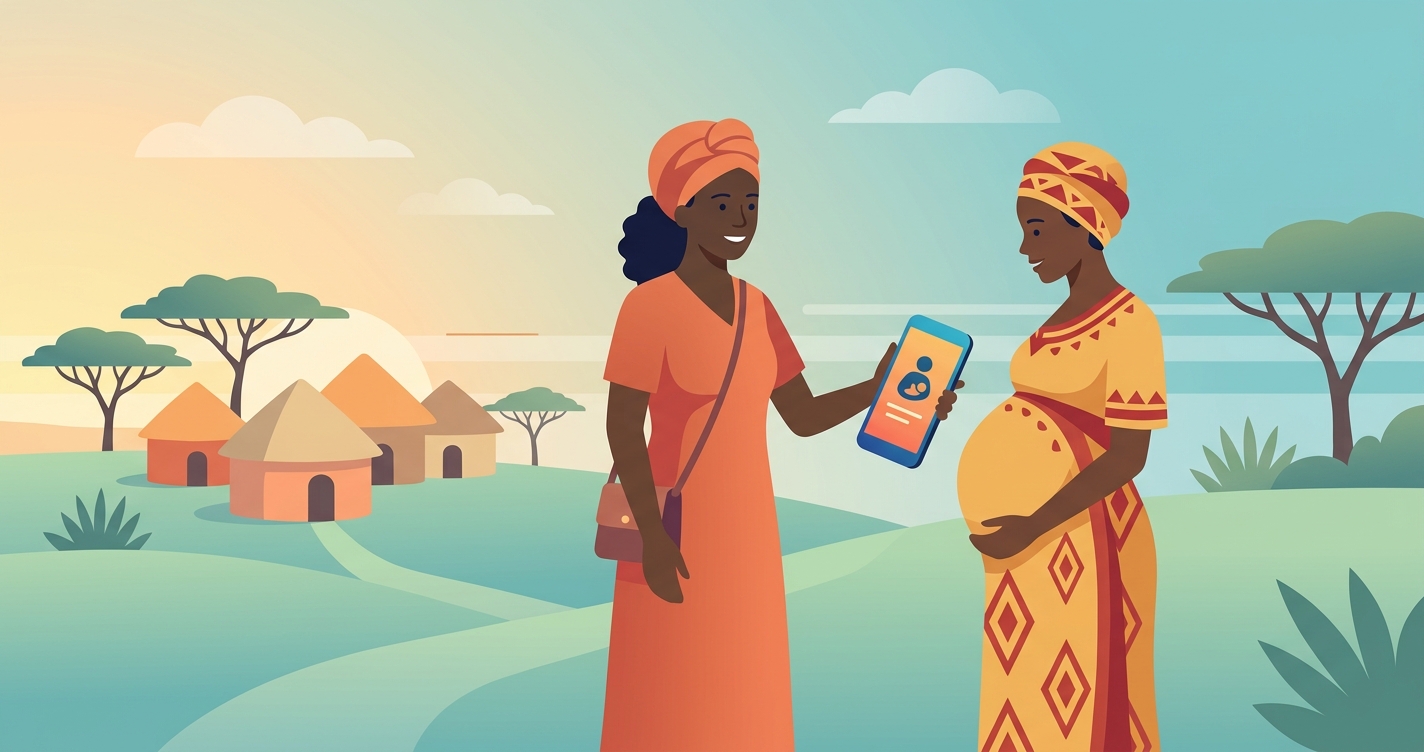
For a family member in a remote community, hours from the nearest health facility, a sister's pregnancy is a source of both hope and anxiety. The central question is often a difficult one: how can you know if everything is progressing normally, and when does a symptom become a sign that she must reach a clinic immediately? This challenge is one of the most significant drivers of maternal mortality in Sub-Saharan Africa, where distance and time are critical barriers to care. Identifying high-risk pregnancies early, using accessible technology, is a solvable problem that can mean the difference between life and death. Understanding the key pregnancy warning signs for when to reach a clinic in Africa is the first and most crucial step.
"Every day, almost 800 women die from preventable causes related to pregnancy and childbirth. In 2020, Sub-Saharan Africa accounted for around 70% of these deaths." - World Health Organization (2023)
Recognizing high-risk pregnancy warning signs in africa
The World Health Organization (WHO) has identified a core set of danger signs during pregnancy, childbirth, and the postpartum period. The presence of any one of these signs indicates that a pregnant woman is at high risk and requires immediate medical attention at a health facility. Community Health Workers (CHWs) and family members trained to recognize these symptoms are the first line of defense. The core challenge is often differentiating a normal discomfort of pregnancy from a life-threatening complication.
Key warning signs during pregnancy include:
- Severe vaginal bleeding
- Severe headache or blurred vision
- Swelling in the hands, face, and legs (a potential sign of pre-eclampsia)
- Fever or significant weakness
- Severe abdominal pain
- Reduced or no fetal movement
During labor and delivery, immediate transfer to a clinic is necessary for:
- Labor lasting more than 12 hours
- Convulsions
- Excessive bleeding
- The placenta not being delivered within 30 minutes of birth
After delivery, a mother should be monitored for:
- Severe bleeding
- Foul-smelling vaginal discharge and high fever
- Severe abdominal pain
- Loss of consciousness or convulsions
These signs point to the five leading causes of maternal death, all of which are largely preventable: hemorrhage, sepsis (infection), hypertensive disorders (pre-eclampsia/eclampsia), obstructed labor, and complications from unsafe abortions. The ability to flag these signs early is the most critical factor in preventing a fatal outcome.
| Feature | Traditional Monitoring | Smartphone-Based Screening (by CHW) |
|---|---|---|
| Data Collection | Subjective observation, patient self-reporting, infrequent clinic records. | Objective vital signs (blood pressure, heart rate, respiratory rate), standardized symptom checklists. |
| Frequency | Intermittent; often only when patient travels to a clinic (quarterly or less). | Regular; weekly or bi-weekly home visits by a CHW. |
| Early Detection | Low. Relies on the pregnant woman recognizing a severe symptom and being able to travel. | High. Trends in vital signs (e.g., rising blood pressure) can be detected before severe symptoms appear. |
| Triage | Inefficient. All emergencies are self-referred, often late, leading to overwhelmed clinics. | Efficient. CHW can triage based on real data, escalating high-risk cases for immediate transport. |
| Cost | High indirect costs for families (transport, lost wages); high direct costs for emergency interventions. | Low-cost for screening; reduces need for expensive emergency care by enabling prevention. |
| Accessibility | Limited by distance, road conditions, and cost of travel. | High. CHWs are from the community and can reach women in their homes. |
How mobile health bridges the gap
The challenge in many parts of Sub-Saharan Africa is not a lack of knowledge about the warning signs, but the inability to act on them in time. This is where mobile health (mHealth) technology, deployed by trusted community health workers, is fundamentally changing the paradigm of maternal health screening. Instead of requiring a pregnant woman to travel for hours to a clinic for a basic check-up, a CHW can perform a robust, data-driven screening at her doorstep using only a smartphone.
Empowering community health workers
CHWs are the backbone of rural healthcare. Equipping them with smartphone-based tools elevates their role from health educators to frontline data collectors. Using camera-based technology, a CHW can capture medically-relevant vital signs like blood pressure, heart rate, and respiratory rate without any traditional equipment like cuffs or sensors. When combined with a digital checklist for the WHO-recognized danger signs, this creates a powerful triage tool. The app can instantly flag a high-risk pregnancy based on objective data, signaling to the CHW that the woman needs to reach a clinic now.
Integrating with local health systems
This model is not about replacing clinics; it's about making them more effective. The data collected by CHWs can be transmitted to a district clinic or hospital, giving medical staff advance notice of an incoming high-risk patient. This allows the facility to prepare resources and personnel, turning a chaotic emergency arrival into a managed referral. It also provides health ministries with unprecedented, real-time visibility into the health of their most remote populations, enabling better resource allocation and policy-making.
Current research and evidence
The effectiveness of mHealth in maternal care is well-documented. A 2024 systematic review published by Gathuru, E., et al., found that in the studies analyzed, mHealth interventions used by CHWs increased the rate of facility-based births by 89%. This demonstrates a direct link between technology-enabled CHWs and women successfully reaching a clinical setting for delivery.
Research from rural Malawi showed that combining proactive CHW home visits with mHealth tools led to a significant increase in early antenatal care attendance and facility-based deliveries. Another study in Burkina Faso found that even with connectivity challenges, midwives and CHWs perceived that mHealth technology enabled them to provide better, more consistent care through improved follow-up and communication. These studies confirm that when CHWs are equipped with the right tools, they can dramatically improve a woman's chances of receiving timely and appropriate medical care.
The future of maternal health screening
The integration of smartphone-based screening is poised to become the standard for community-level maternal health programs. The future lies in using the data collected to create more sophisticated risk models. By applying machine learning to the vital signs and symptom data gathered by CHWs across a region, it will become possible to identify at-risk pregnancies even earlier, before critical symptoms emerge. This predictive capability can help health systems move from a reactive to a proactive posture, further reducing preventable maternal deaths and ensuring that every pregnant woman has the chance for a safe delivery.
Frequently asked questions
Q: How reliable is smartphone-based vital signs screening compared to traditional cuffs and devices? A: The technology has been validated in multiple studies to achieve accuracy comparable to standard medical devices for screening and triage purposes. For community health screening, where the goal is to identify individuals who need further clinical assessment, it is a highly effective and scalable tool.
Q: What are the main challenges to deploying this kind of technology in remote areas? A: The primary challenges are non-technical. They include ensuring CHWs receive consistent training and supervision, managing device logistics like charging and connectivity, and securing sustainable funding to move programs from a pilot phase to a national scale. Community trust and digital literacy are also key factors that successful programs address through careful design.
Q: How does the screening data get used by the health system? A: Data from CHW screenings is typically uploaded to a secure dashboard accessible by clinic managers and district health officials. This allows for real-time tracking of high-risk cases, monitoring of CHW performance, and analysis of population health trends to inform public health strategy and resource allocation.
As a research organization focused on public health technology, Circadify is actively working to solve the challenge of early risk detection in maternal health. By developing and deploying scalable, equipment-free screening tools, the goal is to empower health ministries and their partners to build more resilient and effective community health programs. You can learn more about the data and field insights driving this work at the global health section of our blog at circadify.com/blog.