
How do I tell if my child's diarrhea has become an emergency?
A research-style report on the emergency signs of child diarrhea and dehydration in Africa and the role of mobile health in early detection.
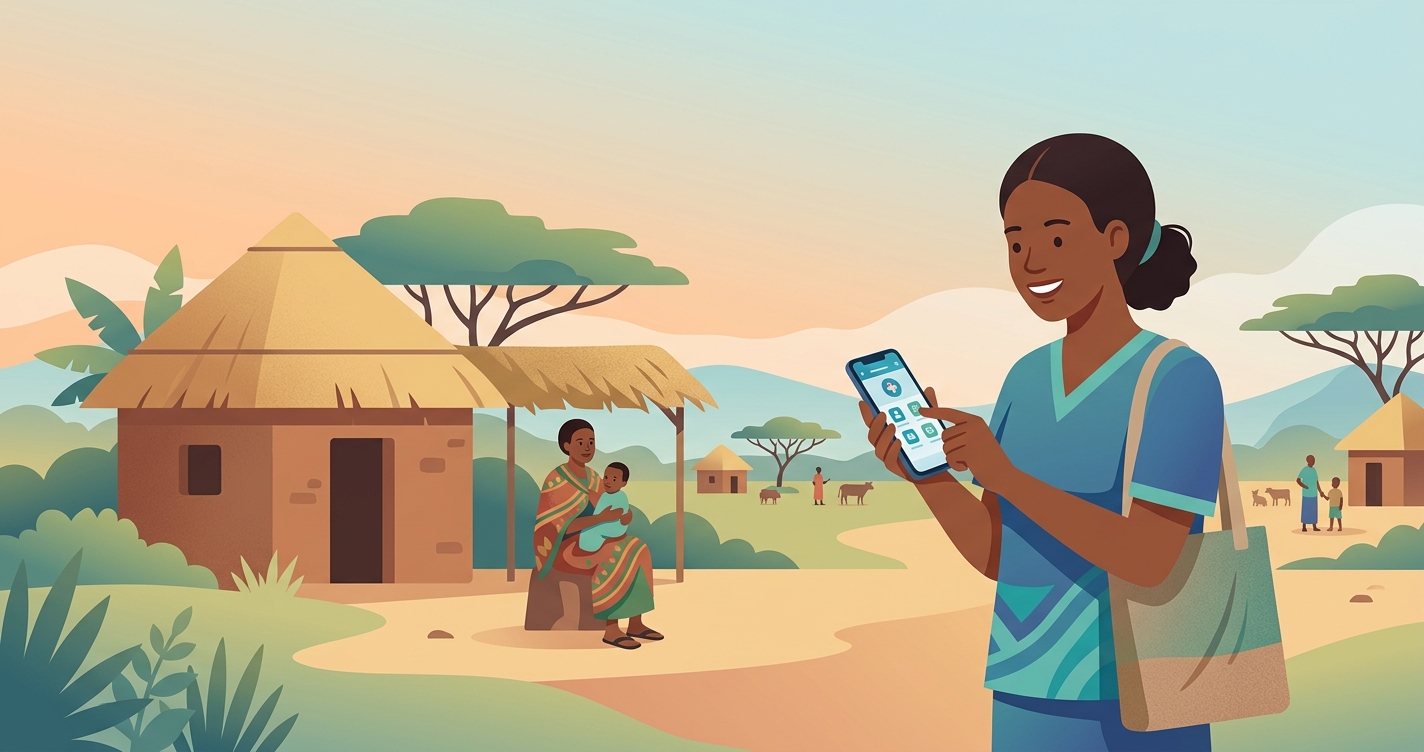
Diarrheal disease remains a leading cause of death in children under five across Sub-Saharan Africa, not because of the illness itself, but due to its most dangerous complication: severe dehydration. For health program managers and ministries of health, the challenge is not just treatment, but timely identification of children who are progressing toward a state of emergency. The moments when a caregiver or a community health worker (CHW) decides if a child can be managed at home or needs urgent referral to a clinic are critical. Delays in this decision, often caused by distance or uncertainty, can have fatal consequences. The key lies in equipping frontline health workers and educating parents to recognize the specific clinical signs that signal a crisis.
"Diarrheal disease is the second leading cause of death in children under five years old... it is both preventable and treatable. Each year, diarrhea kills around 525,000 children under five." - World Health Organization (WHO), 2017
Recognizing the emergency
When a child suffers from diarrhea, their body loses water and essential electrolytes far more rapidly than they can be replaced. This fluid loss is what leads to dehydration. While mild dehydration can often be managed at home with Oral Rehydration Salts (ORS), severe dehydration is a life-threatening medical emergency requiring immediate intravenous fluids in a clinical setting. Recognizing the child diarrhea dehydration emergency signs Africa-based health programs must address is the first and most critical step in preventing mortality.
The World Health Organization provides clear guidelines for assessing dehydration. A child who is lethargic or unconscious, has sunken eyes, and drinks poorly or not at all is classified as having severe dehydration. Other indicators include a very rapid and weak pulse, low blood pressure, and skin that loses its elasticity, when pinched, it returns to its normal state very slowly. These are not subtle changes; they are stark warnings that the body's circulatory system is beginning to fail. For a Community Health Worker, these are the signals that triage protocols must be escalated immediately. A smartphone-based vital signs assessment can quantify these observations, turning a subjective assessment ("the child seems weak") into objective data (e.g., an elevated heart rate of 160 beats per minute) that confirms the need for emergency care.
| Sign | Some Dehydration | Severe Dehydration |
|---|---|---|
| General Condition | Restless, irritable | Lethargic, unconscious, or floppy |
| Eyes | Sunken | Very sunken and dry |
| Thirst | Drinks eagerly, thirsty | Drinks poorly or not at all |
| Skin Pinch | Goes back slowly | Goes back very slowly (>2 seconds) |
| Pulse | Rapid | Very rapid, weak, or not palpable |
| Urine Output | Reduced | Little to no urine output for several hours |
| Fontanelle (infants) | Sunken | Very sunken |
Industry Applications
For global health NGOs and African health ministries, the challenge is deploying a system of identification that is both reliable and scalable across vast, often remote, populations. The integration of mobile health (mHealth) technology into existing Community Health Worker programs presents a powerful solution.
Enhancing CHW protocols
CHWs are the backbone of primary healthcare in many African communities. Equipping them with smartphones loaded with a vital signs screening tool can standardize the assessment of sick children. Instead of relying solely on subjective observation, a CHW can capture objective measurements of heart rate and respiratory rate.
- Standardized Triage: A mobile application can guide the CHW through a checklist of emergency signs, ensuring no critical indicator is missed.
- Data-Driven Referrals: When a screening tool detects a dangerously high heart rate or respiratory rate, it can trigger an automatic referral alert, notifying the nearest clinic and providing them with the child's data in advance.
- Improved Resource Allocation: Over time, aggregated data from these screenings can help health ministries identify hotspots of severe diarrheal disease, allowing for targeted interventions, supply chain improvements for ORS and zinc, and public health campaigns.
Integration with national health campaigns
Mobile screening can be integrated into broader public health initiatives, such as:
- Immunization Drives: While caregivers wait for vaccinations, CHWs can conduct rapid dehydration screenings.
- Nutritional Support Programs: Children being monitored for malnutrition can also be regularly screened for vital signs that might indicate other illnesses.
- Maternal and Child Health Clinics: Integrating contactless screening as a standard part of every child's visit creates a robust health monitoring system.
Current research and evidence
The concept of using a smartphone to detect physiological signs of dehydration is supported by emerging research. A pilot study conducted by researchers at Makerere University in Uganda and published in 2023 explored the use of smartphone-based photoplethysmography (PPG) for assessing dehydration in children. The study, "Smartphone-based photoplethysmography for assessing dehydration in children: a pilot study", investigated how video taken of a child's fingertip could be analyzed to measure heart rate and other perfusion metrics.
The researchers, led by Dr. Alfred Ganizi, found that certain PPG-derived features correlated with clinical signs of dehydration (Ganizi, A. et al., 2023). While the technology is still in the research phase, it establishes a crucial proof-of-concept: the phone in a CHW's pocket has the potential to become a powerful diagnostic aid. This method, often called remote photoplethysmography (rPPG), requires no physical contact, no external sensors, and no equipment beyond the phone itself. This makes it ideal for low-resource settings where traditional medical devices are scarce. The study highlighted that elevated heart rate, a key sign of dehydration, could be reliably measured, providing a quantitative data point to support a CHW's clinical assessment.
The future of dehydration screening
As smartphone penetration continues to grow across Sub-Saharan Africa, the future of child health screening will increasingly involve mobile platforms. The future is not about replacing healthcare workers, but about augmenting their skills with accessible technology. Imagine a system where a parent in a remote village can use a simple app to capture a short video of their sick child. The app analyzes the video to detect a dangerously high heart rate and sends an alert to a regional CHW, who can then initiate a home visit or a referral. This is the promise of contactless screening: to close the gap between the onset of emergency signs and the delivery of lifesaving care. For program managers, this technology offers a scalable way to monitor population health in near real-time, transforming reactive healthcare systems into proactive ones.
Frequently asked questions
What are the three main emergency signs of dehydration in a child? The three most critical signs are: 1) Lethargy or becoming unconscious, where the child is unusually sleepy, limp, or unresponsive. 2) Sunken eyes, where the eyes appear hollow and are not producing tears. 3) Drinking poorly or not at all, indicating the child is too weak to take in fluids.
How quickly can a child become severely dehydrated from diarrhea? A child, especially an infant, can become severely dehydrated in less than 24 hours. The smaller the child, the more rapid the fluid loss is in proportion to their body weight, making rapid assessment and intervention critical.
What is the first thing to do if you suspect your child is dehydrated? The first and most important step is to begin giving Oral Rehydration Salts (ORS) immediately. ORS is a special mixture of sugar and salts that is absorbed in the small intestine and replaces the water and electrolytes lost through diarrhea. Continue to offer fluids and food, and if the child shows any emergency signs, seek care at a health facility immediately.
Can a phone really detect dehydration? A phone cannot "diagnose" dehydration on its own, but it can be used as a powerful screening tool. By using the phone's camera to measure vital signs like heart rate and respiratory rate, it can detect key indicators associated with dehydration. An elevated heart rate is one of the body's primary responses to fluid loss, and a mobile screening tool can provide an objective measurement to help a community health worker or parent identify this emergency sign.
Circadify is at the forefront of developing and deploying this type of mobile health technology. Our work in Uganda and across East Africa focuses on empowering community health workers with contactless vital signs screening to improve the early detection of life-threatening conditions in children and adults. By turning standard smartphones into powerful health screening tools, we are helping our partners in global health build more resilient and effective health systems. To learn more about our field data and partnership opportunities, visit our global health blog at circadify.com/blog.