
How Mobile Health Screening Cuts Child Deaths in Africa
Explore how smartphone-based community health screening in Sub-Saharan Africa aids early detection, cuts child mortality, and replaces imported hardware.
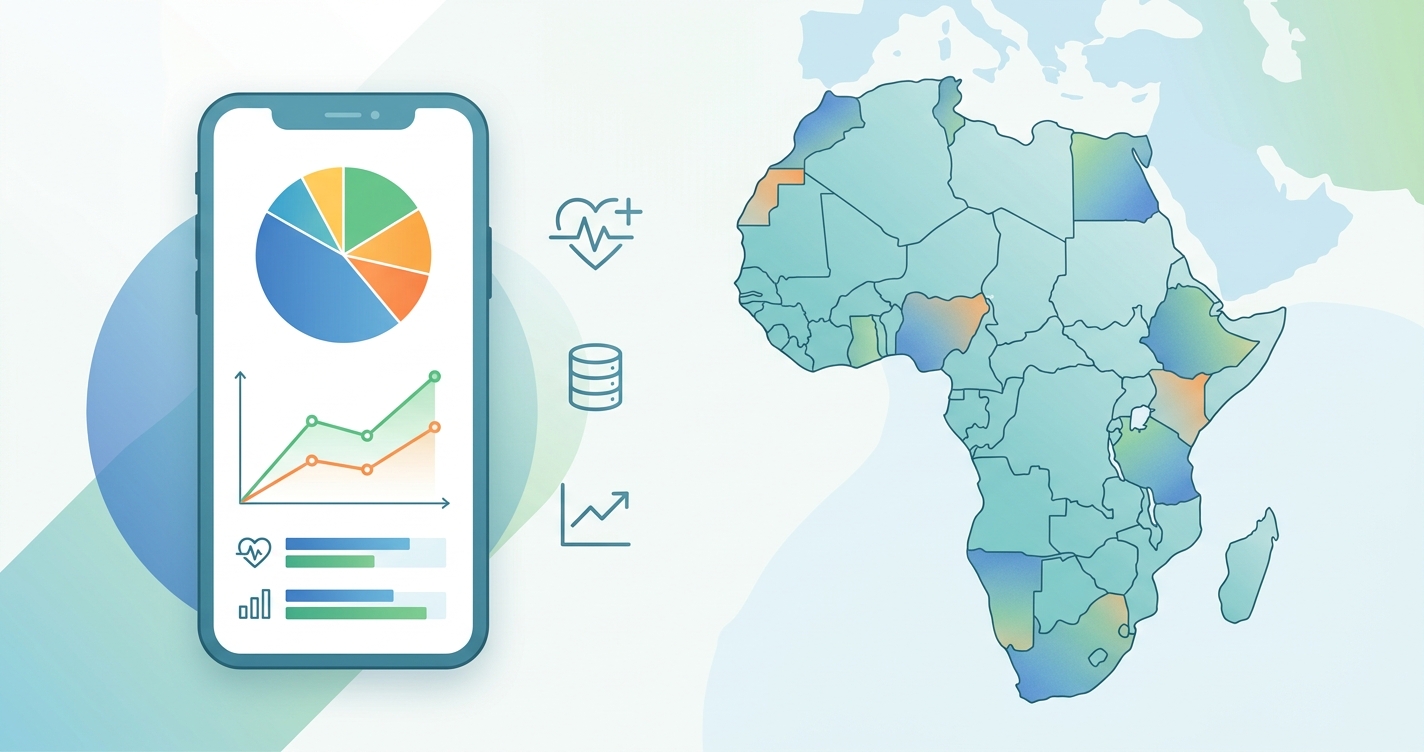
For health ministries and global health organizations operating across Sub-Saharan Africa, reducing under-five mortality remains an urgent operational challenge. Children in remote villages often succumb to treatable conditions simply because warning signs are not detected in time. The logistical burden of equipping every rural clinic and community health worker with standard medical devices, pulse oximeters, blood pressure cuffs, thermometers, has consistently proven unsustainable. Batteries die, sensors break, supply chains falter. However, a structural shift is occurring in community health screening Africa programs. Program managers are replacing imported hardware with software, utilizing smartphones as frontline diagnostic tools to catch life-threatening illnesses before they escalate into crises.
"The ability to accurately measure respiratory rate and oxygen saturation without relying on fragile external hardware fundamentally alters the economics of pediatric care in low-resource settings.", Dr. Elias Kumbakumba, Mbarara University of Science and Technology, 2023.
The economics of early detection in community health
When a child develops severe pneumonia or malaria in rural Uganda, the window for effective intervention is narrow. The primary bottleneck is not always a lack of medication at a regional hospital; it is the delay in identifying the severity of the illness at the community level. In standard models of care, a community health worker relies on manual counting of breaths or subjective assessments of distress.
By integrating mobile health technology into early detection community health protocols, organizations can standardise the intake process. Smartphone-based vital signs screening uses remote photoplethysmography (rPPG). This technology uses the standard optical sensors in a commercial smartphone to detect subtle volumetric changes in microvascular tissue caused by blood flow. By capturing these signals, the software can extract a pulse rate, respiratory rate, and an estimation of oxygen saturation without requiring external clips or cuffs.
This capability is highly relevant for child health screening rural Africa initiatives. Pneumonia remains a leading cause of child deaths, and hypoxemia (low blood oxygen) is a critical indicator of severity. Identifying hypoxemia accurately in the field allows health workers to triage patients, ensuring that those who need immediate oxygen therapy are prioritized for transport to a facility with the necessary resources.
Comparing screening modalities
To understand the shift in procurement strategies, it is necessary to compare the operational realities of different screening methods.
| Feature | Traditional Medical Hardware | Smartphone-Based Screening |
|---|---|---|
| Capital Expenditure | High (requires separate devices for each vital sign) | Low (uses existing mobile devices) |
| Maintenance | High (sensor replacement, calibration, battery inventory) | Low (software updates, standard phone charging) |
| Supply Chain Reliance | Continuous need for consumables and replacement parts | Minimal after initial device deployment |
| Data Integration | Manual entry, high risk of transcription errors | Automatic syncing with digital health records |
| Portability | Bulky, requires dedicated carrying cases | Highly portable, fits in a pocket |
Operational advantages for program managers
Deploying smartphone software rather than physical medical devices solves several acute operational bottlenecks:
- Reduces the physical load on community health workers who travel on foot or bicycle.
- Eliminates the need to procure and distribute specialized batteries for medical devices.
- Standardizes the quality of screening, removing the variability of manual respiratory rate counts.
- Enables immediate data transmission to regional health dashboards when cellular connectivity is available.
- Allows for continuous improvement of screening algorithms via over-the-air updates rather than hardware replacement.
Industry applications in sub-saharan africa
The transition to mobile diagnostic tools is actively reshaping how care is delivered and managed across the continent.
Pediatric pneumonia triage
Engineers and clinicians in Uganda have aggressively pursued technology to address pneumonia. Innovators like Olivia Koburongo and Brian Turyabagye developed the Mama Ope smart jacket to improve diagnostic speed. Concurrently, mobile software utilizing rPPG is being deployed to perform similar diagnostic functions using only a camera. By measuring respiratory rate and heart rate simultaneously, these tools help field workers distinguish between uncomplicated respiratory infections and severe pneumonia requiring immediate hospital admission.
Immunization campaign monitoring
National immunization campaigns reach millions of children. Integrating vital signs screening into these existing touchpoints allows ministries of health to conduct opportunistic health assessments. A quick scan while a child is receiving a vaccine can flag underlying issues that might otherwise go unnoticed, maximizing the value of the logistical effort required to reach remote populations.
Infectious disease surveillance
During outbreaks of infectious diseases, minimizing physical contact between health workers and potentially infected patients is a priority. Contactless vitals screening allows for remote monitoring of patients in isolation wards or during community sweeps, capturing necessary clinical data while reducing the consumption of personal protective equipment.
Current research and evidence
The clinical foundation for mobile health screening in resource-constrained environments is expanding rapidly. Research is focused on validating the accuracy of these tools against gold-standard hospital equipment, specifically in populations with darker skin tones (Fitzpatrick types V and VI), where optical sensors have historically struggled.
The Uganda Hypoxia Lab, established in partnership with the University of California, San Francisco (UCSF), serves as a critical testing ground for these technologies. The facility focuses on the equitable testing of pulse oximeters and respiratory rate monitors in East Africa. Recent studies published in PLOS One (2023) indicate the usability and cost-effectiveness of handheld and mobile-connected devices for detecting hypoxemia in community settings.
Furthermore, research published in Frontiers in Digital Health (2024) indicates that the green channel in rPPG algorithms is highly effective for detecting volumetric changes and accurately estimating heart rate in diverse populations. While adult applications are well-documented, ongoing pediatric studies are refining algorithms to account for the faster physiological rates and constant movement typical of young children. The goal is to achieve parity with standard pulse oximetry, enabling a complete shift away from dedicated hardware for basic triage.
The future of community health screening africa
As smartphone penetration continues to accelerate across the continent, the hardware barrier to digital health interventions is lowering. The future of mobile health screening lies in edge computing, the ability of smartphones to process complex rPPG algorithms locally without relying on continuous internet connectivity.
This edge capability is crucial for rural deployments where cellular networks are intermittent or non-existent. When a health worker can conduct a full vital signs scan, receive an immediate risk assessment, and store the data securely on the device until a connection is restored, the system becomes resilient enough for national scale.
Furthermore, integrating these screening tools with predictive analytics will allow health ministries to identify regional disease clusters in real-time. If community health workers in a specific district begin logging a high frequency of elevated temperatures and respiratory rates, program managers can deploy resources proactively, rather than reacting to a surge in hospital admissions weeks later. The transition from reactive care to predictive, data-driven intervention represents an important return on investment for digital health funding.
Frequently asked questions
How does software measure vital signs without a physical sensor? Smartphone-based screening uses remote photoplethysmography (rPPG). The phone's camera detects microscopic changes in skin color that occur with each heartbeat, as blood flows through the microvascular tissue. Software algorithms analyze these color variations to calculate heart rate, and observe chest movements to determine respiratory rate.
Is this technology effective for patients with darker skin tones? Historically, optical sensors have shown variance across different skin tones. However, modern rPPG algorithms and testing protocols, such as those conducted at the Uganda Hypoxia Lab, are specifically designed and validated to ensure accuracy across all Fitzpatrick skin types, prioritizing equitable performance in African populations.
Does this require a constant internet connection? No. Advanced mobile health screening applications utilize edge computing, meaning the data processing occurs directly on the smartphone. The application can capture vital signs, calculate results, and store the data locally. The records are then synchronized with a central database once the device enters an area with cellular or Wi-Fi connectivity.
Can this replace hospital equipment? Mobile health screening is designed for triage and early detection in community settings, not for continuous intensive care monitoring. The objective is to identify patients who require escalation to a facility where they can be treated with standard clinical equipment, thereby optimizing resource allocation.
When evaluating implementation strategies, global health NGOs and program managers must look beyond pilot studies and focus on scalable, infrastructure-light solutions. Circadify is actively addressing this space by providing technology designed specifically for the realities of field deployments in Sub-Saharan Africa. For organizations seeking to modernize their diagnostic workflows and capture objective clinical data without deploying fragile hardware, exploring partnership models and reviewing recent field data is the next operational step. View partnership opportunities and Uganda field data to learn more.