How can I check my blood pressure when there's no clinic nearby?
For adults in rural areas far from a clinic, learn how contactless phone screening makes it possible to check for high blood pressure without equipment.
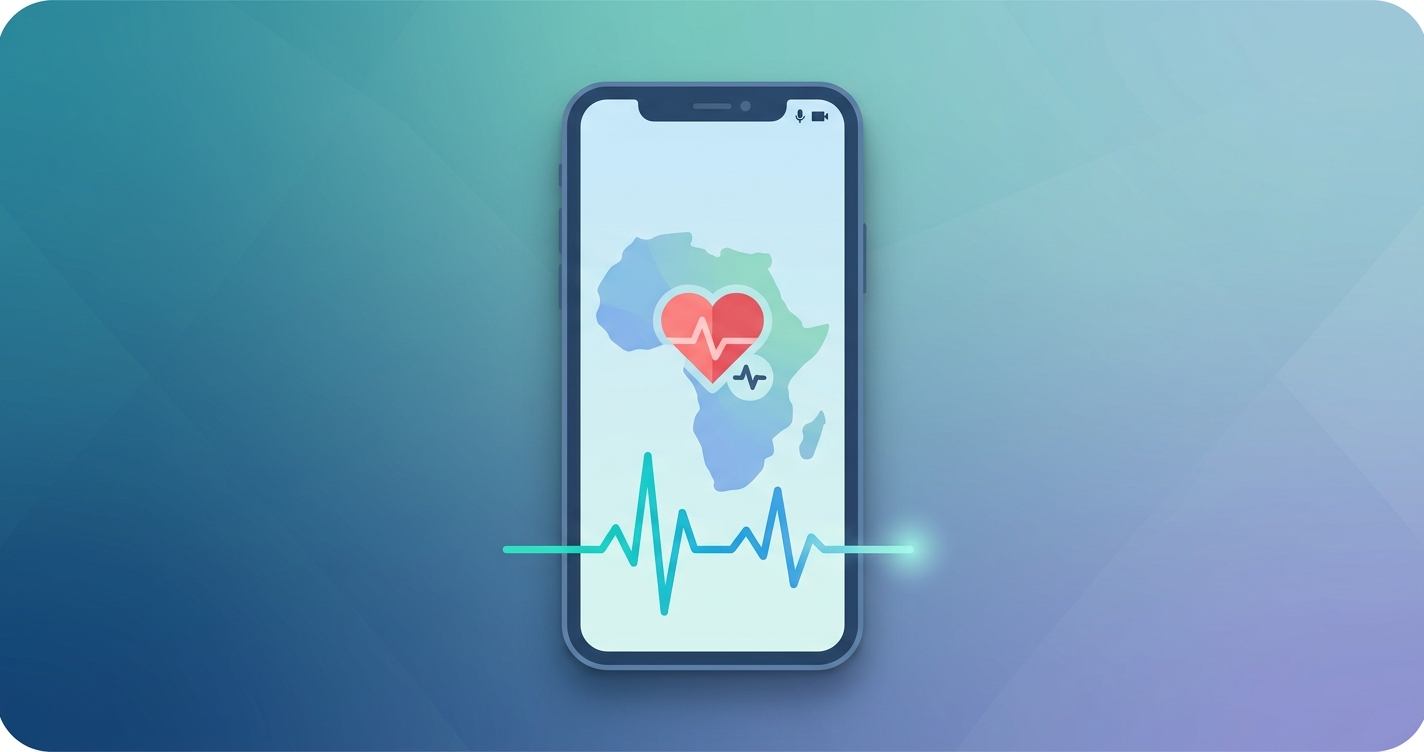
For an adult experiencing persistent headaches in a remote village, the thought of high blood pressure is a serious concern. But when the nearest clinic with a blood pressure cuff is hours or even days away, a simple check-up becomes a significant logistical and financial burden. This is a common reality for millions across Sub-Saharan Africa, where distance and lack of infrastructure are major barriers to essential healthcare. High blood pressure often presents with no obvious symptoms, earning it the name "the silent killer," which makes early detection and regular monitoring critically important for preventing heart disease, stroke, and kidney failure.
"The prevalence of hypertension in Sub-Saharan Africa is estimated to be around 30% among adults, with some studies suggesting over 40% in certain countries. A significant portion of these individuals are unaware they have the condition." - World Health Organization (WHO)
The challenge to check blood pressure with no clinic in rural africa
The difficulty of getting a diagnosis for hypertension in rural communities is a complex problem with deep roots. The primary obstacle is the scarcity of clinics and trained healthcare professionals. According to research on hypertension management in Sub-Saharan Africa, health systems are often overburdened, focusing on communicable diseases and maternal health, leaving fewer resources for non-communicable diseases like hypertension. When you need to check blood pressure with no clinic in rural Africa, the options have historically been nonexistent.
This "equipment desert" means that even when a community health worker is present, they may not have a functioning sphygmomanometer (a blood pressure cuff and gauge). These devices require maintenance, recalibration, and a trained operator-luxuries that are hard to sustain in low-resource settings. Furthermore, the cost of distributing and maintaining traditional medical hardware at a national scale is prohibitive for many health ministries. This leaves a massive gap in public health surveillance and individual care, where a manageable condition escalates into a life-threatening emergency simply because it was never detected.
| Feature | Traditional Cuff-Based Sphygmomanometer | Smartphone-Based rPPG Screening |
|---|---|---|
| Equipment Needed | Manual or digital cuff, pump, gauge | Standard smartphone with a camera |
| Accessibility | Low - Requires physical device transport & maintenance | High - uses existing mobile phone networks |
| Personnel Training | Moderate - Requires training on proper cuff placement and reading | Minimal - App-guided process, can be done by CHWs |
| Cost per Screening | Medium - Tied to device cost and maintenance | Low - Software-based, runs on existing hardware |
| Data Management | Manual - Paper-based records or manual entry | Automatic - Digital records, GPS tagging, cloud sync |
How mobile screening reaches remote communities
The proliferation of mobile phones across Africa offers a powerful new tool for public health. Technology that uses a smartphone's camera to screen for vital signs, including blood pressure, is bridging the gap between communities and clinics. This method, known as remote photoplethysmography (rPPG), measures changes in light reflection from the skin to assess blood flow and estimate blood pressure.
- Empowering Community Health Workers: Instead of carrying bulky medical kits, community health workers (CHWs) can use a standard smartphone to screen community members for hypertension during their regular household visits.
- Reaching the Unreachable: Mobile screening can be deployed anywhere with a mobile signal, turning every smartphone into a potential health screening point.
- Immediate Triage: The technology can provide an immediate risk assessment, helping a CHW identify individuals who need to be referred to a clinic for a full diagnosis and treatment.
- Data for Health Ministries: Each screening can generate a data point, contributing to a real-time map of hypertension prevalence that helps ministries of health allocate resources more effectively.
Deploying at scale
For health program managers at NGOs and government agencies, this technology enables a shift from reactive, clinic-based care to proactive, community-based screening. It allows for the design of large-scale hypertension screening programs that are not dependent on building new infrastructure. By integrating rPPG screening into existing programs, such as vaccination campaigns or maternal health check-ins, it's possible to reach thousands of people a day with minimal additional cost.
Current research and evidence
The shift towards camera-based screening is supported by a growing body of research. A multi-country study published in 2022 evaluated the accuracy of a smartphone application for blood pressure estimation in community settings across Tanzania, South Africa, and Bangladesh. Researchers, including those from the University of California, San Francisco, compared the app's readings to traditional cuff-based measurements. The findings showed that the technology generally performed well against international accuracy standards, particularly for diastolic blood pressure.
However, the research also highlighted the need for algorithm refinement for specific populations to improve accuracy, especially for systolic measurements. This ongoing work is crucial for developing tools that are Innovative. Equitable and effective across diverse user groups. The consensus in the research community is that while not yet a replacement for diagnostic-grade medical devices, rPPG technology is a highly effective tool for preliminary screening and risk assessment in low-resource environments.
The future of contactless health screening
As smartphone penetration in Sub-Saharan Africa continues to rise and camera technology improves, the potential for contactless health screening will only grow. Future developments will likely focus on integrating more advanced AI to improve accuracy and expanding the range of conditions that can be screened for, from respiratory rate to signs of anemia. For ministries of health and their partners, this technology represents a scalable and cost-effective way to tackle the rising tide of non-communicable diseases and move closer to the goal of universal health coverage. The ability to check blood pressure without a clinic is no longer a question of "if," but "when" it will be available to every community.
Frequently asked questions
Is a phone blood pressure check accurate? For general wellness screening, yes. Current smartphone-based technologies are designed to provide a risk assessment for hypertension, not a clinical diagnosis. They are highly effective for identifying individuals who may be at risk and should seek a follow-up with a healthcare provider. Research shows their accuracy is promising but can be influenced by factors like user skin tone and lighting conditions.
Do I need a special phone for this? No. These technologies are designed to work on standard smartphones with a regular camera. The processing is done by a specialized application, making the solution accessible to anyone with a common consumer-grade device.
Who can use this technology to help my village? Community health workers, NGO field staff, and local healthcare providers can all be trained to use this technology. Because it is software-based and requires minimal hardware, health ministries and their partners can deploy it widely through their existing networks of community-facing personnel to conduct large-scale screening campaigns.
This technology provides a vital first step in identifying health risks in areas where conventional medical services are out of reach. Circadify is actively working in this space, providing tools that enable global health organizations and ministries of health to deploy and manage community-based screening programs. By using the power of mobile technology, we can help bring essential health insights to the most remote corners of the world. For more information on our work and potential partnerships, please see our findings in global health at circadify.com/blog.