Is the smartphone becoming the most important medical tool in Africa?
A research-style analysis of how smartphones are being used as medical diagnostic and screening tools in Sub-Saharan Africa, citing studies and industry trends.
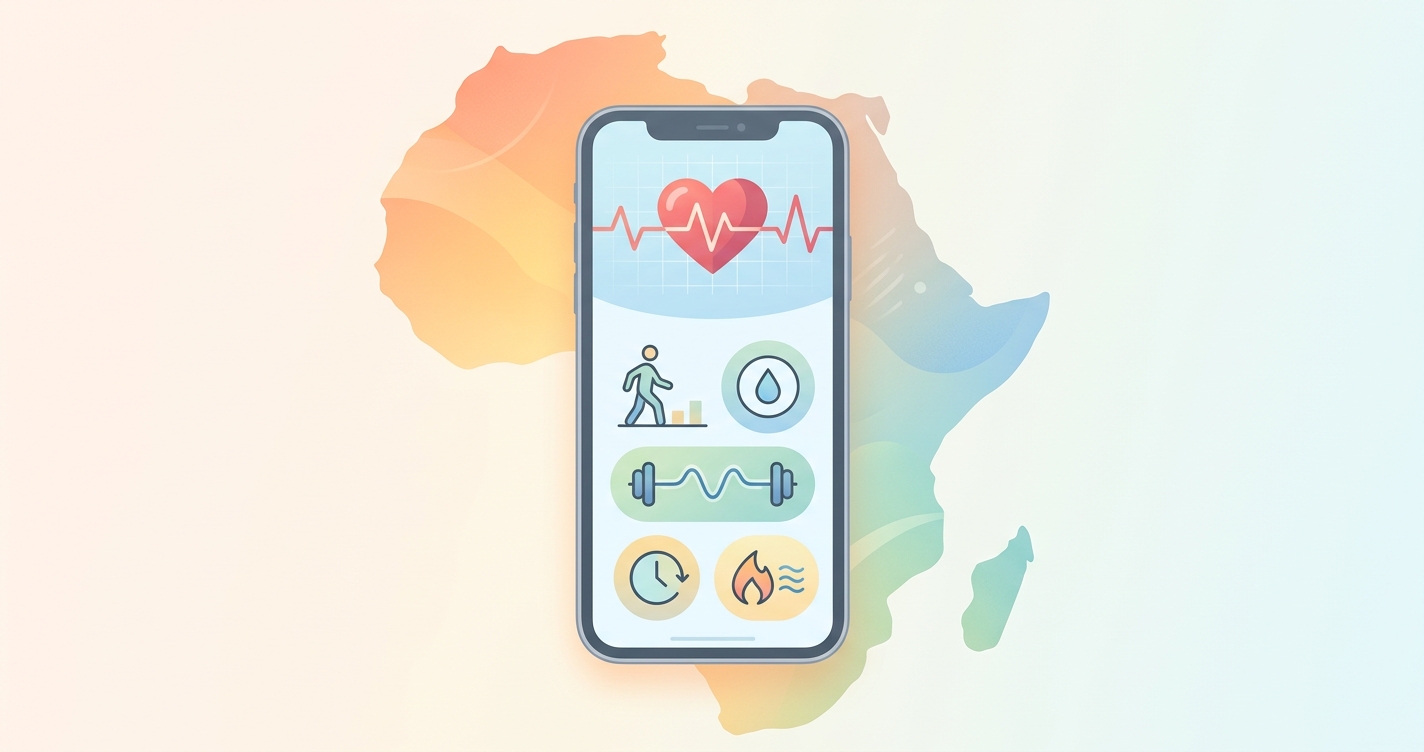
The rapid proliferation of smartphones across Sub-Saharan Africa is beginning to reshape the primary healthcare landscape. With mobile penetration exceeding 90% in many countries and smartphone adoption growing faster than in any other region, the device in everyone's pocket is becoming a viable platform for medical diagnosis, monitoring, and data collection. This trend is moving beyond academic research and into practical application, particularly in community health settings where traditional medical equipment is scarce. The question is no longer if the smartphone can be a medical tool, but how it is already becoming one of the most important tools in African healthcare.
"By 2030, there will be 1 billion mobile subscribers in Sub-Saharan Africa, and the majority of these connections will be on smartphones. This creates an unprecedented opportunity to deliver essential health services." - GSMA, "The Mobile Economy Sub-Saharan Africa," 2023.
The Rise of the Smartphone as a Medical Tool in Africa
The use of mobile technology for health, or "mHealth," is not a new concept in Africa. For over a decade, programs have used SMS for health messaging and patient reminders. However, the increasing availability of affordable, internet-enabled smartphones marks a pivotal shift. A smartphone is not just a communication device; it is a powerful sensor package containing a high-resolution camera, processor, and microphone. This makes it a platform for a new class of smartphone medical tool in Africa that can perform tasks previously requiring dedicated, expensive medical hardware.
Pioneering research from institutions like Makerere University in Uganda and the University of Pretoria in South Africa has consistently demonstrated the viability of smartphone-based diagnostics. Early studies focused on using phone cameras to diagnose skin conditions or analyze urine test strips. More recent work has pushed the boundaries further. Researchers like Dr. Andrew Bastawrous and his team at the London School of Hygiene & Tropical Medicine demonstrated Peek, an app for eye exams, as early as 2013, proving that complex screenings could be adapted for mobile devices. This laid the groundwork for the current wave of innovation, which sees the smartphone not just as an accessory but as the core diagnostic instrument. The formal partnership between the GSMA and the Africa CDC, signed in 2023, aims to institutionalize this trend through the HealthConnekt Africa initiative, which will connect all health facilities on the continent to the internet by 2030, creating a robust digital backbone for these tools.
| Feature | Traditional Medical Equipment | Smartphone-Based Medical Tools |
|---|---|---|
| Cost | High (e.g., $1,000+ for a pulse oximeter) | Low (uses existing or low-cost smartphones) |
| Portability | Often bulky and requires a power source | Highly portable, battery-powered |
| Training | Requires skilled technicians | Can be used by community health workers with minimal training |
| Connectivity | Typically offline, manual data entry | Built-in connectivity for real-time data transmission |
| Maintenance | Specialized maintenance and calibration | Software updates delivered remotely, minimal hardware maintenance |
| Scalability | Difficult and expensive to scale | Highly scalable through app distribution |
- Accessibility: Smartphones can reach rural and remote populations that have limited access to clinics or hospitals.
- Cost-Effectiveness: uses a device that people already own or can acquire cheaply, drastically reducing the cost per screening.
- Data Management: Enables immediate, automated data capture, reducing human error and improving the quality of health information systems.
- Task-Shifting: Allows less-specialized community health workers (CHWs) to perform screenings that once required a trained clinician.
- Patient Empowerment: Gives individuals the ability to monitor their own health indicators, such as blood pressure or blood glucose, building greater health awareness.
Industry Applications
The theoretical potential of the smartphone as a medical tool is now being realized through scalable, field-tested applications across the continent. These are not just research projects but operational deployments changing how healthcare is delivered.
Malaria diagnosis in kenya
In 2024, a pilot program in Kenya, supported by the startup Ubenytics and the Kenyan Ministry of Health, demonstrated the power of AI-driven diagnostics for malaria. Using smartphones attached to portable microscopes, health workers in 420 facilities could capture images of blood slides. An AI algorithm then analyzed the images for malaria parasites, delivering a diagnosis with high accuracy in minutes. This approach, as reported by Global Voices, significantly reduces the reliance on trained microscopists, who are in short supply, and speeds up the time to treatment.
Ai-assisted radiology in west africa
Ghanaian startup Chestify AI, founded in 2020, is addressing the critical shortage of radiologists in West Africa. Their platform uses AI algorithms to help clinicians interpret chest X-rays and other medical images. A healthcare provider can take a picture of an X-ray with a smartphone, and the AI provides a preliminary reading, highlighting potential abnormalities. This has been shown to reduce diagnostic turnaround times by approximately 40%, enabling faster clinical decisions in under-resourced health centers.
Contactless vital signs monitoring
A notable advancement is the use of remote photoplethysmography (rPPG), a technology that uses the smartphone camera to measure vital signs like heart rate, respiratory rate, and blood pressure without any physical contact. Companies are deploying this in countries like Uganda for community health screening. Community health workers can screen individuals for hypertension and other conditions in seconds, simply by recording a short video of their face. This removes the need for equipment like blood pressure cuffs, which require calibration and can be a vector for infection.
Current research and evidence
The academic and research community is vigorously exploring and validating the use of the smartphone medical tool in Africa. A 2023 analysis published in the African Journal of Laboratory Medicine highlighted the surge in publications related to AI and digital technology for diagnostics on the continent. This indicates a maturing field moving from proof-of-concept studies to more rigorous evaluation of accuracy, cost-effectiveness, and real-world impact.
A key area of research is the development of algorithms that are robust enough to work in diverse African populations and under variable conditions, such as poor lighting or older smartphone models. For example, research published in Nature (Kamal et al., 2023) demonstrated a method for measuring blood oxygen levels using a smartphone camera, with results comparable to conventional pulse oximeters across different skin tones, a critical factor for ensuring equity. Similarly, a 2025 review in the journal Environmental Science and Technology Letters emphasizes the role of smartphone-enabled diagnostics not just for medical purposes but also for environmental monitoring, linking population health to factors like air and water quality.
The Future of the Smartphone as a Medical Tool
The trajectory is clear: the smartphone will become increasingly integrated into formal healthcare systems in Africa. The future will likely see a shift from standalone apps to integrated platforms that are part of national electronic health record (EHR) systems. Initiatives like HealthConnekt Africa, a partnership between the GSMA and the Africa CDC, aim to connect all health facilities and workers to the internet by 2030, laying the digital infrastructure for this future.
As AI models become more sophisticated and smartphone sensors more sensitive, the range of possible diagnostics will expand. We can anticipate tools for early cancer detection, remote monitoring of chronic diseases like diabetes, and even mental health assessments based on voice and behavioral patterns. The primary challenge will be ensuring regulatory oversight, data privacy, and ethical use of this powerful technology.
Frequently asked questions
This section answers common questions about the use of smartphones as medical tools in Africa.
The evidence points to a fundamental transformation in healthcare delivery across Africa, driven by the mobile technology already in people's hands. As NGOs, health ministries, and their partners work to achieve universal health coverage, using the smartphone as a medical tool is no longer an option but a necessity. Circadify is at the forefront of this shift, developing and deploying contactless screening solutions that work in the most challenging environments. To learn how Circadify is partnering with organizations to use this technology on the ground, explore our work in the global health section at circadify.com/blog.