
What Maternal Health Screening Means for Remote Villages
A look into how global health programs are expanding maternal health screening in Sub-Saharan Africa without relying on traditional diagnostic hardware.
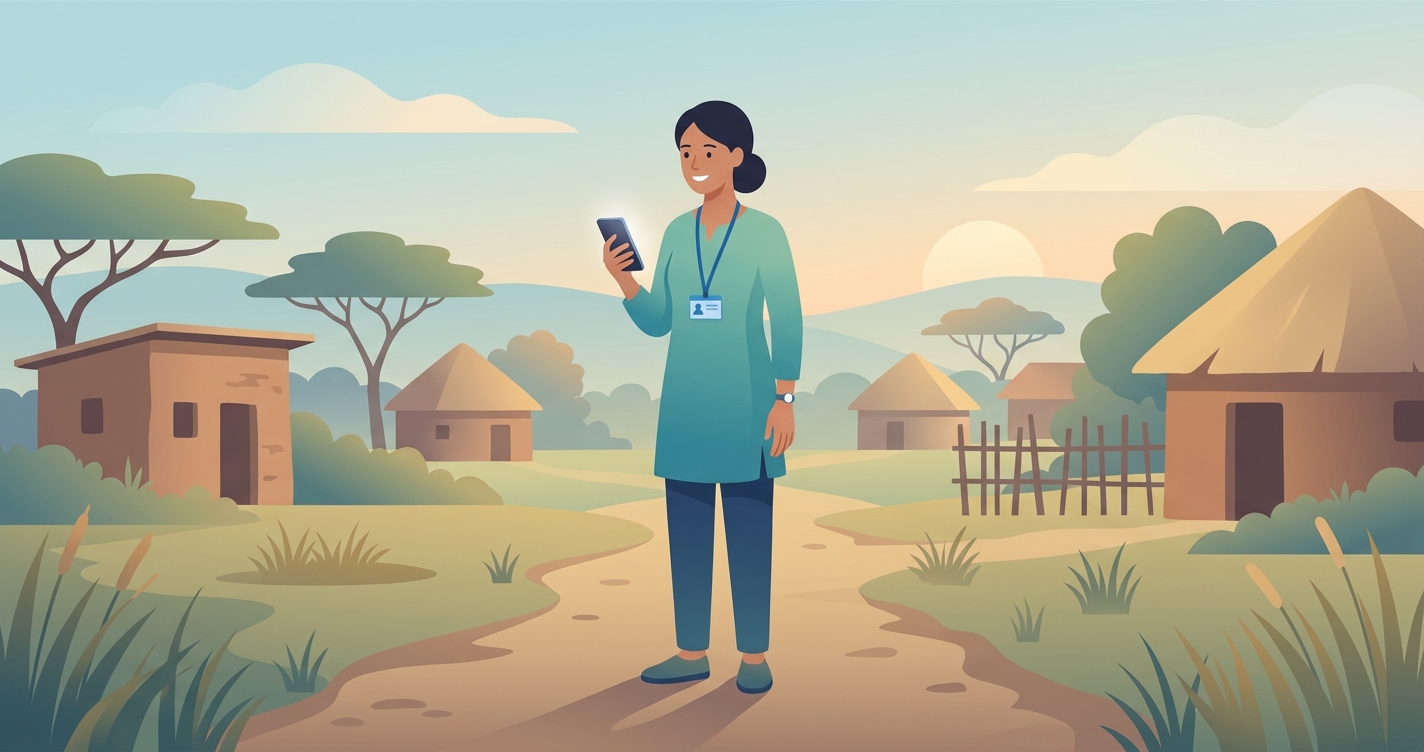
Program managers mapping out maternal mortality prevention strategies inevitably face the same logistical ceiling. The challenge of maternal health screening Sub-Saharan Africa is not a lack of clinical knowledge; it is a persistent lack of accessible hardware at the village level. A global health initiative can train thousands of community health workers, optimize supply chains for essential medicines, and build new referral hospitals, but early intervention depends entirely on early detection. In the global health sector, experts often refer to the "three delays" model of maternal mortality: the delay in seeking care, the delay in reaching a medical facility, and the delay in receiving adequate treatment once there.
The first delay is directly tied to a lack of awareness and a lack of diagnostic capacity at the community level. In regions where the nearest health facility is a day's walk away or requires expensive transport, detecting danger signs before they become clinical emergencies requires a rethinking of how and where measurements happen. When a pregnant woman cannot easily or safely reach a rural clinic, the clinic's screening capacity must somehow reach her. Solving this bottleneck requires moving beyond the constraints of traditional medical procurement.
"Sub-Saharan Africa continues to bear the highest burden of maternal mortality globally, accounting for approximately 70 percent of all maternal deaths in 2023, with 454 maternal deaths per 100,000 live births. Progress in reducing maternal deaths has largely stagnated since 2016."
, World Health Organization and UNICEF, Trends in Maternal Mortality Report (2023)
The structural challenge of prenatal screening without a clinic
The traditional model of prenatal care assumes the existence of a physical building equipped with blood pressure cuffs, thermometers, pulse oximeters, reliable electricity, and trained nursing staff. In rural and remote regions across the continent, this infrastructure is either completely absent or chronically under-resourced. Procurement teams evaluating health technology for developing countries understand a fundamental operational truth: hardware breaks, batteries degrade, and calibration standards slip over time.
When global health organizations attempt to bridge this gap by distributing traditional medical hardware to community health workers, they run into immediate operational friction. The logistics of the "last mile" are notoriously unforgiving. Cuff-based blood pressure monitors require specific sizing for accurate readings, and a one-size-fits-all approach routinely produces clinical errors. Thermometers require regular sterilization, disposable covers, or continuous battery replacements. For a community health worker walking miles between households in varying weather conditions, carrying a bulky, fragile diagnostic kit is simply impractical.
Furthermore, the environmental realities of Sub-Saharan Africa take a heavy toll on imported medical devices. High heat, pervasive dust, and extreme humidity degrade rubber tubing and electronic sensors at a rate far faster than manufacturers in the Global North anticipate. This leads to a high total cost of ownership, as programs must constantly replace broken equipment or accept that their field workers are operating with uncalibrated, inaccurate tools.
To achieve meaningful impact, health ministries and donor organizations are exploring alternative operational models. The goal is no longer just to build more brick-and-mortar clinics or fund massive hardware supply chains. Instead, the focus is shifting toward decentralizing the measurement of pregnancy vitals rural Africa using tools that community health workers already carry in their pockets: smartphones. By using existing mobile devices, health systems can bypass the physical supply chain entirely.
| Screening Method | Hardware Requirements | Logistical Burden | Scalability in Remote Villages |
|---|---|---|---|
| Traditional Clinic-Based | Blood pressure cuffs, thermometers, pulse oximeters, sterilization gear | High: Requires physical infrastructure, continuous power, and hardware maintenance | Low: Limited by facility access and patient travel distance |
| Hardware Distribution to CHWs | Portable diagnostic kits, batteries, multiple cuff sizes | Medium: High procurement costs, frequent equipment breakage, supply chain friction | Moderate: Constrained by hardware lifespan and carrying capacity |
| Contactless Smartphone Screening | Standard smartphone with a functioning camera | Low: Utilizes existing mobile infrastructure, no extra equipment to carry or sanitize | High: Software-based updates, easily deployed across existing worker networks |
Danger signs captured outside the clinic
Screening pregnant women far from a clinical setting focuses heavily on identifying high-risk conditions before they escalate into life-threatening emergencies. Pregnancy induces significant physiological changes, meaning the baseline for what constitutes a "normal" vital sign can shift. When community health workers are equipped to measure vital signs in the field, they are primarily looking for deviations in critical indicators that signal impending complications:
- Blood pressure abnormalities: Elevated blood pressure is the primary warning sign for pre-eclampsia and other hypertensive disorders of pregnancy. If left undetected, pre-eclampsia can rapidly progress to eclampsia, characterized by severe seizures, which is frequently fatal in remote settings without intensive care capabilities.
- Heart rate irregularities: An abnormally high resting heart rate can indicate underlying systemic issues. During pregnancy, this might point to severe dehydration, hemorrhage, anemia, or an escalating cardiovascular burden that the mother's body cannot sustain.
- Respiratory rate changes: Rapid breathing often serves as an early, highly sensitive indicator of severe systemic infections. In regions where malaria and pneumonia are endemic, identifying respiratory distress early is vital, as pregnant women are particularly vulnerable to sudden physiological decompensation from infectious diseases.
By capturing these vitals accurately during a household visit, a community health worker can make evidence-based triage decisions, determining whether a mother needs immediate emergency transport or if she can be safely monitored at home.
Industry applications for remote maternal screening
Deploying screening technology in remote settings requires seamless integration into existing global health programs. Health ministries and large-scale NGOs do not want fragmented, standalone applications. They require comprehensive systems that plug directly into their current operational workflows and data architectures.
Equipping community health workers
The most direct application for contactless vital signs monitoring is within established community health worker networks. Programs in East Africa, particularly in Uganda, are increasingly using mobile health technology to empower frontline workers. By using a smartphone camera to measure vital signs, a worker can conduct a comprehensive preliminary screening during a routine household visit. This shifts the triage process from the hospital waiting room to the patient's living room. It ensures that limited and expensive transport resources, such as community ambulances or fuel stipends, are strictly reserved for women who exhibit objective clinical danger signs.
National outreach and immunization campaigns
National health ministries frequently run mass outreach programs, such as polio supplementary immunization activities or seasonal malaria chemoprevention campaigns. These high-contact events present a massive, often underutilized secondary opportunity for maternal health screening. When health workers are already deployed in the field interacting with large segments of the population, software-based screening allows them to capture maternal vital signs without adding physical hardware logistics to the campaign's already strained supply chain.
Data integration for national health ministries
Beyond individual patient triage, digital screening tools offer a macro-level benefit: instant data digitization. When vitals are captured via smartphone, the anonymized data can be automatically uploaded to national health databases. This provides health ministries with real-time epidemiological surveillance, allowing them to map geographic hotspots for conditions like pregnancy-induced hypertension and allocate resources accordingly.
Current research and evidence
The clinical urgency of improving vital sign monitoring during pregnancy is extensively documented in recent epidemiological research. Hypertensive disorders of pregnancy drive a massive proportion of maternal fatalities across the African continent.
A 2023 systematic review published in the Pan African Medical Journal by researchers at the University of Gondar, including Dr. Getachew Mullu Kassa, found that the overall pooled incidence of pre-eclampsia in Sub-Saharan Africa is approximately 13 percent. This exceptionally high prevalence highlights the absolute necessity for aggressive, population-level screening initiatives outside of traditional clinical walls.
Specific country data further amplifies this crisis. According to a 2023 report from the Uganda Ministry of Health, pre-eclampsia was the second leading cause of maternal death in the country, contributing to 15 percent of all maternal fatalities. Research conducted in 2024 by teams at St. Mary's Hospital Lacor in Northern Uganda demonstrated that predictive screening models relying on consistent blood pressure monitoring and demographic history are highly critical for early intervention in low-resource settings.
Furthermore, a 2023 study published in BMC Pregnancy and Childbirth by researchers at Mbarara University of Science and Technology in Uganda revealed significant gaps in vital sign monitoring even within established clinical environments. The study found that quality monitoring was alarmingly low, with only a fraction of women receiving high-quality vital sign checks in the immediate postpartum period. If regional referral hospitals struggle with consistent monitoring due to persistent staff and equipment shortages, the argument for decentralized, software-based screening at the community level becomes even more pressing.
The future of maternal health screening
The future of maternal health screening in low-resource environments is steadily moving away from hardware procurement and toward scalable software deployment. Remote photoplethysmography and other advanced camera-based technologies represent a fundamental operational shift in how global health programs build screening capacity.
Instead of navigating the complex, expensive logistics of shipping, tracking, and repairing physical diagnostic devices across vast rural expanses, ministries of health will increasingly distribute screening capabilities via digital downloads. A community health worker's standard issue smartphone will serve as a versatile, multi-diagnostic tool, capable of capturing the critical data needed to identify at-risk pregnancies without requiring a backpack full of calibrated instruments.
This transition will not replace the need for skilled obstetric care, midwives, or emergency medical facilities. Rather, it will optimize the entire referral pathway. By accurately identifying which women need immediate clinical attention and which can safely remain in their villages, health systems can allocate their severely limited resources much more efficiently. Ultimately, moving the initial point of screening into the community is the most viable strategy for reducing the structural delays that continue to drive maternal mortality across the continent.
Frequently asked questions
How does contactless screening work for pregnant women?
Contactless screening uses the optical sensors in a standard smartphone camera to detect micro-changes in light absorption as blood pulses under the skin. This technology allows software to calculate vital signs like heart rate and respiratory rate without any physical equipment attaching to the patient.
Why is pre-eclampsia screening so difficult in remote villages?
Pre-eclampsia is characterized by elevated blood pressure, which traditionally requires a calibrated cuff and a trained operator to measure. In remote villages, the lack of functioning blood pressure cuffs, combined with the distance to the nearest clinic, means women often go undiagnosed until the condition becomes severe.
Can software replace traditional clinical hardware in Africa?
Software is not meant to replace clinical hardware in hospitals, but rather to bridge the screening gap in communities where traditional hardware cannot be sustained. For community health workers operating miles from a power grid, software-based screening provides a logistical alternative to carrying fragile diagnostic kits.
As global health NGOs and African health ministries continue to redesign their operational strategies for maternal mortality prevention, the transition from hardware-dependent diagnostics to software-based community tools is accelerating. Circadify is actively supporting these efforts by deploying smartphone-based vital signs screening that requires no additional equipment. To learn more about how our technology integrates with community health programs and to view our latest field data, visit our partnership resources at https://circadify.com/blog.