
Phone Camera vs Medical Devices: Which Screens Patients Faster?
A head-to-head look at smartphone health screening vs medical devices on speed, cost, and maintenance for African community health programs.
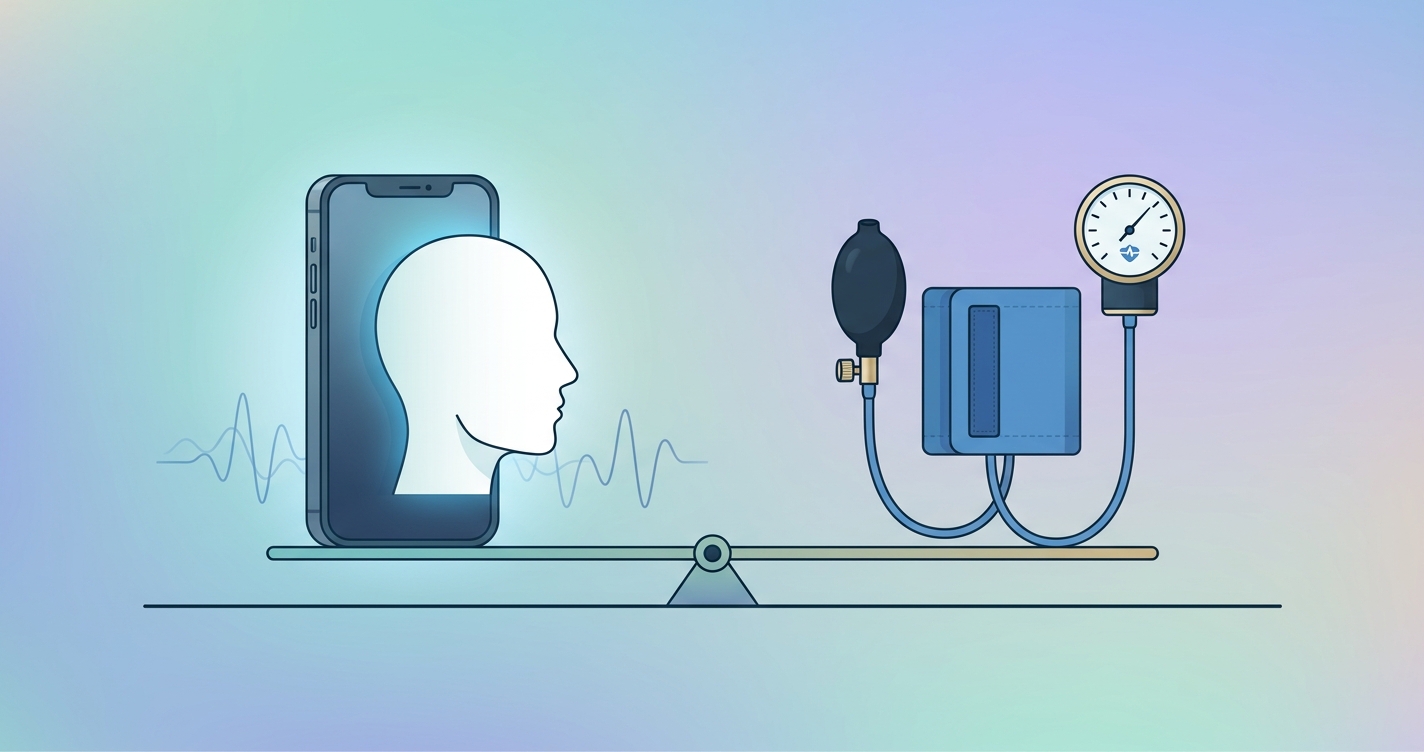
Procurement officers at health ministries across Sub-Saharan Africa are asking a question that did not exist a decade ago: when a phone in a health worker's pocket can read a patient's pulse and breathing rate from the face, why keep buying containers of imported monitors that sit broken in storerooms? The comparison of smartphone health screening vs medical devices is no longer a thought experiment. It is a live budgeting decision, and the variables that matter most to a program manager are speed at the point of contact, total cost over a deployment cycle, and the maintenance burden that quietly drains operating funds long after the purchase order is signed.
"Approximately 40% of medical devices in low- and middle-income countries are out of service," the World Health Organization reported in its 2023 statement on health technology management, pointing to poor maintenance, missing spare parts, and a shortage of trained biomedical engineers as the main causes.
Smartphone health screening vs medical devices: the three variables that decide deployments
When ministry decision-makers evaluate screening capacity, the headline price of a device is the least useful number on the page. A blood pressure monitor or pulse oximeter that costs a modest amount to buy can cost several times that figure across its working life once calibration, consumables, repairs, and downtime are counted. Camera-based screening shifts the cost structure entirely, because the sensor is a phone the health worker already carries and the measurement is software running on it.
Speed is where the gap shows up first in the field. Research summarized in a 2024 review of remote photoplethysmography (rPPG) for health assessment found that a contactless facial scan can return heart rate, respiratory rate, and oxygen saturation in roughly 30 seconds to 1.5 minutes. By contrast, a properly conducted manual blood pressure reading requires a rest period before the first reading and one to two minutes between repeated readings to be reliable. In a mass screening line, that difference compounds across hundreds of patients per day.
The table below frames the core trade-offs that matter to a procurement decision.
| Factor | Smartphone camera screening | Imported medical devices |
|---|---|---|
| Time per patient | ~30 to 90 seconds, contactless | 2 to 5 minutes including rest and repeat readings |
| Upfront capital | Software on existing phones | Per-unit hardware purchase, often in foreign currency |
| Consumables | None | Cuffs, probes, batteries, calibration kits |
| Maintenance | Software updates over the air | Spare parts, technicians, service contracts |
| Downtime risk | Tied to phone battery and signal | ~40% out of service in LMICs (WHO, 2023) |
| Scaling cost | Marginal per added worker | Linear per added device |
| Infection control | No contact, no shared surfaces | Shared cuffs and probes require cleaning |
A few patterns stand out when the variables are read together rather than in isolation:
- Hardware cost is front-loaded for imported devices and spread thin for phone-based screening, which changes how a multi-year program plans cash flow.
- The maintenance line item, not the purchase price, is what most often kills a device fleet in remote districts.
- Speed advantages only translate into throughput if the workflow around the measurement is also fast, which favors contactless capture.
- Accuracy expectations differ by vital sign, and that nuance belongs in any honest comparison rather than a blanket claim.
Industry applications across screening programs
Mass screening and campaigns
National immunization days, nutrition surveys, and outbreak response all share a brutal constraint: large numbers of people, short windows, and limited staff. The camera-based vitals comparison is most favorable here, because a contactless scan removes the cuff-cleaning and probe-handling steps that slow a manual line and raise infection-control concerns. A health worker can move from one person to the next without resetting equipment.
Rural and last-mile clinics
For facilities far from district hospitals, the imported devices vs phones question is really a question about repair logistics. When a monitor fails in a remote clinic, the device may travel for weeks to reach a technician, if one exists at all. A phone that runs screening software can be replaced through ordinary consumer supply chains, and the screening capability is restored with a download rather than a service visit.
Community health worker networks
Community health workers are the largest screening workforce in most African health systems. Equipping each of them with a dedicated medical device is expensive and fragile. Loading screening software onto the phones they already use turns an existing asset into a measurement tool, which is the practical core of the unique value proposition behind smartphone-based deployments in Uganda and similar settings.
Current research and evidence
The evidence base for camera-based vitals has matured quickly. A 2024 systematic review of rPPG for heart rate monitoring published in the Journal of Personalized Medicine documented strong agreement for heart rate under controlled conditions, with mean absolute error often within a few beats per minute. A separate evaluation of a camera-based monitoring solution against regulated medical devices, published in PMC, reported high accuracy for heart rate and respiratory rate while noting that blood pressure estimation carried wider error margins, with systolic mean absolute error reported in the range of roughly 9 to 14 mmHg.
The honest reading of this literature is that camera-based screening is strongest for heart rate and respiratory rate, useful for triage-level oxygen saturation, and still maturing for blood pressure. Researchers including the authors of the 2024 Applied Sciences study on deep-learning rPPG have flagged that motion, lighting, and skin tone affect results, and that algorithms must be tested across diverse populations rather than assumed to transfer. For a screening program, that means positioning camera-based tools as a fast first-pass filter that flags who needs confirmatory measurement, not as a wholesale replacement for every diagnostic instrument.
On the device side, the WHO's 2023 findings on the roughly 40% out-of-service rate for medical equipment in low- and middle-income countries remain the most cited evidence of the maintenance problem. The organization's broader work through its Global Initiative on Health Technologies has repeatedly tied non-functional equipment to weak procurement practices and the absence of local biomedical engineering capacity. The cost of medical equipment in Africa, in other words, is not mostly the sticker price. It is the recurring expense of keeping imported hardware alive in environments it was not designed for.
The future of smartphone health screening vs medical devices
The trajectory points toward a layered model rather than a winner-take-all outcome. Camera-based screening is likely to absorb the high-volume, low-complexity first contact, where speed and zero consumables matter most, while a smaller fleet of well-maintained devices handles confirmation and clinical care. Three developments will shape how fast that shift happens:
- Validation in real field conditions, with study populations that reflect the skin tones, lighting, and movement of actual screening lines, will determine how much clinical trust the tools earn.
- Offline-capable software will widen deployment into areas with intermittent connectivity, removing one of the last hard dependencies of phone-based screening.
- Data integration into national health information systems will turn millions of fast screens into population-level signal that informs policy, not just individual triage.
The screening speed comparison will keep favoring contactless capture as algorithms get faster and phones get cheaper. The maintenance comparison already favors software. The open frontier is accuracy parity across the full vital-sign panel, and that is where the next few years of research will decide how much of the screening burden phones can responsibly carry.
Frequently asked questions
Is smartphone screening accurate enough to replace medical devices?
For heart rate and respiratory rate, peer-reviewed studies in 2024 show strong agreement with reference devices. Blood pressure estimation still carries wider error margins. The practical role is fast first-pass triage that flags who needs confirmatory measurement, not a full replacement for every diagnostic instrument.
Why do imported medical devices fail so often in African clinics?
The WHO reported in 2023 that roughly 40% of medical devices in low- and middle-income countries are out of service, driven by poor maintenance, missing spare parts, and too few trained biomedical engineers. Proprietary imported hardware is especially hard to repair locally.
How much faster is camera-based screening?
A contactless facial scan typically returns several vital signs in about 30 to 90 seconds. A reliable manual blood pressure reading needs a rest period and repeated readings, pushing time per patient to several minutes, which compounds across high-volume screening lines.
What is the real cost difference?
The purchase price understates the gap. Imported devices add recurring costs for consumables, calibration, repairs, and downtime, while phone-based screening runs on existing hardware and updates over the air. Total cost of ownership, not unit price, is the figure ministries should compare.
For health ministries and global health partners weighing these trade-offs, the decision hinges on field data rather than vendor claims. Circadify is working in this space with smartphone-based screening deployed in Uganda, and its global health team publishes partnership terms and field results that program managers can use to build a proper cost analysis. Review the evidence and engagement model in the global health section at circadify.com/blog.