How Smartphone Screening Addresses Maternal Mortality in Africa
An analysis of how smartphone-based screening tools are helping reduce maternal mortality across Sub-Saharan Africa by detecting complications earlier through community health worker networks.
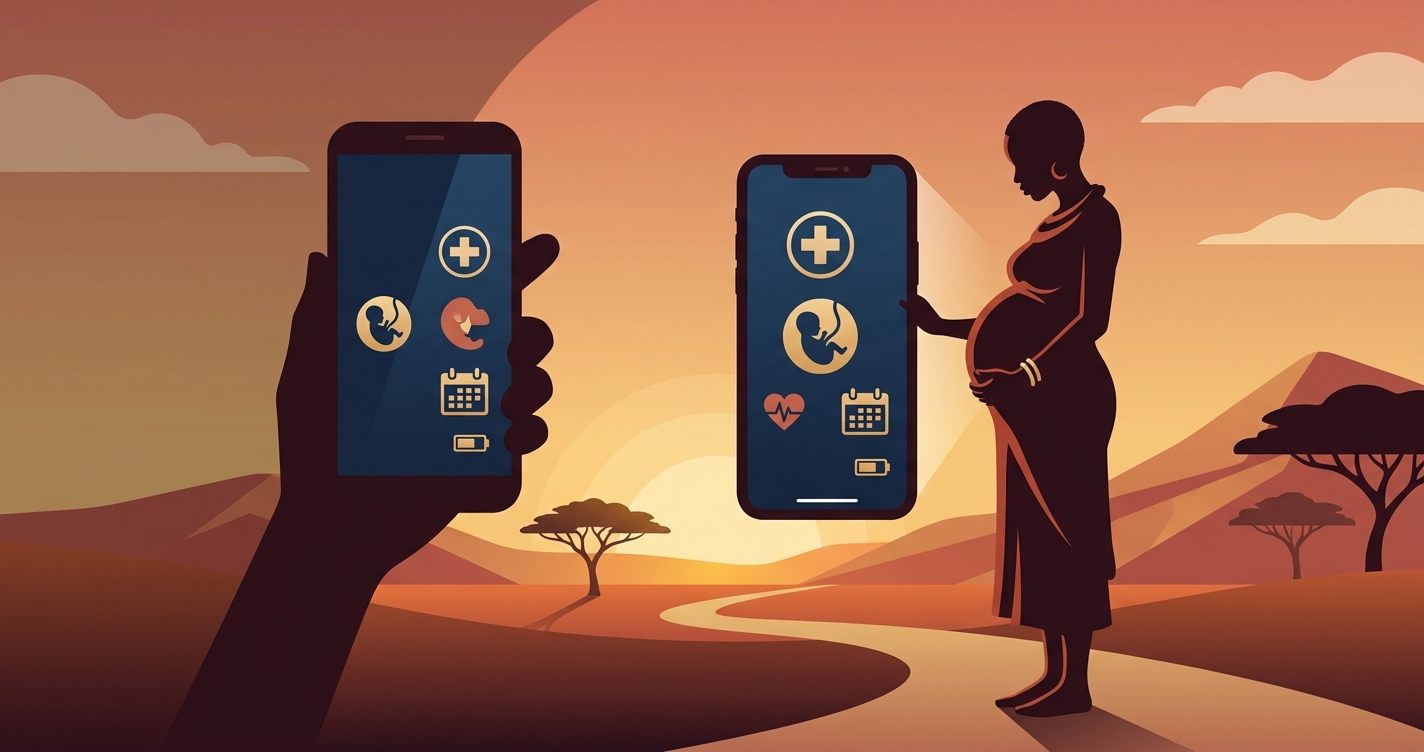
Sub-Saharan Africa accounts for roughly 70% of all maternal deaths worldwide. In 2023, the region recorded 454 maternal deaths per 100,000 live births, compared to 3 per 100,000 in Australia and New Zealand (UNICEF Data, 2024). The gap is staggering, and it has barely moved in the past decade despite billions in aid spending. Most of these deaths come from conditions that clinicians have known how to treat for generations: hemorrhage, preeclampsia, sepsis, obstructed labor. The problem was never a lack of medical knowledge. It was always about getting the right information at the right time to someone who could act on it.
Smartphone screening for maternal mortality in Africa has started to change that equation, and the shift is worth examining in detail.
"Maternal mortality is not a medical mystery. The interventions that prevent maternal death are well-known, well-tested, and cost-effective. The persistent challenge is delivering those interventions to every pregnant woman, regardless of where she lives." — The Lancet Maternal Health Series, 2023
Why traditional screening fails pregnant women in rural Africa
The standard approach to maternal health monitoring depends on antenatal care visits at a health facility. The WHO recommends at least eight contacts during pregnancy. In practice, the median gestational age at first antenatal visit across Sub-Saharan Africa is 5.2 months, according to Demographic and Health Survey data compiled by the WHO in 2024. Many women attend only one or two visits total.
The reasons are structural. A pregnant woman in rural Uganda or northern Nigeria may live 15 kilometers from the nearest health facility. (For context on the broader mobile health landscape in the region, see our analysis of mobile health technology in rural Africa.) Getting there means transport costs, lost agricultural work time, and sometimes securing permission from a spouse or family elder. When she arrives, the facility may not have a functioning blood pressure cuff. The WHO Medical Device Technical Series has documented that up to 40% of clinical equipment in district-level facilities across Sub-Saharan Africa is non-functional at any point in time.
Preeclampsia, which causes roughly 14% of maternal deaths in the region according to a 2025 WHO systematic analysis published in The Lancet Global Health (Cresswell et al., 2025), develops through progressive hypertension that serial blood pressure monitoring can detect. But serial monitoring requires repeated visits. Fewer visits means later detection, which means the condition is more likely to progress to eclampsia — the convulsive, frequently fatal stage.
Hemorrhage, the leading cause of maternal death in the African region at 27% of deaths (WHO Africa Regional Factsheet, 2021), is harder to predict through screening alone. But abnormal vital signs in the weeks before delivery can flag elevated risk, and women identified as high-risk can be directed to deliver at facilities with surgical capability rather than at home with a traditional birth attendant.
How smartphone-based mHealth tools work in the field
The mHealth approach to maternal screening puts a diagnostic tool in the hands of community health workers who already visit pregnant women in their homes. Instead of requiring the woman to travel to a facility, the screening comes to her.
Several models exist. Some rely on SMS reminder systems that prompt women to attend clinic visits — a 2022 systematic review in Frontiers in Global Women's Health found that text-based reminders improved antenatal care attendance rates but had limited evidence of direct impact on mortality outcomes. More recent approaches go further by collecting actual vital sign data during household visits.
Camera-based contactless screening using remote photoplethysmography (rPPG) represents the newest iteration. A community health worker holds a smartphone camera facing the woman for about 30 seconds. The camera detects subtle color changes in facial skin caused by blood flow, and algorithms extract heart rate, respiratory rate, blood pressure estimates, and stress indicators from the video signal. A 2023 study published on medRxiv by researchers studying rPPG accuracy found that smartphone-based rPPG technology matched traditional PPG devices for cardiovascular monitoring.
No cuff. No stethoscope. No physical contact. No equipment that needs calibration or replacement parts.
What changes when CHWs can screen during home visits
The practical effects are worth spelling out because they compound:
Monitoring happens more often. In Uganda, Village Health Team members visit assigned households at least monthly. In Ethiopia, Health Extension Workers make fortnightly visits. When each visit includes a vitals check, a woman might get screened 6-9 times during pregnancy instead of once or twice at a clinic.
Screening starts earlier. Facility-based care often begins in the second trimester. Community-based screening can start as soon as a CHW confirms the pregnancy, potentially catching conditions that develop early.
Trends become visible. A single blood pressure reading tells you relatively little. A series of readings across weeks shows whether pressure is climbing — and a climbing trend is far more useful for preeclampsia detection than any individual number.
Referrals happen faster. A CHW who sees an abnormal reading can refer the woman to a facility that same day rather than hoping she makes it to her next scheduled appointment.
Comparing maternal screening approaches in low-resource settings
| Factor | Facility-based ANC only | CHW with basic equipment | CHW with smartphone screening |
|---|---|---|---|
| Typical screening frequency per pregnancy | 1-4 visits (often incomplete) | 2-4 visits (campaign-based) | Monthly or more (routine household visits) |
| Equipment cost per provider | $80-$150 for BP cuff, stethoscope | $80-$150 plus transport logistics | Smartphone with camera (often already owned) |
| Training required | Nursing or midwifery certificate (2-3 years) | Weeks to months of outreach training | 90-minute app onboarding |
| Data capture method | Paper registers, manual compilation | Paper forms, periodic submission | Automatic digital with GPS and timestamp |
| Physical contact needed | Yes (cuff, palpation) | Yes | None |
| Postpartum monitoring | Rare (low return-visit rates) | Rarely included in campaigns | Continues with routine CHW visits |
| Estimated cost per woman monitored | $25-$60 per pregnancy | $15-$40 per pregnancy | $2-$8 per pregnancy (marginal software cost) |
| Infection control risk | Shared equipment between patients | Shared equipment | No shared surfaces |
Sources: WHO Recommendations on Antenatal Care (2016); UNICEF Maternal Health Programme Evaluations (2022-2024); Financing Alliance for Health (2022).
Where smartphone screening has been deployed
Uganda
Uganda's community health system relies on Village Health Teams — volunteer health workers who serve as the first point of contact between communities and the formal health system. The country had a maternal mortality ratio of 284 per 100,000 live births as of the most recent DHS data. Programs integrating smartphone-based screening into VHT workflows have been tested in districts across central and western Uganda, using the existing community health infrastructure rather than creating parallel systems.
Ethiopia
Ethiopia's Health Extension Program employs over 38,000 Health Extension Workers stationed at health posts across the country. The program has been credited with significant reductions in child mortality and malaria deaths. Adding smartphone screening to HEW workflows is a logical extension, particularly for catching hypertensive disorders during the routine household visits that HEWs already conduct every two weeks. Our earlier piece on how community health workers use contactless screening in the field covers the CHW training model in more detail.
Nigeria
Nigeria accounts for the largest absolute number of maternal deaths of any country — roughly 82,000 per year according to WHO estimates. The northern regions face the greatest burden, with maternal mortality ratios exceeding 1,000 per 100,000 live births in some states. mHealth programs in Nigeria have focused on both demand-side interventions (SMS reminders to pregnant women) and supply-side improvements (decision-support tools for midwives). A study in JMIR mHealth and uHealth (2022) found that mHealth interventions supporting community health workers in rural Nigeria improved both care-seeking behavior and health worker performance.
Kenya and Tanzania
East African countries with relatively strong mobile phone penetration have been early adopters of mHealth for maternal health. Kenya's M-TIBA platform and Tanzania's Wazazi Nipendeni program both use mobile technology for maternal health messaging, though most programs have focused on information delivery rather than actual vital sign collection.
Current research and evidence
The evidence base for smartphone-based maternal screening is growing, though it remains early-stage compared to traditional approaches.
Dr. Peter von Dadelszen at King's College London has led some of the most significant work on community-level preeclampsia detection through the CLIP (Community Level Interventions for Pre-eclampsia) trials, which tested whether community health worker-led screening and triage could reduce maternal and perinatal mortality. The trials, conducted across Mozambique, Pakistan, and India, demonstrated that community-based blood pressure monitoring with mobile health decision support was feasible and acceptable.
A systematic review published in PLOS ONE (2025) examined mHealth clinical decision-making tools for maternal and newborn health, finding that mobile decision-support applications improved the quality of care provided by health workers in low-resource settings, though the authors noted significant heterogeneity across studies.
Research on rPPG accuracy specifically has advanced rapidly. A medRxiv preprint (2023) evaluating smartphone-based rPPG for vital sign monitoring found the technology comparable to traditional pulse oximetry devices. Work published in JMIR Human Factors (2026) evaluated a smartphone application for blood pressure monitoring in pregnant women, including those with preeclampsia, and reported reliable measurements across pregnancy trimesters.
The gap in the literature is longitudinal outcome data. Most studies measure process indicators (screening coverage, referral rates, health worker compliance) rather than hard outcomes (maternal deaths averted). That gap will likely close as programs scale and collect multi-year data.
The cost argument for health ministries and donors
Cost matters enormously in contexts where per-capita health expenditure may be under $50 per year. The economics of smartphone screening favor it heavily over alternatives.
A sphygmomanometer costs $80-$150 and requires replacement every 2-3 years in field conditions. Multiply that across thousands of health workers and the equipment budget alone becomes substantial. Smartphone-based screening shifts the cost to software, which scales differently — the marginal cost of adding one more user is close to zero once the platform is built.
Training time matters too. Certifying a new clinical health worker takes years. Training a community health worker to use a smartphone screening app takes hours. In countries facing severe health workforce shortages (Sub-Saharan Africa has roughly 2.2 health workers per 1,000 population against the WHO minimum threshold of 4.45), the ability to expand the screening workforce quickly is not a minor consideration.
Donor-funded programs also benefit from the digital trail. Every screening event generates timestamped, geolocated data that funders can use to verify program activity and measure reach. That kind of accountability is far more difficult to achieve with paper-based systems.
What still needs to happen
Smartphone screening is not going to solve maternal mortality on its own. Several pieces need to come together.
Referral pathways need to work. Detecting a complication early only matters if the woman can reach a facility equipped to treat it. In many rural areas, the referral chain remains broken by distance, transport costs, and facility capacity.
Connectivity remains patchy. While many smartphone screening tools work offline (including rPPG-based solutions that process video on-device), data synchronization and remote clinical oversight require network access that is not yet universal.
Health worker motivation is fragile. Community health workers across Sub-Saharan Africa are frequently unpaid or irregularly compensated volunteers. Adding screening tasks to their workload without addressing compensation risks burnout and attrition.
Regulatory frameworks are catching up. Most African health ministries do not yet have formal policies governing smartphone-based diagnostic tools. Integrating these tools into national health programs requires regulatory clarity that is still developing.
Frequently asked questions
Can smartphones really measure blood pressure without a cuff?
Remote photoplethysmography (rPPG) analyzes subtle skin color changes caused by blood flow through facial tissue. The camera captures these micro-changes and algorithms estimate cardiovascular parameters including blood pressure. Research published in JMIR Human Factors (2026) has shown reliable blood pressure measurements from smartphone apps in pregnant women, though the technology measures estimates rather than the direct arterial pressure that a cuff provides.
How does this work in areas without reliable internet?
Most rPPG-based screening apps process video locally on the smartphone. The vital sign extraction happens on-device, not in the cloud. Data can be stored locally and synchronized when the health worker reaches a connectivity point. This offline-first design is standard for tools built for rural Sub-Saharan Africa.
What happens when a screening detects a problem?
The screening app typically flags abnormal readings and generates a referral recommendation. The community health worker then helps the woman access facility-based care, which may involve coordinating transport, notifying the receiving facility, and following up after the visit.
Are community health workers qualified to do this screening?
Community health workers are not making clinical diagnoses. They are collecting data and following protocol-based decision support. The screening tool handles the interpretation and generates clear guidance. This task-shifting model — where trained but non-specialist workers perform specific clinical tasks under protocol — is well-established in global health and endorsed by the WHO.
Where this is heading
Organizations like Circadify are building smartphone-based screening specifically for deployment contexts like community health in Sub-Saharan Africa. The approach takes rPPG technology that works on any smartphone with a front-facing camera and packages it for the operational realities of field health work — offline functionality, minimal training requirements, automatic data collection. For global health organizations, NGOs, and health ministries looking at how to extend maternal screening coverage without building new clinics, this is worth a serious look. More information on field deployment programs is available at circadify.com.
Maternal mortality in Sub-Saharan Africa is a logistics problem disguised as a medical one. The medicine exists. The challenge is getting screening to women where they live, when they need it, at a cost that health systems can sustain. Smartphones are the first tool that fits all three requirements at once.