
Smartphone Screening vs Imported Medical Devices: Cost in Africa
Compares total cost of ownership between donated devices and smartphone-based screening over five years to help health ministries optimize procurement.
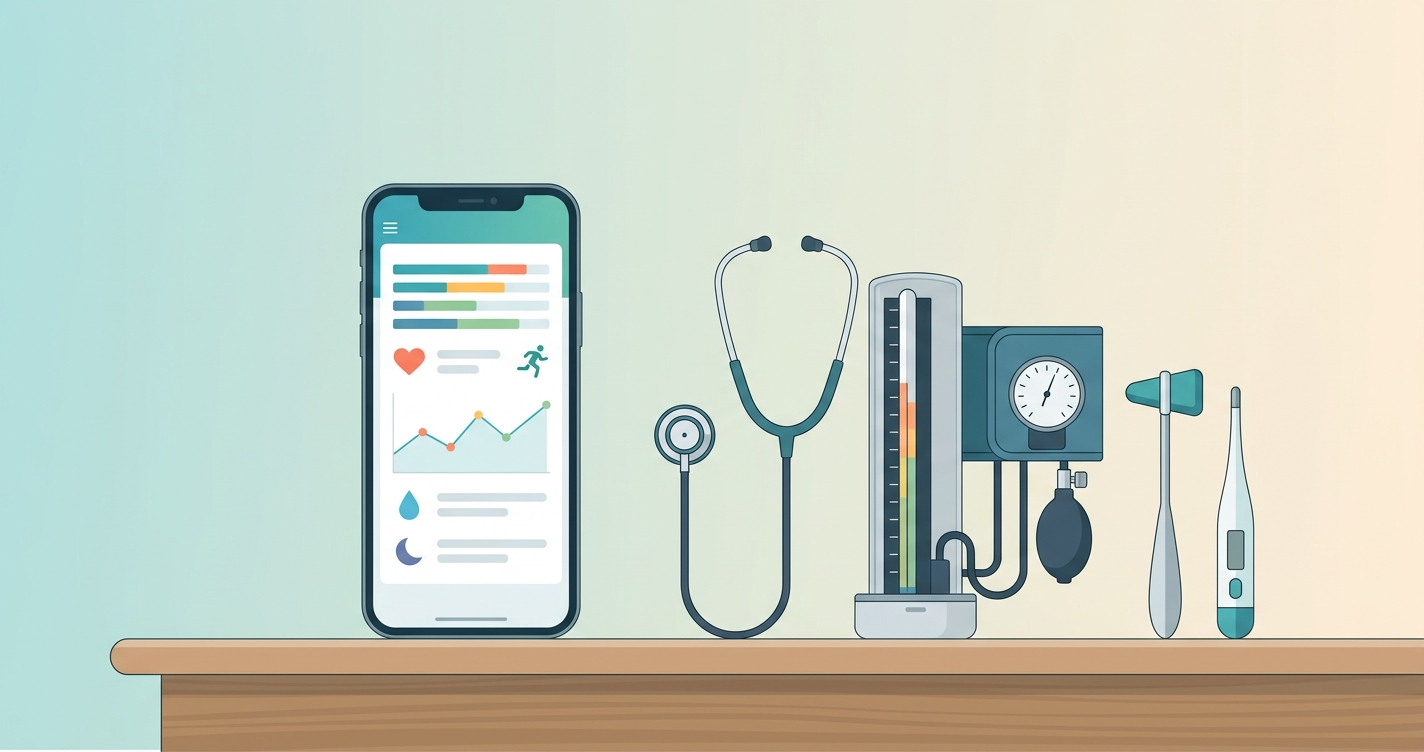
For health ministries and non-governmental organizations operating across Sub-Saharan Africa, procurement cycles often involve a complex calculation of capital expenditure versus long-term utility. Evaluating smartphone health screening vs medical devices cost requires moving beyond the initial purchase price to understand the total cost of ownership over a multi-year deployment. Historically, global health programs have relied on imported, dedicated hardware to measure patient vitals in rural clinics. However, mounting evidence suggests that physical hardware shipments carry hidden maintenance burdens that software applications simply avoid.
When a donor organization or a national health ministry drafts a budget for expanding primary care access, the line items traditionally focus on physical assets. Shipping containers full of diagnostic monitors, blood pressure cuffs, and digital thermometers arrive at ports in Mombasa or Dar es Salaam, destined for rural outposts. Yet, within months, many of these devices sit broken in storage rooms, defeated by erratic power grids, dust, and a complete absence of spare parts. The financial drain of replacing and repairing this equipment is forcing global health leaders to rethink their approach to diagnostic infrastructure.
"Up to 70% of donated medical equipment in sub-Saharan Africa is not used effectively, often due to missing technical support, incompatible infrastructure, and a lack of spare parts, creating a graveyard of abandoned technology."
- World Health Organization, Report on Medical Device Management (2023)
Analyzing smartphone health screening vs medical devices cost
Over a five-year deployment horizon, the financial model for outfitting a community health worker network shifts dramatically when comparing physical hardware to software-based solutions. Procurement officers evaluating smartphone health screening vs medical devices cost must consider the entire lifecycle of a diagnostic tool rather than just the initial invoice.
The 80 percent hidden cost rule
Research from engineering and global health policy groups indicates that the total cost of owning medical equipment in a low-resource setting involves roughly 80 percent in hidden costs beyond the initial purchase price. When health ministries import traditional diagnostic devices, they assume ongoing financial liabilities. These include:
- Consumable supplies like specialized cuffs, proprietary batteries, and specific sensor probes that must be imported continuously.
- Power stabilization equipment to protect sensitive circuitry against electrical surges common in rural grids.
- Specialized maintenance and repair contracts requiring certified technicians who rarely travel to remote districts.
- Complex supply chain logistics to deliver physical units to rural clinics over poor road networks.
For ministries managing tight national budgets, these hidden costs quickly drain resources meant for patient care. The reliance on imported equipment costs Africa heavily, not just in financial terms, but in missed diagnostic opportunities when devices inevitably fail.
The software-defined alternative and device-free screening savings
By contrast, software-based screening relies on consumer electronics that are already widely distributed and maintained. If a diagnostic tool functions as a software application analyzing a smartphone camera feed, the marginal cost of adding a new capability approaches zero.
This software-defined approach introduces massive device-free screening savings. Ministries do not need to ship a new piece of hardware every time a new health initiative launches. Instead, they push a software update over a cellular network. Because community health workers are increasingly equipped with smartphones for basic data entry and mobile health tracking, the underlying hardware is already funded, deployed, and protected by the users themselves.
| Cost Category | Imported Medical Devices | Smartphone-Based Screening |
|---|---|---|
| Initial Capital Expenditure | High (Device, shipping, customs) | Low to Zero (Utilizes existing devices) |
| Maintenance & Repair | High (Requires biomedical engineers) | Minimal (Standard IT/software updates) |
| Consumables & Parts | Ongoing expense (Cuffs, batteries) | None (Software-driven) |
| Training Burden | High (Specialized training per device) | Low (Intuitive consumer interface) |
| Total Cost of Ownership | Driven by 80% hidden lifecycle costs | Highly predictable, fixed software licensing |
Operational impact on procurement
When ministries shift their procurement strategies toward smartphone-based screening, the structural barriers of rural healthcare delivery change.
Escaping the graveyard of donated equipment
Global health initiatives have historically relied on equipment donations from high-income countries. However, these well-intentioned donations often fail to account for the operational realities of Sub-Saharan Africa. Devices arrive without manuals printed in local languages, without compatible power plugs, and without established pipelines for spare parts.
According to a 2021 report from the National Academy of Medicine, these sustainability challenges create severe operational bottlenecks. Because rural clinics lack access to trained biomedical engineers, a minor malfunction can permanently disable a critical piece of diagnostic hardware. A blown fuse or a frayed wire can turn a highly expensive piece of life-saving equipment into electronic waste. By eliminating the specialized hardware altogether, health systems avoid contributing to these equipment graveyards and ensure that diagnostic capacity remains functional year-round.
Consolidating the field kit
Community health workers operating in remote regions face severe physical limitations on what they can carry. The standard daily route for a health worker might involve walking several kilometers between villages in extreme heat or heavy rain.
- Traditional field kits require dedicated, fragile devices for each vital sign.
- Hardware-heavy kits increase the risk of breakage during transit over rough terrain.
- Each device requires its own specific charging protocol, battery replacements, and protective casing.
Smartphone-based screening consolidates these functions. Using affordable health technology LMIC frameworks, the entire diagnostic suite lives on the exact same mobile device that health workers already use for patient registration and mobile health data entry. This consolidation reduces the physical burden on the health worker and drastically simplifies the logistics for the organizations supporting them.
Training and workforce efficiency
When a ministry of health purchases a new pallet of traditional medical devices, the procurement cost must also include widespread training programs. Each piece of hardware has a unique interface, specific error codes, and a distinct operating manual. This fragments the training pipeline. Instructors must travel to remote districts to train community health workers on each new piece of equipment. High staff turnover means the training must be repeated frequently.
In contrast, smartphone health screening uses the intuitive interfaces of modern mobile operating systems. Because the health workers are already familiar with navigating apps on their touchscreen phones, the learning curve is exceptionally flat. Training can be conducted via in-app tutorials or simple video modules distributed over a data connection, completely removing the logistical nightmare of in-person hardware training sessions. This dramatic reduction in training burden is a core driver of device-free screening savings.
Current research and evidence
The evidence against maintaining traditional hardware supply chains in low-income settings is robust. An extensive review published by the Engineering For Change Research Group (2022) established a decision-support framework demonstrating that prioritizing equipment repair over replacement is rarely feasible when local infrastructure lacks technical support networks. Their research highlights that without a localized supply chain for spare parts, maintenance strategies consistently fail.
The World Health Organization has continuously reported on the operational failure rates of imported technology, noting that without sustained technical support, capital expenditures are wasted. Studies reviewing equipment lifecycles show that software-based tools exhibit far greater resilience in remote deployments.
Furthermore, data from health technology deployments in East Africa suggests that scaling software applications is exponentially faster and more cost-effective than scaling physical hardware. Research investigating Uganda health screening technology deployment models shows that when the screening technology lives entirely in software, updates and new diagnostic parameters can be distributed instantly. This digital-first approach to community health screening Africa bypasses the physical supply chain entirely, offering a resilient model for rural healthcare delivery.
The future of global health procurement
As mobile broadband penetration deepens across the African continent and consumer smartphones become standard issue for public health operations, the reliance on single-use imported medical devices will decline. Health ministries are increasingly optimizing their budgets for software licensing and data infrastructure rather than warehousing physical hardware.
The future of mHealth Sub-Saharan Africa lies in using the processing power and advanced optical sensors already present in mobile phones. Using techniques like remote photoplethysmography, standard smartphone cameras can detect micro-changes in light absorption beneath the skin to measure vital signs. This approach removes the financial and logistical barriers that have historically prevented scaling basic diagnostic services to the "last mile" of care.
Beyond pure financial metrics, the reliance on imported hardware carries a massive environmental footprint. The graveyard of donated equipment is quite literal in many regions, where broken pulse oximeters, cracked blood pressure monitors, and short-circuited thermometers are burned or buried because there are no electronic waste recycling facilities. Transitioning to software-based screening consolidates digital infrastructure and significantly reduces the volume of medical electronic waste generated by global health interventions. By shifting from hardware acquisition to software deployment, global health programs can finally align their procurement budgets with the reality of field operations.
Frequently asked questions
What is the biggest hidden cost of imported medical devices in Africa?
Maintenance and consumable parts present the largest financial drain. Because rural clinics often lack access to trained biomedical engineers or dedicated supply chains for proprietary replacement parts, minor breakdowns can render expensive equipment permanently useless.
How do smartphone health screening vs medical devices cost models differ over five years?
Imported hardware front-loads costs but accumulates unpredictable repair and consumable expenses over time. Smartphone models shift the budget toward predictable, scalable software licenses while utilizing existing consumer hardware, driving down total long-term expenditure.
Do community health workers need to purchase new phones for software screening?
In most modern deployments, ministries or non-governmental organizations issue standard Android smartphones to field workers for data collection and reporting. Software screening applications run on these exact same devices, eliminating the need to buy secondary hardware.
Can smartphone screening applications function without an active internet connection?
Yes. Many modern mobile health tools are designed specifically for offline-first environments. The processing happens locally on the smartphone's hardware, meaning community health workers can conduct screenings in areas without cellular coverage and sync the data later when they return to a connected zone.
For program managers and health ministries looking to escape the hidden costs of imported hardware, the transition to software-based diagnostics offers a highly scalable alternative. Circadify is actively addressing this space by developing technology that turns standard mobile devices into powerful health assessment tools. To learn more about how our smartphone-based vital signs screening is being deployed in Uganda without the need for traditional equipment, read our latest field data and partnership insights on the Circadify Global Health Blog.