
Uganda Health Screening Technology: 2026 Program Results
Reports measurable outcomes from smartphone screening programs in Uganda, highlighting cost reductions and efficiency gains for global health NGOs.
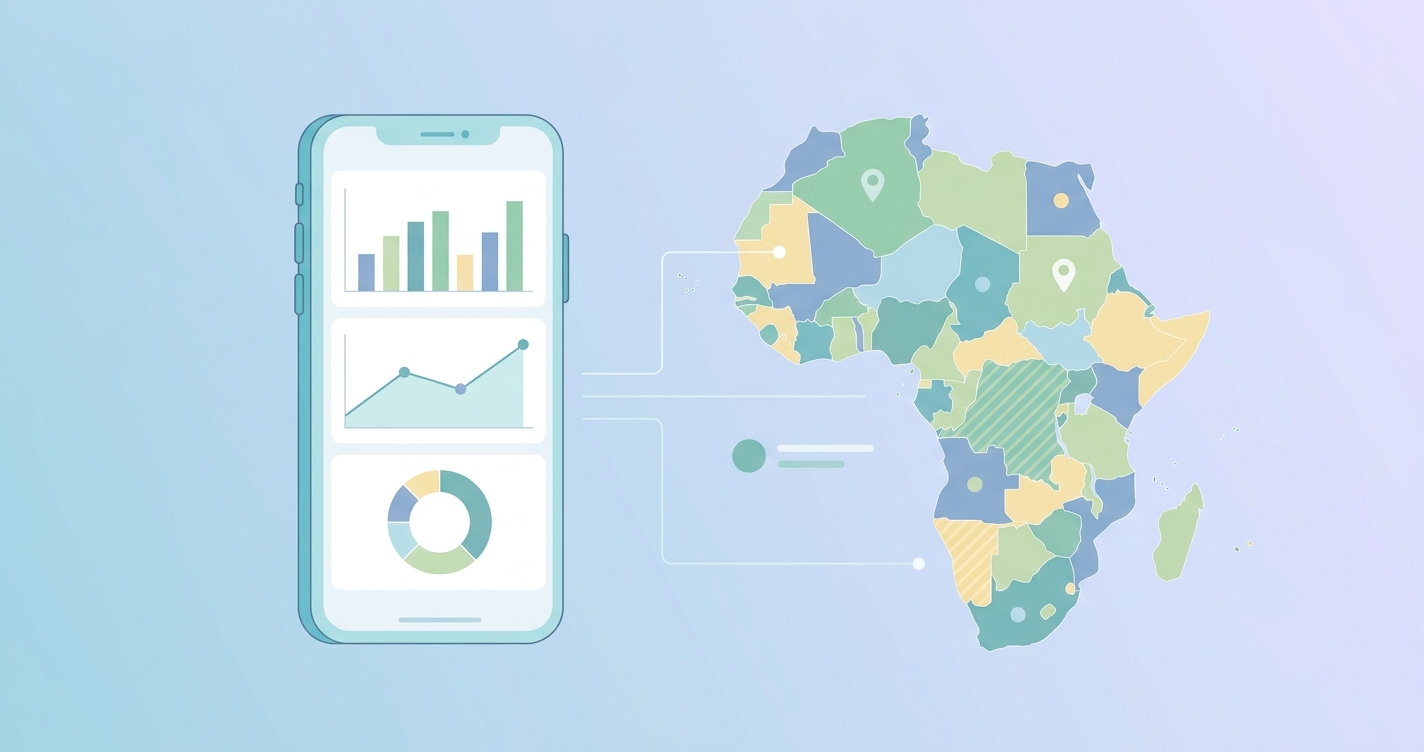
Global health organizations and program managers operating across Sub-Saharan Africa face a persistent mathematical problem. The population requiring clinical measurement is distributed across thousands of rural villages, while the hardware required to perform those measurements is concentrated in centralized facilities. Over the past three years, Uganda health screening technology has shifted from attempting to distribute hardware to deploying software instead. By equipping community health workers with smartphone applications capable of capturing physiological data, the Ministry of Health and international non-governmental organizations have begun to bypass traditional procurement bottlenecks. The 2026 program outcomes reveal how this transition from physical medical devices to mobile applications is changing the economics and logistics of rural healthcare delivery. This transition represents a fundamental change in how global health funding is deployed. Instead of procuring sensitive equipment that degrades in harsh field conditions, program managers are investing in digital infrastructure that scales at a fraction of the cost. The implications for donor reporting and patient outcomes are substantial.
"The transition to smartphone-based screening models has allowed community health workers to halve response times to critical health events and significantly reduce the cost per intervention. The bottleneck is no longer hardware procurement, but software deployment and digital literacy."
- Dr. Winnifred K. Kansiime, Makerere University School of Public Health, 2023
Shifting the hardware bottleneck: uganda health screening technology
Data from the implementation of Uganda's National Health Information and Digital Health Strategic Plan reveals a measurable impact on community screening outcomes. Traditional procurement models required ministries and non-governmental organizations to purchase, ship, clear through customs, and maintain dedicated medical equipment. Pulse oximeters, blood pressure cuffs, and thermometers require constant recalibration, physical storage, and battery replacements. In the context of rural Uganda, a broken medical device often remains broken for months due to a lack of local technicians and replacement parts.
Smartphone-based screening removes these logistical steps. Software tools utilize the existing cameras and sensors on commercial Android devices already carried by field workers. By treating the smartphone itself as the screening instrument, organizations eliminate the capital expenditure associated with single-function medical devices. This model aligns with the Community Health Toolkit, an open-source platform heavily adapted for Ugandan health systems, enabling immediate data synchronization and localized disease surveillance. The shift to software means that when a new screening protocol is required, it can be distributed over a mobile network to thousands of devices simultaneously, rather than requiring a nationwide hardware recall and replacement cycle. This agility is a primary reason why donor funds are increasingly directed toward digital interventions.
Infrastructure and economic comparisons
| Factor | Traditional Screening Devices | Smartphone-Based Technology |
|---|---|---|
| Hardware Logistics | Requires physical shipping, customs, and maintenance | Downloadable software to existing Android devices |
| Power Dependence | Requires steady grid electricity or specific batteries | Relies on standard phone charging infrastructure |
| Cost at Scale | Linear scaling (more patients requires more hardware) | Marginal cost approaches zero per additional screening |
| Data Integration | Manual transcription into secondary digital systems | Automatic synchronization with national health databases |
| Maintenance | Requires specialized technicians and replacement parts | Requires software updates and standard phone care |
Workflow improvements for community health workers
The transition to digital tools alters the daily operations of field teams. When community health workers utilize integrated mobile tools, program managers observe several distinct operational improvements:
- Reduction in time spent manually transcribing patient records onto paper forms, which frequently result in data entry errors.
- Immediate routing of severe cases to regional clinics based on automated risk algorithms built into the software.
- Automatic geocoding of screening locations to map disease clusters in real time, aiding rapid response teams.
- Decreased physical burden, as workers carry a single mobile phone rather than a bulky bag of diagnostic tools.
- Standardization of screening protocols through step-by-step software guidance that ensures consistent care delivery across different districts.
- Enhanced supervision capabilities, allowing regional managers to track the daily screening volume and accuracy of their remote field teams.
Industry applications for contactless vitals
Rural respiratory screening
Childhood pneumonia remains a leading cause of mortality in East Africa. Health workers often lack the diagnostic tools to differentiate between common respiratory infections and severe pneumonia. Smartphone applications that analyze breathing rates and signs of respiratory distress enable workers to make objective referral decisions immediately. This capability reduces the critical delay between symptom onset and clinical intervention. By providing an objective measurement tool at the village level, health programs can triage patients more effectively, ensuring that limited transport resources are utilized for children who urgently require hospital care.
Maternal health and hypertension
Hypertension during pregnancy is a critical risk factor in rural communities where prenatal clinic visits are infrequent and difficult to access. Mobile platforms allow field teams to track cardiovascular indicators without requiring calibrated blood pressure cuffs. This early detection mechanism provides a pathway for rural mothers to receive specialized care before complications become severe. Implementing these digital tools during routine village visits ensures that asymptomatic conditions are flagged early, ultimately reducing maternal mortality rates in isolated regions.
Infectious disease surveillance
Outbreak response relies heavily on speed and accurate reporting. When screening data is digitized at the point of care, centralized health ministries receive real-time epidemiological data. Programs tracking tuberculosis or malaria interventions can monitor the geographic spread of symptoms, allowing for targeted resource allocation rather than broad, inefficient distribution. The ability to push survey requests to mobile devices and receive aggregated data within forty-eight hours has transformed how the Ugandan health system responds to emerging biological threats.
Current research and evidence
Recent studies confirm the operational benefits of mobile health technology in Uganda. Research led by Rawlance Ndejjo at Makerere University in 2024 evaluated the impact of mobile health tools on community health worker performance in vulnerable populations. The findings indicated that digital reporting tools improved the timeliness of data collection and increased the proportion of complete health records transmitted to central databases. Workers equipped with smartphones demonstrated higher adherence to clinical guidelines compared to those relying on paper manuals.
Furthermore, economic analyses by Edwinah Atusingwize in 2024 demonstrated the cost-effectiveness of these digital interventions. The research highlighted that mobile health applications could achieve an incremental cost-effectiveness ratio of 17 dollars per disability-adjusted life year averted. This efficiency makes software-based screening highly attractive to donor-funded programs requiring measurable impact metrics. Studies consistently show that replacing paper-based systems with digital health screeners reduces response times to localized outbreaks by up to fifty percent, proving that digital speed translates directly into saved lives. Additional research by Winnifred K. Kansiime in 2023 established that smartphone applications significantly enhanced the referral accuracy for rural health workers treating pediatric populations.
The future of uganda health screening technology
The trajectory for 2026 and beyond points toward deeper integration of contactless measurement into national health infrastructure. As internet penetration increases across rural Uganda and smartphone costs continue to drop, the barrier to entry for digital health platforms will lower further. The next phase of development focuses on interoperability. Screening applications are increasingly designed to communicate directly with regional electronic medical records, ensuring that a patient screened under a tree in Buikwe District has their vital signs available to a specialist in Kampala within minutes.
Global health organizations are adjusting their funding models accordingly. Grant applications and procurement budgets now prioritize software licensing and digital literacy training over hardware acquisition. This strategic shift indicates that the model established in Uganda will likely become the standard for community health interventions across the African continent. Program managers are recognizing that the long-term sustainability of health initiatives depends on building flexible digital ecosystems rather than relying on brittle supply chains for specialized medical devices.
Frequently asked questions
What are the main barriers to deploying digital screening in Uganda?
The primary barriers include intermittent internet connectivity, varying digital literacy among community health workers, and initial hardware availability. However, building software that runs on standard commercial smartphones mitigates hardware shortages, and offline-first application architectures solve connectivity issues.
How does smartphone screening affect the cost of community health programs?
By removing the need to procure, ship, and maintain dedicated clinical hardware, programs shift their budgets from capital expenditure to software licensing. This transition significantly lowers the cost per patient screened and scales far more efficiently.
Do these programs require continuous internet access?
Most field-ready applications are built with offline-first capabilities. Community health workers perform screenings without an active network connection and synchronize the data automatically once they return to an area with reliable mobile coverage.
How do health ministries utilize the data from these tools?
Anonymized screening data feeds directly into national surveillance systems. This immediate flow of information allows program managers and health ministries to track disease outbreaks in real time and allocate resources dynamically rather than relying on delayed paper reports.
As digital transformation accelerates across Sub-Saharan Africa, organizations must adopt tools built for the realities of field operations. Circadify provides smartphone-based screening solutions designed for community health workers operating in low-resource environments, enabling rapid physiological measurement without extra hardware. By integrating contactless vital signs technology into existing mobile platforms, program managers can scale their reach and improve data visibility. For organizations ready to modernize their field operations, explore partnership opportunities and review our field data at https://circadify.com/blog to see how software is solving the hardware problem.