What are Ugandan community health workers finding that clinics miss?
Analysis of the gap between community health worker (CHW) findings and formal clinic data in Uganda, revealing key insights into public health challenges.
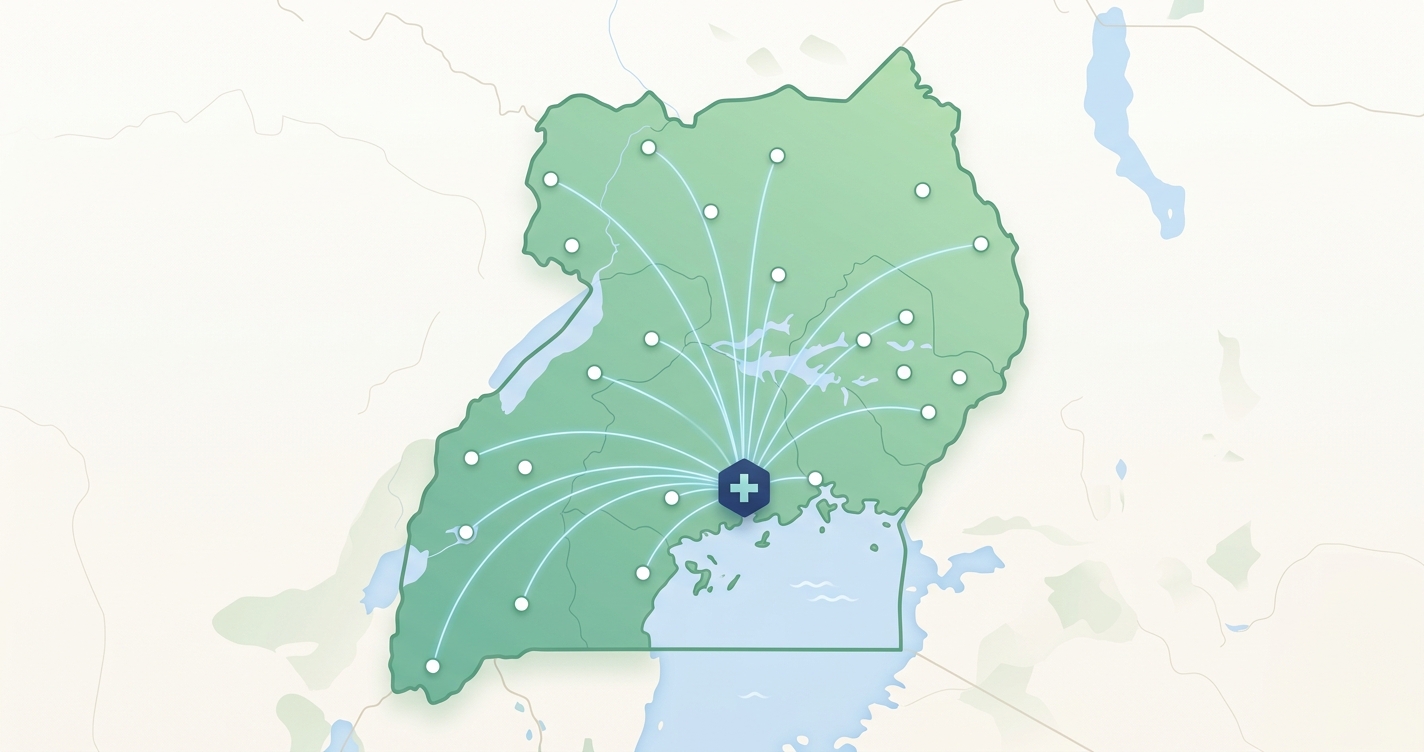
Community health workers (CHW) in Uganda are increasingly recognized as a critical link in the healthcare system, bridging the gap between formal clinics and the communities they serve. These frontline health workers, often equipped with mobile health (mHealth) technology, are documenting a range of conditions and health metrics that frequently go unrecorded in facility-based settings. This growing body of community-level data reveals a significant gap between the health challenges observed in villages and the data captured by clinics, a phenomenon known as the Uganda CHW findings clinic gap. This gap highlights the limitations of relying solely on facility data for a complete picture of public health.
"A study in Eastern Uganda found that CHW data reported higher coverage for some health services, like antenatal care (ANC) and family planning, compared to facility-based data, which can lead to an underestimation of the true burden of disease and the reach of health interventions if only clinic data is considered." - (BMC Public Health, 2023)
The uganda CHW findings clinic gap
The core of the Uganda CHW findings clinic gap lies in the different realities to which each system is exposed. Clinics primarily see patients who are well enough to travel and sick enough to seek care, a self-selecting group that represents only a fraction of a community's overall health status. In contrast, CHWs conduct proactive, door-to-door screening and follow-up, creating a more comprehensive and preventative view of public health. This distinction is particularly evident in the management of non-communicable diseases (NCDs) and maternal and child health. CHWs are identifying "pre-symptomatic" individuals and risk factors that would otherwise remain invisible until they escalate into more severe conditions requiring clinical intervention.
For instance, CHWs using simple, often smartphone-based, tools can screen for hypertension or assess malnutrition risks in children at the household level. This proactive screening identifies at-risk individuals who may not have otherwise visited a clinic. The data they collect provides an early warning system, highlighting emerging health trends like rising blood pressure rates in a specific village or a pocket of childhood wasting. This information is often missed by the formal clinic system, which is structured to be reactive, treating acute illnesses rather than managing population-level risk factors. The result is a significant discrepancy between the health profile recorded in a clinic's ledger and the one taking shape in the community.
| Metric | Typical Clinic Findings | Typical CHW Findings |
|---|---|---|
| Hypertension | Diagnosis of symptomatic, often severe, cases (Stage 2+) that present at the facility. | Early detection of elevated blood pressure and pre-hypertension during routine household visits. |
| Child Malnutrition | Treatment of severe acute malnutrition (SAM) cases requiring inpatient care. | Identification and management of moderate acute malnutrition (MAM) at home; tracking of stunting and wasting trends across the community. |
| Antenatal Care | Records of women who complete the recommended number of facility-based ANC visits. | Higher reported coverage of initial ANC contact and follow-up with women who may not attend all formal clinic appointments. |
| Disease Surveillance | Data on specific infectious diseases (e.g., malaria) confirmed by lab tests at the facility. | Syndromic surveillance of fevers, coughs, and diarrhea at the household level, providing a broader view of community disease burden. |
| Referral Success | Records of patients who successfully arrive at the clinic after being referred. | Data on referral initiation, including patients who were referred but did not complete the journey to the clinic, highlighting access barriers. |
Industry Applications
For global health organizations and ministries of health, understanding the Uganda CHW findings clinic gap has profound implications for program design and resource allocation.
- Targeted Interventions: CHW data can pinpoint specific geographic areas or demographic groups with elevated risk factors, allowing for more targeted and efficient deployment of resources.
- Supply Chain Management: By tracking conditions being managed at the community level, health systems can better forecast the need for essential medicines and supplies, from blood pressure medication to nutritional supplements.
- Health System Strengthening: The gap's existence argues for greater investment in integrating CHW data into national Health Management Information Systems (HMIS). This integration creates a single, more accurate source of truth for health policy and planning.
- Performance Management: Analyzing discrepancies between CHW referral rates and clinic attendance can help managers identify and address barriers to care, such as transport costs, clinic hours, or community trust.
Current research and evidence
Recent studies have begun to quantify the impact and importance of the data collected by CHWs. Research in rural Uganda has shown the feasibility and acceptance of task-shifting NCD screening to CHWs. A 2021 qualitative study in Nakaseke, Uganda, explored the perceptions of patients, CHWs, and healthcare professionals regarding this shift for hypertension and diabetes screening. The study, involving 24 in-depth interviews and ten focus group discussions, identified structured supervision, community involvement, and continuous training as critical drivers for success (Rwabukwali et al., 2021).
In child health, the evidence is even more established. Data from Uganda between 2016 and 2022 showed a decrease in stunting from 29% to 26% and wasting from 4% to 2.9%, improvements credited in part to the community-level work of CHWs. Organizations like the World Health Organization have highlighted how CHWs, supported by digital tools, are critical for the early detection and management of malnutrition, reaching hundreds of thousands of households that might otherwise have no contact with the formal health system.
The future of community-level data
The future of healthcare in Uganda and similar settings will increasingly depend on closing the gap between community and clinic data. The proliferation of smartphones has made mobile data collection a viable and scalable solution. As CHWs are equipped with more sophisticated mHealth applications, they can capture a richer dataset, including vital signs measured through contactless screening technologies, GPS-tagged health events, and longitudinal health records for entire families. This data, when properly aggregated and analyzed, can transform public health from a reactive to a proactive discipline. The challenge is no longer about whether community-level data is valuable, but how to best collect, integrate, and act upon it to improve health outcomes for all.
Frequently asked questions
Q: What is the main difference between data from CHWs and clinics? A: The main difference is proactive vs. reactive data collection. CHWs proactively screen entire communities, identifying risks and early-stage conditions. Clinics reactively record data from patients who self-select to seek care, often with more advanced conditions.
Q: Are CHW data less accurate than clinic data? A: Not necessarily. While data quality is a concern for both, studies show that with proper training, supervision, and digital tools, CHW-collected data can be highly reliable. In some cases, like health service coverage, it may be more accurate than facility records alone.
Q: Why is there a "gap" in the first place? A: The gap exists because many people face barriers to accessing clinics, including distance, cost, and time. CHWs work within communities, reaching individuals who may never enter a formal health facility, thus capturing a more complete picture of public health.
As a leader in smartphone-based screening, Circadify is actively working in this space to address the challenges and opportunities presented by the Uganda CHW findings clinic gap. By empowering community health workers with powerful and easy-to-use tools, we aim to help partners strengthen the link between community-level insights and national health strategy. For more information on our work and potential partnerships, please visit the global health section of the Circadify blog.